

Maddy summaryHR 9655 reauthorizes key provisions of the 2019 Global Fragility Act through 2029, extending existing programs and coordination mechanisms. It requires annual meetings of senior U.S. officials (including State Department, USAID, Defense, and Treasury leaders) to review alignment between U.S. foreign assistance strategies and partner country priorities. The bill also reauthorizes two funds - the Prevention and Stabilization Fund and Complex Crises Fund - through 2029 and allows Economic Support Fund resources to cover monitoring and evaluation for these programs. This directly affects U.S. government agencies managing international conflict prevention and stabilization efforts, as well as partner countries selected under the Global Fragility Strategy.
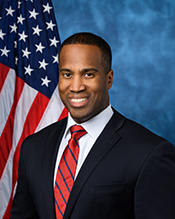
Rep. John James
Sponsored bills
Maddy summaryThis bill names the Battle Creek, Michigan, United States Postal Service facility at 90 McCamly Street South as the "Sojourner Truth Post Office." It directly affects that specific post office location and all federal documents referencing it. The bill updates official records, maps, and references to use the new name instead of the previous designation.
Maddy summaryThe TELEMH Act of 2024 would require Medicare to establish a specific code or modifier for claims related to mental health services provided via telehealth by support staff (such as nurse practitioners or physician assistants) when billed under a physician's supervision. This change would directly affect healthcare providers who deliver telehealth mental health services through auxiliary personnel and submit claims to Medicare. The Secretary of Health and Human Services must create this requirement within two years of the bill becoming law. The bill aims to standardize billing for these services, improving clarity in Medicare claims processing for telehealth mental health care.
Maddy summaryThis bill modifies Medicaid and CHIP rules to let eligible out-of-state healthcare providers enroll without extra state screening. It applies to providers already in Medicare or their home state program, with low fraud risk, serving children under 21 with complex medical conditions. Providers would receive 5 years of enrollment under this streamlined process, eliminating state-level barriers. The change directly affects children seeking specialized care across state lines and the providers who serve them.
Maddy summaryHR 705, the Veterans 2nd Amendment Protection Act, prohibits the Department of Veterans Affairs (VA) from automatically sending veterans' personal information to the national background check system solely because a fiduciary (like a guardian) manages their benefits. It specifically blocks the VA from sharing this data with the Justice Department without a court order finding the veteran a danger to themselves or others. This directly affects veterans who have a fiduciary appointed due to incapacity but are not deemed dangerous, preventing automatic barriers to firearm purchases based only on their fiduciary status. The bill amends 38 U.S.C. § 5501B to require judicial authorization before such data can be transmitted.
Maddy summaryHRES 1441 is a non-binding House resolution supporting the designation of September 11-17, 2024, as "Patriot Week." It does not create new laws or affect specific groups; instead, it encourages voluntary recognition by citizens, schools, and government entities. The resolution emphasizes honoring U.S. history, founding documents (like the Constitution), and symbols through education and celebration. It references historical figures and events but does not mandate any actions or changes to policy. As a symbolic gesture, it has no legal effect beyond expressing support for the commemorative week.
Maddy summaryHR 7089, the Global Anti-Human Trafficking Enhancement Act, expands the U.S. State Department's authority to investigate cross-border human trafficking cases. It authorizes the Secretary of State to probe violations of federal trafficking laws (Title 18, Chapter 77) when part of the crime occurs outside the U.S. or involves foreign nationals. The bill amends the State Department Basic Authorities Act to explicitly include these transnational trafficking investigations under the Secretary's existing powers. This change directly affects the State Department's investigative capabilities for international trafficking cases involving foreign elements. The law creates a specific mechanism for U.S. authorities to address trafficking networks operating across borders.
Maddy summaryHRES 1429 is a non-binding House resolution that congratulates Michigan athletes who competed in the 2024 Paris Olympics and Paralympics. It specifically honors 20 athletes, including basketball player Devin Booker and track and field athlete Grant Fisher, by naming them in the resolution. The resolution does not create new laws or policies but serves as a symbolic gesture recognizing their achievements and the values of the Olympic movement.
Maddy summaryThis resolution aims to block a rule issued by the National Highway Traffic Safety Administration (NHTSA) that sets new fuel efficiency standards for passenger cars, light trucks (starting in 2027), and heavy-duty pickup trucks/vans (starting in 2030). If passed, it would prevent this specific rule from taking effect by disapproving it under a congressional review process. The rule directly affects vehicle manufacturers by requiring them to meet these updated fuel economy targets for future model years. This is a procedural resolution, not a new law, focused solely on halting the implementation of the existing NHTSA rule.
Maddy summaryHR 9274, the SHAWL Act, establishes two new Smithsonian museums: the National Museum of the American Latino and the American Women’s History Museum. It authorizes both museums to be located within the National Mall’s "Reserve" area, overriding prior restrictions, and requires federal agencies managing potential sites to transfer jurisdiction to the Smithsonian after notifying congressional committees. The bill mandates that both museums accurately represent diverse cultures, histories, and viewpoints within Latino and women’s communities through exhibits and programs, requiring input from a broad range of community experts. It also requires the Smithsonian to submit biennial reports to Congress detailing compliance with these representation requirements.