

Maddy summaryThis resolution (HRES 549) is a non-binding House measure expressing support for designating June 26 as "LGBTQI+ Equality Day." It commemorates three landmark Supreme Court rulings on June 26 (2003, 2013, and 2015) that ended criminalization of same-sex intimacy, struck down marriage discrimination, and established marriage equality. The resolution encourages public celebration of this day to honor these milestones and educate about ongoing discrimination faced by LGBTQI+ communities. It also acknowledges the need for future legislation to address discrimination in areas like employment, housing, and public accommodations. As a symbolic resolution, it does not create new legal requirements but formally recognizes these historical court decisions.
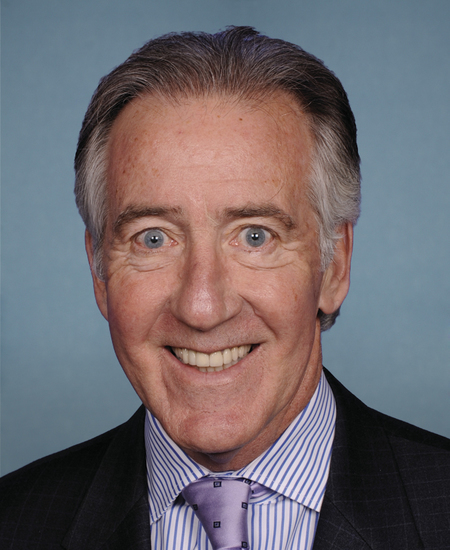
Rep. Richard E. Neal
Sponsored bills
Maddy summaryHR 4167, the Expanding Access to Lending Options Act, amends the Federal Credit Union Act to extend the maximum time federally chartered credit unions can hold mortgage loans from 15 years to 20 years (or longer by NCUA regulation). This change directly affects federally chartered credit unions by allowing them to offer longer-term mortgage products to members. The key provision modifies Section 107(5) of the Federal Credit Union Act, specifically updating the time limit for mortgage loans held by credit unions. The bill also includes a non-binding sense of Congress statement emphasizing safety and soundness in NCUA oversight, but the core policy change is the extended mortgage holding period.
Maddy summaryThe Women's Health Protection Act of 2025 would protect access to abortion services across the United States by prohibiting states from imposing restrictions that are more burdensome than those on comparable medical procedures. The bill directly affects people seeking abortion care and health care providers by banning restrictions such as mandatory in-person visits, requirements for specific tests, limitations on telemedicine, and rules based on a patient's reason for seeking abortion. It prohibits state laws that single out abortion for unnecessary restrictions while allowing post-viability abortions when necessary to protect a patient's life or health. The bill preempts conflicting state laws and provides enforcement mechanisms through private lawsuits and actions by the Attorney General.
Maddy summaryThis bill creates federal funding for community-based violence intervention programs in high-violence areas, targeting communities with 35+ homicides annually or 20+ homicides with rates double the national average. It establishes grants for community organizations to implement trauma-informed violence interruption strategies, hospital-based programs for injured patients, and job training for "opportunity youth" (16-25 year olds not in school or work). The legislation authorizes $300 million in 2026, increasing to $700 million annually through 2033, with requirements for evidence-based approaches that reduce violence without contributing to mass incarceration. It creates a National Community Violence Response Center to coordinate data collection, research, and best practices for these programs. The focus is on prevention through economic opportunity, trauma care, and community-driven interventions rather than traditional law enforcement approaches.
Maddy summaryThe Caring for Survivors Act of 2025 increases monthly dependency and indemnity compensation for surviving spouses of veterans. It changes the calculation method from a fixed $1,154 to 55% of a specific veteran compensation rate, effective six months after enactment. The bill also reduces the required continuous disability rating period for survivors from 10 years to 5 years, and provides a proportional payment for cases where the rating period is shorter than 10 years. Surviving spouses of veterans who died before January 1, 1993, receive the greater of their current benefit or the new calculation. This directly affects surviving spouses eligible for benefits under Title 38, U.S. Code, particularly those with veterans who died prior to 1993.
Maddy summaryHRES 502 is a House resolution requesting transparency about a potential federal database project. It directs the President and three Cabinet Secretaries (Treasury, Labor, Health and Human Services) to provide documents to the House within 14 days regarding a proposed centralized database developed with Palantir Technologies Inc. The resolution seeks information about the database’s scope - compiling sensitive personal data like tax records, health information, financial accounts, and Social Security details across federal agencies - and its purpose, including potential uses like tax audits or benefit restrictions. This is a procedural inquiry (not a policy change) focused on obtaining documents for congressional review of the project’s development and contracts.
Maddy summaryHR 3906, the Medical Research for Our Troops Act, restores funding levels for military medical research by increasing the Defense Health Agency's research budget from $40.395 billion to $41.576 billion in the 2025 appropriations act. It ensures Congressionally Directed Medical Research Programs funds are used consistently with the Consolidated Appropriations Act, 2024, requiring the Defense Secretary to support all previously identified research programs and maintain existing funding allocations. The bill directly affects military medical research initiatives and the Defense Health Agency's budget implementation. This is a procedural funding adjustment, not a new policy, maintaining continuity for ongoing research projects.
Maddy summaryThis bill requires private firearm transfers between individuals to go through a licensed dealer who must conduct a background check. It applies to most private sales but includes exceptions for transfers between family members (like parents and children), law enforcement, emergencies preventing harm, and temporary loans at shooting ranges or for hunting. Dealers must provide background check notices in both English and Spanish. The law aims to prevent prohibited individuals from obtaining firearms through private transactions while maintaining existing state authority on firearm laws.
Maddy summaryHR 3868, the Enhanced Background Checks Act of 2025, modifies federal firearm background check procedures to address delays. It requires federal firearms licensees to wait 10 business days after a background check query if the system doesn’t immediately flag a transfer, unless the buyer submits an electronic petition confirming they aren’t prohibited from owning firearms. The petition process includes a 10-day response deadline from the Attorney General, with licensees allowed to proceed if the system remains silent after 10 days. The bill also mandates detailed annual reports from the FBI on petition delays and GAO reports on implementation, focusing on how these changes affect firearm transfers to prohibited individuals.
Maddy summaryHR 3760, the Charles B. Rangel Congressional Gold Medal Act, authorizes the posthumous award of a Congressional Gold Medal to honor former U.S. Representative Charles B. Rangel for his decades of service to the nation. The medal, to be struck by the U.S. Mint and presented by the Speaker of the House and President pro tempore of the Senate, will be given to Rangel's children after the ceremony. This commemorative measure recognizes Rangel's contributions as a Korean War veteran, founder of the Congressional Black Caucus, and champion of legislation like the African Growth and Opportunity Act.