

Maddy summaryHR 7415 would repeal the 1990 Gun-Free School Zones Act, which prohibited firearms within 1,000 feet of school grounds. It removes specific references to school zones from federal gun law provisions in Title 18 of the U.S. Code. This change would eliminate the federal prohibition on firearms in designated school zones, altering the scope of existing gun law enforcement. The bill does not create new safety measures but modifies how federal gun laws apply to school areas.
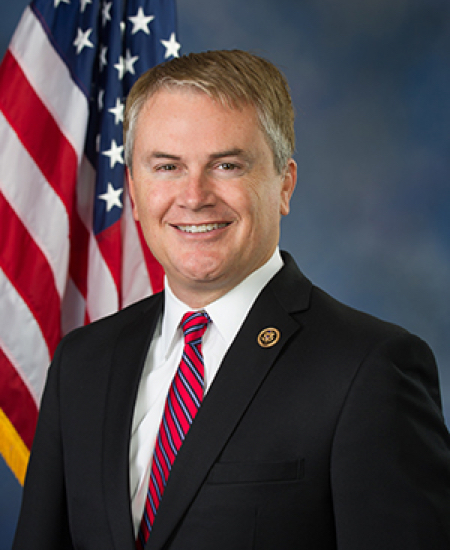
Rep. James Comer
Sponsored bills
Employee Rights Act This bill makes various changes with respect to the collective bargaining process and labor relations. For example, the bill permits an employer to refuse to collectively bargain with a union within 90 days prior to the expiration of a collective bargaining agreement if the employer receives evidence that the majority of the employees in the bargaining unit do not support the union. The bill requires support from a majority of the employees in the bargaining unit (not just a majority of the employees voting) when electing union representation. The bill also requires unions to provide bargaining unit employees with the right to vote by secret ballot, including when voting whether to engage in a strike or refusal to work. Further, union dues, fees, assessments, and other contributions may be used for only collective bargaining or contract administrative functions. Additionally, the bill establishes a process for nullifying executive orders that the Office of Management and Budget determines are likely to result in an employer ordering a plant closure or mass layoff.
Illegal Immigrant Payoff Prohibition Act This bill prohibits the payment of a settlement to an alien for a civil action brought against the United States in connection with the alien's inadmissibility to, or unlawful presence in, the United States.
H-2B Returning Worker Exception Act of 2021 This bill modifies the H-2B (temporary nonagricultural workers) nonimmigrant visa program, including by exempting certain workers from an annual numerical limit on such visas and requiring civil penalties for program violations. Under this bill, if a worker seeking a H-2B visa has been counted toward the 66,000 annual cap on such visas in one of the three preceding fiscal years, that worker shall not be counted against the cap again. Furthermore, the Department of Homeland Security (DHS) must impose a civil monetary penalty on an employer for (1) failing to meet requirements related to an H-2B visa petition, or (2) making a willful misrepresentation of material fact in such a petition. DHS must also ensure the establishment of an electronic platform (1) for employers to submit and request approval of an H-2B petition, and (2) to act as a single point of access for applicants and the relevant government agencies. The Department of Labor must maintain a publicly available online database of all job orders by H-2B employers. Furthermore, Labor may take certain actions to enforce program requirements, such as imposing penalties and seeking injunctions. The bill provides statutory authority for the current practice of limiting the program to workers who are nationals of countries approved by DHS. DHS may make exceptions to this limitation in individual cases if it is in the U.S. interest to do so. DHS shall select approved countries based on various factors, such as the rate of overstay by H-2B visa holders from each country.
FedRAMP Authorization Act This bill provides statutory authority for the Federal Risk and Authorization Management Program (FedRAMP) within the General Services Administration (GSA). The GSA must establish a government-wide program that provides the authoritative standardized approach to security assessment and authorization for cloud computing products and services that process unclassified information used by agencies. Agencies must ensure that their cloud computing services meet GSA requirements. The Government Accountability Office must report to Congress assessing the costs incurred by agencies and cloud service providers relating to the issuance of FedRAMP authorizations, the extent to which agencies have processes in place to continuously monitor the implementation of cloud computing products and services operating as federal information systems, how often and for which categories of products and services agencies use FedRAMP authorizations, and the unique costs and potential burdens incurred by cloud computing companies that are small business concerns as a part of the FedRAMP authorization process. The bill establishes the Federal Secure Cloud Advisory Committee.
This bill designates the facility of the United States Postal Service located at 3900 Crown Road Southwest in Atlanta, Georgia, as the John R. Lewis Post Office Building.
Protect Farmers from the SEC Act This bill prohibits the Securities and Exchange Commission from requiring the disclosure of greenhouse gas emissions related to agricultural products.
This resolution requests the President to transmit to the House of Representatives certain documents in his possession relating to specified individuals, including Biden family members; certain business entities connected to Biden family members or associates; specified property in the District of Columbia; foreign financial accounts of the individuals or entities; or any money laundering violations involving the individuals, entities, or property.
Social Security Fairness Act of 2021 This bill repeals provisions that reduce Social Security benefits for individuals who receive other benefits, such as a pension from a state or local government. The bill eliminates the government pension offset , which in various instances reduces Social Security benefits for spouses, widows, and widowers who also receive government pensions of their own. The bill also eliminates the windfall elimination provision , which in some instances reduces Social Security benefits for individuals who also receive a pension or disability benefit from an employer that did not withhold Social Security taxes. These changes are effective for benefits payable after December 2021.
Maintaining Access to Recreational Industry and Necessary Adjustments Act or the MARINA Act This bill addresses rental amounts, administrative fees, and lease terms with respect to certain marinas. The bill establishes that sales of food, beverages, fuel, boats, boat motors, and boat lifts must be capped at 1% for calculating the amount of rent charged to the operator of a marina for a lease. It directs the U.S. Army Corps of Engineers to establish a standardized fee schedule for administrative fees assessed to operators of marinas that specifies under what circumstances and at what time such a fee is to be assessed. Additionally, the bill specifies that lease terms for a marina shall be at least 50 years for an initial lease or first renewal of a lease and at least 25 years for any subsequent renewal.