

Maddy summaryThis bill, known as the State Emissions Authority Act of 2026, modifies the Clean Air Act to reduce federal mandates on vehicle inspection and maintenance programs. It primarily affects state governments by removing requirements for them to maintain specific inspection schedules and by limiting the federal government's ability to credit states for emissions reductions achieved through these programs. Additionally, the legislation adjusts rules regarding how states must report their environmental plans and clarifies compliance standards for federal vehicles and installations. By striking several existing sections of the law, the bill effectively shifts more authority over vehicle inspection policies from the federal level to the states.
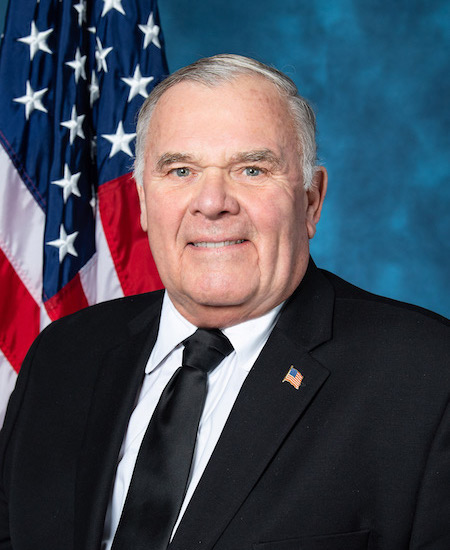
Rep. James R. Baird
Sponsored bills
Maddy summaryHR 1041, the Veterans 2nd Amendment Protection Act, prevents the Department of Veterans Affairs (VA) from automatically sending veterans' personal information to the national background check system (NICS) solely because a court has appointed a fiduciary (like a guardian) to manage their benefits. This directly affects veterans who have a fiduciary appointed due to mental health or cognitive challenges but are not deemed a danger to themselves or others. The bill requires a court order finding the veteran poses a danger before any such information can be shared with the NICS. It changes VA procedures to block unnecessary barriers to firearm ownership for veterans who qualify for fiduciary support without a judicial determination of danger.
Maddy summaryThis bill, known as the Sex Trafficking Demand Reduction Act, modifies how the United States evaluates foreign countries' efforts to combat human trafficking. It requires these nations to demonstrate serious and sustained actions, such as banning the purchase of commercial sex acts, educating buyers about exploitation, and reducing international sex tourism. These new criteria will be used in future annual reports to determine whether a country meets the minimum standards for eliminating trafficking. Consequently, the bill directly affects how the U.S. government assesses and categorizes the anti-trafficking progress of other nations.
Maddy summaryThe Smithsonian American Women’s History Museum Act authorizes the creation of a new Smithsonian museum dedicated to women’s history, to be located within the National Mall Reserve in Washington, D.C. If the site is managed by another federal agency, the bill requires that agency to transfer the land after notifying Congress and relevant committees. The museum must ensure exhibits and programs accurately represent diverse women’s experiences by consulting a broad range of experts and community voices. The Smithsonian will submit biennial reports to Congress detailing how the museum meets these representation standards.
Maddy summaryThe BIO-SCALE Act establishes a program to build at least three regional, nonprofit facilities designed to help bioindustrial companies test and scale up new technologies for producing chemicals, fuels, and materials. Funded by approximately $462 million over ten years, these open-access sites will provide large-scale equipment for public and private organizations to move innovations from the lab to commercial production without intellectual property barriers. The Department of Commerce will select facility locations through a competitive process that prioritizes areas near raw material sources and regions with existing biotech industries to promote economic growth and national security.
Maddy summaryThe Waste Heat to Wattage Act of 2026 amends the definition of renewable energy under the Farm Security and Rural Investment Act of 2002 to include "waste energy recovery." Specifically, it adds waste energy recovery - defined as heat or pressure from industrial processes that would otherwise be wasted - to the list of eligible renewable energy sources. This change directly affects industrial facilities that capture waste heat or pressure to generate electricity through systems like waste heat to power. The bill updates existing law to recognize this technology as renewable energy, without creating new programs or funding.
Hemp Planting Predictability Act This bill extends by two years the implementation of changes to the regulation of hemp products, which reimpose certain federal controls over some hemp products. Specifically, Congress enacted the FY2026 agriculture appropriations act (P.L. 119-37) on November 12, 2025. Effective November 12, 2026, the act modifies the statutory definition of hemp products that are considered to be lawful. This bill extends the effective date to November 12, 2028. As background, the 2018 farm bill excluded hemp from the Controlled Substances Act definition of marijuana and defined hemp . As a result, hemp and hemp-derived products at or below the 0.3% delta-9 tetrahydrocannabinol (THC, the psychoactive component of marijuana) concentration threshold were no longer regulated as Schedule I controlled substances and registration with the Drug Enforcement Administration was no longer required to cultivate or handle hemp and hemp-derived products. However, hemp remained subject to Department of Agriculture and Food and Drug Administration regulation. The 2025 changes to the definition of hemp, include changing the limit to a total THC concentration of not more than 0.3% on a dry weight basis rather than only delta-9 THC, explicitly including industrial hemp, excluding seeds from a cannabis plant that exceed a certain THC concentration, and excluding various types of hemp-derived cannabinoid products. Cannabinoids refer to unique chemical compounds that are found in hemp and marijuana (e.g., THC) and are known to exhibit a range of psychological and physiological effects.
This bill extends by two years the implementation of changes to the regulation of hemp products, which reimpose certain federal controls over some hemp products. Specifically, Congress enacted the FY2026 agriculture appropriations act (P.L. 119-37) on November 12, 2025. Effective November 12, 2026, the act modifies the statutory definition of hemp products that are considered to be lawful. This bill extends the effective date to November 12, 2028. As background, the 2018 farm bill excluded hemp from the Controlled Substances Act definition of marijuana and defined hemp . As a result, hemp and hemp-derived products at or below the 0.3% delta-9 tetrahydrocannabinol (THC, the psychoactive component of marijuana) concentration threshold were no longer regulated as Schedule I controlled substances and registration with the Drug Enforcement Administration was no longer required to cultivate or handle hemp and hemp-derived products. However, hemp remained subject to Department of Agriculture and Food and Drug Administration regulation. The 2025 changes to the definition of hemp, include changing the limit to a total THC concentration of not more than 0.3% on a dry weight basis rather than only delta-9 THC, explicitly including industrial hemp, excluding seeds from a cannabis plant that exceed a certain THC concentration, and excluding various types of hemp-derived cannabinoid products. Cannabinoids refer to unique chemical compounds that are found in hemp and marijuana (e.g., THC) and are known to exhibit a range of psychological and physiological effects.
Maddy summaryHR 8901, the Securing Innovation and Research from Adversaries Act, prohibits federally funded researchers and institutions from collaborating with entities on specific U.S. government restricted lists, such as those related to national security risks or forced labor. The bill defines research collaboration broadly to include joint projects, data sharing, co-authorship, and personnel exchanges, and it requires agencies to issue guidance for standardized compliance. While the law generally bans these partnerships, it allows federal agency heads to grant case-by-case waivers if the collaboration is essential for national security or critical scientific purposes, provided they report the decision and justification to Congress within 30 days.
Maddy summaryThe Build to Scale Reauthorization Act of 2026 extends funding and updates rules for the Regional Technology and Innovation Hub Program, which supports economic development in specific geographic areas. The bill defines eligible organizations as state or nonprofit groups that provide direct financing, commercialization services, and entrepreneurial support to local businesses. It mandates that the federal government cover up to 90 percent of project costs and requires outreach to rural communities and areas facing economic hardship. Additionally, the legislation authorizes $50 million annually from 2026 to 2030 and allows the use of previously unspent funds to continue the program.