

Scientific Integrity Act This bill revises provisions regarding the release of scientific research results by federal agencies. Each agency that funds, conducts, or oversees scientific research must (1) adopt and enforce a scientific integrity policy that includes requirements such as that scientific conclusions are not based on political considerations, and (2) submit such policy to the Office of Science and Technology Policy (OSTP) for approval. Each agency must make such policy available to the public and submit such policy to Congress. Agencies and the OSTP must periodically review the policies. The Government Accountability Office shall review implementation of the policies. Each agency shall (1) appoint a Scientific Integrity Officer, (2) establish a process for dispute resolution consistent with the scientific integrity policy, and (3) establish a specified training program for current and new employees.
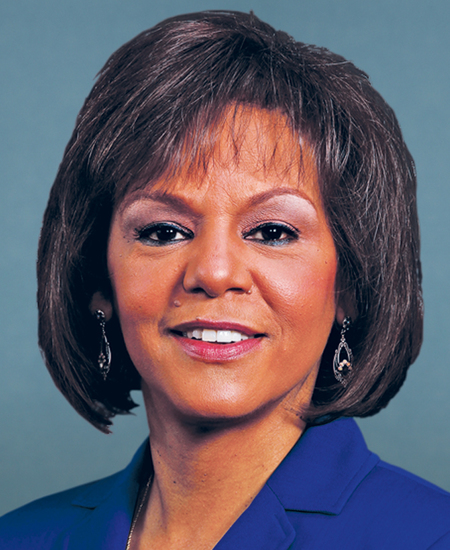
Rep. Robin L. Kelly
Sponsored bills
No Congressional Gun Loophole Act This bill prohibits the Capitol Police Board from allowing Members of Congress or their staff to carry firearms on the grounds of the U.S. Capitol or in its buildings. Members and their staff may store firearms in their cars in Capitol complex garages if their possession complies with the firearms laws of the District of Columbia and the firearms are locked with gun locks while on the complex. Current board regulations allow Members of Congress to keep firearms in their offices; the regulations also allow Members and their staff to transport unloaded and securely wrapped firearms within the Capitol grounds. Firearms are prohibited inside the chambers of the Senate and the House of Representatives, as well as in adjacent lobbies and cloakrooms, the galleries, the Marble Room of the Senate, and the Rayburn Room of the House, unless approved by the Sergeants at Arms for security purposes.
USPS Fairness Act This bill repeals the requirement that the U.S. Postal Service annually prepay future retirement health benefits.
Medicare Dental Benefit Act of 2021 This bill provides for Medicare coverage of dental and oral health services, including routine diagnostic and preventive services, basic and major dental services, and emergency care; dental prostheses are also covered. Currently, such services are excluded from Medicare coverage.
Emergency Water is a Human Right Act This bill creates a grant program, administered by the Department of Health and Human Services, to provide funds to states and Indian tribes to assist low-income households that pay a high proportion of household income for drinking water and wastewater services. Further, any entity receiving financial assistance under this grant program must ensure that no home energy service or public water system service is or remains disconnected or interrupted during the COVID-19 (i.e., coronavirus disease 2019) public health emergency.
Mental Health Access Improvement Act of 2021 This bill provides for coverage of marriage and family therapist services and mental health counselor services under Medicare. It also excludes such services from the skilled nursing facility prospective payment system, and authorizes marriage and family therapists and mental health counselors to develop discharge plans for post-hospital services.
Improving Social Determinants of Health Act of 2021 This bill requires the Centers for Disease Control and Prevention (CDC) to establish a program to improve health outcomes and reduce health inequities by, for example, coordinating activities across the CDC. As part of the program, the CDC must award grants to eligible organizations to build capacity to address social determinants of health. The CDC shall provide for an independent evaluation of certain grants and report findings to Congress.
Insular Area Medicaid Parity Act This bill eliminates Medicaid funding limitations for U.S. territories beginning in FY2021.
Nationally Enhancing the Well-being of Babies through Outreach and Research Now Act or the NEWBORN Act This bill establishes a pilot program through which the Health Resources and Services Administration must award grants to territorial, tribal, and local health departments in areas with the highest rates of infant mortality to address birth defects, premature births, and other leading causes of infant death.
This concurrent resolution recognizes the difficult challenges Black veterans faced when returning home after serving in the Armed Forces, their heroic military sacrifices, and their patriotism in fighting for equal rights and for the dignity of a people and a nation. The concurrent resolution also recognizes the need for the Department of Veterans Affairs to continue to work to eliminate any health and benefit disparities for minority veterans.