Title X Abortion Provider Prohibition Act This bill prohibits the Department of Health and Human Services (HHS) from awarding family planning grants to entities that perform abortions or provide funding to other entities that perform abortions. To receive a grant, an entity must certify it will refrain from those activities during the grant period. The bill provides exceptions for abortions (1) in cases of rape or incest; or (2) when the life of the woman is in danger due to a physical disorder, injury, or illness. It also exempts hospitals unless they provide funds to non-hospital entities that provide abortions. HHS must report annually on this prohibition.
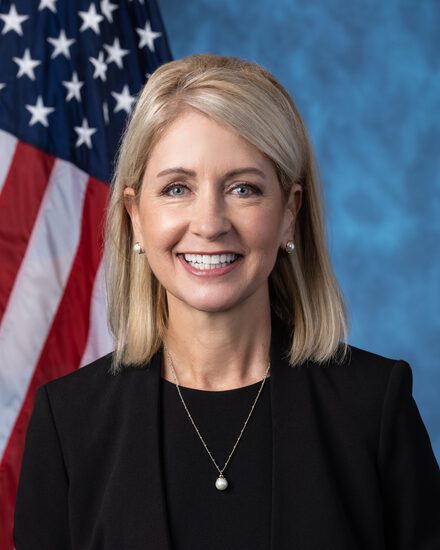
Rep. Mary E. Miller
Sponsored bills
Protecting Life in Crisis Act This bill specifies that federal funds allocated for COVID-19 (i.e., coronavirus disease 2019) response efforts may not, in general, be used for abortions. Current law generally prohibits the use of federal funds for abortions through language included in appropriations bills, such as the Hyde Amendment. The bill also restricts the use of federal tax credits or other federal funding for health insurance coverage if the coverage includes abortions.
Protecting Life in Foreign Assistance Act This bill prohibits the use of federal funds for purposes outside the United States related to abortion. Specifically, the bill prohibits funding to certain foreign or domestic organizations that perform or promote abortions, furnish or develop items intended to procure abortions, or provide financial support for an entity that conducts such activities. Current U.S. policy prohibits the provision of federal funds to a foreign nongovernmental organization unless it agrees to not perform or actively promote abortions.
No Abortion Bonds Act This bill denies a tax exclusion for the interest paid on state and local bonds that are used to provide a facility owned or used (for any purpose) by an abortion provider for more than 30 days during a year in which interest is paid on the bonds. An entity is not considered an abortion provider solely as a result of performing abortions if (1) the pregnancy is the result of an act of rape or incest; or (2) a woman suffers from a physical disorder, physical injury, or physical illness that would, as certified by a physician, place the woman in danger of death unless an abortion is performed, including a life-endangering physical condition caused by or arising from the pregnancy itself. The Department of the Treasury may exempt certain hospitals from being considered an abortion provider by making the name of the hospital available on Treasury's public website.
This resolution supports the recognition of January 22 each year as the Day of Tears in the United States and encourages citizens to lower their flags to half-staff to memorialize the unborn.
Abortion Is Not Health Care Act of 2021 This bill prohibits a tax deduction for medical expenses paid for an abortion.
Paris Agreement Constitutional Treaty Act This bill prohibits taking any action to carry out the goals of the United Nations Framework Convention on Climate Change—commonly known as the Paris Agreement—unless the Senate first ratifies the agreement. Further, the bill prohibits the use of any funds to advance the agreement.
No Taxpayer Funding for the World Health Organization Act This bill prohibits the United States from providing any assessed or voluntary contributions to the World Health Organization.
Save Democracy Act This bill addresses issues involving voter registration, casting of ballots, and tabulation of ballots in federal elections. Specifically, regarding voter registration for federal elections, the bill prohibits the use of automatic voter registration systems, requires individuals to provide documentary proof of U.S. citizenship to register to vote, requires individuals to provide their full Social Security number on their voter registration application, and requires courts to notify state election officials when an individual is recused from jury duty because the individual is not a U.S. citizen. Next, regarding the casting of ballots in federal elections, the bill requires individuals to provide proof of identification for absentee and in-person voting, prohibits states from mailing unrequested absentee ballots, prohibits the use of a drop box for collecting voted absentee ballots unless it is located inside of a building that serves as an office for the election official, restricts the delivery of ballots by third parties (i.e., prohibits ballot harvesting), requires that absentee ballots be received before the polls close on election day, and requires states to use Social Security numbers to verify the identification of each individual who casts a ballot. Finally, regarding the tabulation of ballots in federal elections, the bill requires states to permit poll watching by at least two campaign representatives per campaign, requires continuous counting of ballots after the closure of polling places on election day, and requires an audit of voting systems.

Federal Reserve Transparency Act of 2021 This bill establishes requirements regarding audits of certain financial agencies performed by the Government Accountability Office (GAO). Specifically, the bill directs the GAO to complete, within 12 months, an audit of the Federal Reserve Board and Federal Reserve banks. In addition, the bill allows the GAO to audit the Federal Reserve Board and Federal Reserve banks with respect to (1) international financial transactions; (2) deliberations, decisions, or actions on monetary policy matters; (3) transactions made under the direction of the Federal Open Market Committee; and (4) discussions or communications among Federal Reserve officers, board members, and employees regarding any of these matters.