

Maddy summaryThe Protecting Our Democracy Act is a comprehensive legislative bill designed to prevent abuses of presidential power, restore checks and balances, and defend elections against foreign interference. Key provisions include prohibiting the President from granting self-pardons, requiring congressional oversight for pardons involving the President or their family, and banning the President from accepting payments from individuals who have received clemency. The bill also strengthens enforcement of the Hatch Act and ethics rules for political appointees, mandates greater transparency in presidential tax returns and campaign finances, and restricts the use of federal property for political conventions. Additionally, it expands reporting requirements for foreign contacts in federal campaigns and imposes stricter penalties for violations of election laws.
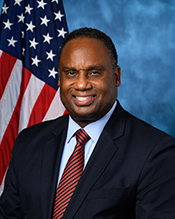
Rep. Jonathan L. Jackson
Sponsored bills
Maddy summaryThe Moms Matter Act directs the Department of Health and Human Services to create two main grant programs aimed at improving maternal mental health and reducing health disparities among pregnant and postpartum individuals. The first program provides funding to community organizations and healthcare providers to expand services that integrate mental health care into prenatal and postpartum settings, with a specific focus on groups facing higher risks of mortality and morbidity. The second program offers grants to educational institutions to train and recruit a diverse workforce of mental health professionals who specialize in caring for pregnant and postpartum patients. Both initiatives require recipients to submit annual reports on their activities and outcomes, while the legislation authorizes $25 million and $15 million respectively for each program from fiscal years 2027 through 2031.
Maddy summaryThe Maternal Health Pandemic Response Act allocates $200 million to the Centers for Disease Control and Prevention to improve data collection, surveillance, and research on how public health emergencies affect pregnant and postpartum individuals. This funding supports efforts to gather detailed demographic information on maternal health outcomes, establish regional centers of excellence, and expand surveys to better reach underrepresented communities. The legislation also requires the CDC to make this data publicly available in a disaggregated format while protecting patient privacy, and mandates public education campaigns to ensure accurate information reaches families and healthcare providers. Additionally, the bill creates a diverse task force to develop federal recommendations for respectful maternity care during emergencies, addressing issues such as telehealth access, doula coverage, and the treatment of mental health and substance use disorders. These measures aim to reduce health disparities and improve care quality for pregnant people from racial and ethnic minority groups during public health crises.
Nationwide Consumer and Fuel Retailer Choice Act of 2025 This bill amends the Clean Air Act to address the limitations on Reid Vapor Pressure (a measure of gasoline's volatility) that are placed on gasoline during the summer ozone season. Specifically, the bill applies the waiver for Reid Vapor Pressure requirements that is applicable to gasoline blended with 10% ethanol (E10) to gasoline blended with up to 15% ethanol (E15). This change allows gasoline that is blended with 10% to 15% ethanol to be sold year-round. Currently, states may be excluded from the waiver for Reid Vapor Pressure requirements by submitting documentation supporting that the waiver would increase air pollution. The bill nullifies existing state exclusions, but states may submit documentation after enactment of the bill to be excluded going forward. The bill also modifies the Renewable Fuel Standard Program, which requires transportation fuel sold or introduced into commerce in the United States to contain minimum volumes of renewable fuel. Under the existing program, obligated parties, such as small refineries, must satisfy the volume obligations by either blending renewable fuels into their gasoline or diesel fuel products or by acquiring credits that represent the required renewable fuel volume. The bill directs the Environmental Protection Agency to return compliance credits to small refineries under certain circumstances.
Maddy summaryThe Universal School Meals Program Act of 2026 mandates that all public schools provide free breakfast and lunch to every enrolled student, regardless of income. It establishes specific funding rates for these meals, adjusts payments based on the use of locally sourced food, and eliminates the ability of schools to collect debt for unpaid charges. Additionally, the bill expands free meal access to summer programs, afterschool care, and incarcerated juveniles while updating poverty measurement standards across various federal education and nutrition laws.
Maddy summaryThis House resolution condemns the ongoing civil war in Sudan and calls for an end to external support provided to the warring parties, the Sudanese Armed Forces and the Rapid Support Forces. It urges the Trump Administration to stop supplying weapons or other assistance to these groups and to negotiate a peaceful settlement that restores democratic governance. The bill also highlights the severe humanitarian crisis affecting millions of people and demands that aid workers be granted safe, unrestricted access to deliver essential supplies. Additionally, it calls on the international community to support post-conflict reconstruction and establish a justice mechanism to hold perpetrators of war crimes accountable.
Maddy summaryThe Pregnant Women in Custody Act establishes new federal standards to protect the health and rights of pregnant women held in Bureau of Prisons facilities, immigration detention centers, and refugee shelters. It mandates comprehensive medical care, including mandatory pregnancy testing, access to contraception, and specialized dietary and housing accommodations tailored to pregnancy needs. A central provision prohibits the use of restrictive housing and physical restraints during pregnancy, labor, and the postpartum recovery period, with limited exceptions only for immediate safety threats. The legislation also requires facilities to provide nursery programs allowing mothers and infants to remain together, offers education on parental rights, and mandates regular reporting on health outcomes and the use of restrictive measures.
Maddy summaryThis resolution expresses support for designating July 15, 2026, as Glioblastoma Awareness Day to raise public awareness about this aggressive and deadly form of brain cancer. The bill honors patients and caregivers while encouraging greater understanding of the urgent medical needs associated with the disease, which currently has a low survival rate and limited treatment options. It also calls for increased collaboration among government, private, and nonprofit organizations to advance research and develop better therapies for those affected.
Maddy summaryThis bill establishes a process to identify and sanction foreign individuals and governments involved in recruiting or trafficking African citizens to fight for Russia in Ukraine. It requires the State Department to compile a list of these actors within 90 days, explicitly excluding those who were victims of fraud or coercion. Once the list is finalized, the President can impose severe penalties, including freezing assets, cutting off access to U.S. loans and contracts, and denying entry or revoking visas for the listed entities and their affiliates. The sanctions include specific exemptions for humanitarian aid and may be lifted if the President determines that doing so serves vital U.S. national interests. All sanctions imposed under this act will automatically expire five years after the bill is enacted.
Maddy summaryThis bill prohibits the U.S. government from spending money on military actions against Iran between its enactment and December 31, 2026, unless Congress explicitly approves the use of force. It allows for military action only if Congress declares war, passes a specific authorization, or if the action is necessary to defend the United States or its allies from an imminent attack while following reporting requirements. The law directly restricts the President's ability to deploy troops without legislative approval during the specified timeframe.