

Maddy summaryThis concurrent resolution (HCONRES 40) directs the President to remove U.S. military forces from hostilities with Iran, as required by the War Powers Resolution. It applies directly to U.S. Armed Forces deployed in conflict with Iran, except for forces needed to defend the U.S. or allies from imminent attack. The bill mandates removal unless the President complies with War Powers Resolution reporting requirements for self-defense actions, without needing new congressional authorization. As a procedural resolution, it does not create new law but compels executive action under existing legal framework.
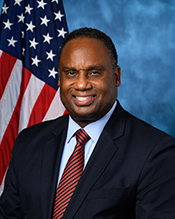
Rep. Jonathan L. Jackson
Sponsored bills
Maddy summaryThis resolution expresses support for recognizing April as National Arab American Heritage Month to celebrate the heritage and culture of Arab Americans in the United States. The bill directly affects Arab American communities and encourages the public to observe the month with programs and activities that highlight their contributions to American society. It acknowledges Arab Americans' historical and ongoing contributions across various fields including science, arts, public service, and civil rights, while noting that 47 states and numerous local jurisdictions have already recognized the month. The resolution urges the people of the United States to observe National Arab American Heritage Month with appropriate programs and activities that recognize and celebrate the unique contributions of Arab Americans.
Maddy summaryThis bill mandates that the U.S. Secretaries of State and Treasury jointly review the Rapid Support Forces (RSF) of Sudan within 90 days to determine if they meet the criteria for a global terrorist organization. If the RSF is affirmatively designated, the President must impose sanctions, which include freezing their assets within U.S. jurisdiction and preventing associated individuals from entering the United States. The bill provides exceptions for humanitarian assistance, U.S. national security activities, and allows for a waiver of sanctions if it's deemed important for U.S. national security interests. Concurrently, the Secretary of State must submit a report to Congress detailing the designation decision, foreign support to the RSF, and the implications of the designation.
Maddy summaryThe Senior Hunger Prevention Act of 2026 aims to reduce food insecurity among older adults and people with disabilities by modifying and expanding federal nutrition assistance programs. It streamlines the Supplemental Nutrition Assistance Program (SNAP) by extending certification periods to 36 months for these groups, creating simplified application processes, and establishing a standard medical expense deduction. The bill also expands eligibility for the Commodity Supplemental Food Program and the Seniors Farmers' Market Nutrition Program to include adults with disabilities, while increasing funding and benefits for these programs. Additionally, it establishes a pilot program for SNAP enrollment outreach, creates a new program to reimburse retail food stores for grocery delivery to eligible participants, and provides funding for farmers' market infrastructure and local produce procurement.
Maddy summaryThis bill seeks to block a specific rule issued by the Department of Education that affects the William D. Ford Federal Direct Loan Program. If passed, it would prevent the rule from taking effect, meaning the proposed changes to federal student loans would not be implemented. The measure uses a legislative process known as a joint resolution of disapproval to override agency regulations. It directly impacts students, families, and institutions that rely on federal student loans by stopping the Department of Education from enforcing the new policy.
Maddy summaryThis bill, known as the OHH SNAP Act of 2026, would expand eligibility for the Supplemental Nutrition Assistance Program to include more college students. It directly affects students who are working while attending college or have no financial aid available. The key changes allow students with zero financial aid and those classified as independent to qualify for SNAP benefits, while also broadening the definition of eligible work activities to include attending school. These provisions would take effect 180 days after the bill is signed into law, but would not apply to certification periods that began before that date.
Maddy summaryThe Books Save Lives Act requires public libraries and schools receiving federal funding to maintain diverse book collections that include works by and about members of underrepresented communities. It mandates that covered schools employ trained librarians and establishes that excluding books with a disparate impact on underrepresented groups serves as initial evidence of discrimination under existing civil rights laws. Additionally, the bill directs the Comptroller General to produce a report within 180 days on how recent book ban campaigns have affected underrepresented communities. The legislation defines underrepresented communities to include racial and ethnic minorities, LGBTQ+ individuals, religious minorities, and people with disabilities.
Maddy summaryThis resolution formally acknowledges historical and ongoing injustices in women's healthcare, particularly affecting marginalized groups such as Black, Indigenous, immigrant, LGBTQ+, disabled, and low-income women. It highlights specific issues including dismissed pain, lack of bodily autonomy, and past medical abuses like non-consensual sterilization and coercive contraceptive testing. The bill calls for patient-centered care, expanded research, and stronger protections for reproductive and gynecological health, while urging the federal government to address systemic bias in medical settings.
Maddy summaryThis bill directs the Secretary of Health and Human Services to conduct a study on barriers that prevent patients from accessing pain management during gynecologic procedures. The study will examine factors such as insurance coverage, provider training, and resource availability, and will include input from patients, medical professionals, and health equity experts. Within 24 months of enactment, the Secretary must submit a report with findings and recommendations to relevant congressional committees. The bill does not change current laws or funding but establishes a research requirement to inform future policy decisions.
Maddy summaryThis bill would create a federal paid leave program allowing employees to take up to 96 hours of paid time off each year for reproductive health needs, including menstrual care, endometriosis, fertility treatments, and pregnancy-related procedures. It applies to private employers with at least five employees and certain government workers, requiring employers to grant this leave upon request without requiring employees to find replacements during their absence. The legislation prohibits retaliation against employees who use this leave and establishes enforcement mechanisms through the Department of Labor, including civil penalties for violations. Employers with existing paid leave policies that already cover these reproductive health reasons would not need to provide additional leave under this bill.