

National Law Enforcement Officers Remembrance, Support and Community Outreach Act. [ sic ] This bill temporarily directs the Department of the Interior to award a grant to the National Law Enforcement Officers Memorial Fund for the expenses associated with operating and enhancing the community outreach, public education, and officer safety and wellness programs of the National Law Enforcement Museum.
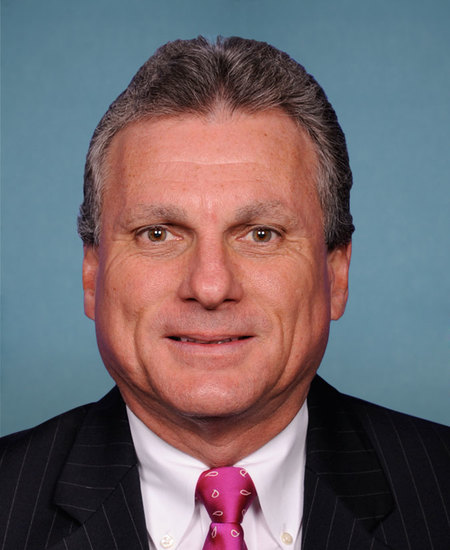
Rep. Earl L. "Buddy" Carter
Sponsored bills
Maddy summaryThis House resolution formally honors the life and legacy of the late Representative Kay Granger from Texas, recognizing her historic achievements in public service. The bill highlights her roles as the first woman elected mayor of Fort Worth, the first Republican woman to represent Texas in the U.S. House, and the first Republican woman to chair the House Committee on Appropriations. It also acknowledges her contributions to national defense, including her work on the F-35 fighter jet program and the naming of a Navy ship for Fort Worth. The resolution expresses sympathy to Granger's family and directs the Clerk of the House to send an official copy of the document to her loved ones.
Maddy summaryThe Freedom Haulers Act extends the existing waiver period for military service members seeking a commercial driver's license from 12 to 24 months after separation. It requires states to waive specific knowledge and driving tests for current or former military personnel who held designated vehicle operator roles, such as motor transport operators or fuelers, within the last two years. To qualify, applicants must certify they have operated comparable commercial vehicles during that period and maintain a clean record with no serious traffic violations, license suspensions, or at-fault crashes. The bill also mandates waivers for specialized endorsements related to passenger transport, tank vehicles, and hazardous materials, provided the applicant meets similar service and safety criteria.
Maddy summary# Summary of Digital Commodities and Blockchain Technology Regulatory Framework This comprehensive legislation establishes a new regulatory framework specifically for digital commodities and blockchain technology, creating a balanced approach that protects investors while fostering innovation. ## Key Components 1. **New Regulatory Structure**: - Creates new categories for digital commodity exchanges, brokers, and dealers under the Commodity Futures Trading Commission (CFTC) - Establishes "qualified digital asset custodians" as a new regulatory category - Defines "mature blockchain systems" with special regulatory treatment 2. **Core Requirements**: - Mandates segregation of customer assets and strict custody requirements - Requires robust risk management systems - Sets capital requirements for digital commodity brokers and dealers - Establishes new disclosure and reporting obligations - Defines "blockchain control persons" with special restrictions on selling digital commodities 3. **Innovation-Focused Provisions**: - Creates a "Strategic Hub for Innovation and Financial Technology" (FinHub) at the SEC - Establishes "LabCFTC" as a dedicated innovation lab within the CFTC - Provides exemptions for SEC-registered entities from certain CFTC requirements - Includes provisions for expedited hiring of digital commodities experts 4. **Studies and Research**: - Mandates studies on decentralized finance (DeFi) - Requires a study on non-fungible tokens (NFTs) - Directs a study on financial literacy among digital commodity holders - Requires a study on tokenized securities and derivatives 5. **Exclusions**: - Excludes decentralized finance activities from regulation - Excludes certain blockchain-related activities from regulatory requirements The legislation aims to create a functional regulatory framework that acknowledges the unique benefits and risks of digital commodities while ensuring investor protection, preventing market manipulation, and promoting the responsible development of this emerging technology within the United States. It seeks to prevent the shift of digital commodity development to less regulated countries by establishing a clear, balanced regulatory path.
Maddy summaryHR 7008, the Stop Insider Trading Act, restricts Members of Congress, their spouses, and dependent children from purchasing certain investments like stocks in publicly traded companies. It requires 7-14 days' advance public notice before selling any such investment, including the sale date, description, and number of shares. Exceptions apply for work-related transactions (e.g., employer compensation) and reinvesting dividends. Violations trigger a fee of $2,000 or 10% of the investment’s value (whichever is greater), plus any net gain, paid from personal funds - not congressional allowances or campaign donations. The bill aims to prevent conflicts of interest by increasing transparency around congressional financial dealings.
Maddy summaryThis bill, titled the Permanent CBDC Ban Act, aims to permanently prohibit the Federal Reserve from issuing a central bank digital currency. It achieves this by amending the Federal Reserve Act to remove the specific legal authority that allows the Reserve to create such a digital currency. The legislation directly affects the Federal Reserve by stripping away its power to launch a digital version of the dollar. By deleting the relevant subsection of the law, the bill ensures that the Reserve cannot issue a CBDC in the future.
Maddy summaryThis resolution formally recognizes the 100th anniversary of the Golf Course Superintendents Association of America, honoring its century-long contribution to the golf industry. The bill does not change any laws or allocate funds; instead, it serves as a symbolic commendation for the organization's work in advancing greenkeeping standards, promoting environmental stewardship, and supporting education and workforce development. By acknowledging the association's role in managing golf courses and its impact on the economy and communities, the measure highlights the professional achievements of its members without imposing new regulatory requirements.
Maddy summaryThe Stop EU Overreach Act directs the United States Trade Representative to initiate a formal investigation within 30 days of enactment to determine if specific European Union environmental and sustainability regulations unfairly burden American commerce. These targeted measures include rules on corporate sustainability due diligence, reporting, deforestation traceability, and carbon border adjustments that apply to US companies based on their operations or supply chains outside the EU. If the investigation concludes that these foreign practices are unreasonable or discriminatory, the USTR is authorized to take retaliatory actions such as imposing duties on imports from EU member states or suspending trade agreement benefits. The bill includes a sunset provision that terminates its requirements for any specific EU measure once the USTR certifies that the European Union has repealed the rule or entered into a binding agreement to exempt US persons from its extraterritorial obligations.
Maddy summaryThe Citizenship Act of 2026 redefines the term "invader" to include individuals who are unlawfully present in the United States or those seeking entry specifically for the purpose of giving birth. Under this legislation, children born in the U.S. to these designated invaders would not be entitled to birthright citizenship if their mothers were not lawfully admitted or if the parents do not meet specific residency requirements. The bill also explicitly excludes children born through commercial surrogacy contracts involving nationals of certain countries from acquiring citizenship. Additionally, the act declares that courts cannot review the President's or Congress's determination that an invasion is occurring.
Maddy summaryThis bill requires pharmacy benefits managers (PBMs) administering prescription drug benefits for federal employee health plans to reimburse pharmacies at specific rates, including the national average drug cost plus a small percentage or $50, whichever is lower. It prohibits PBMs from favoring their own pharmacies, restricting patient choice, or reducing pharmacy payments after claims are processed. The bill establishes $10,000 civil penalties for violations, with debarment from federal health plans after 10 penalties in 10 years. This directly affects PBMs, in-network pharmacies, and federal health benefit plans covering millions of federal employees and their families. The law aims to ensure fair reimbursement practices and maintain pharmacy choice under the Federal Employees Health Benefits Program.