

Children Have Opportunities in Classrooms Everywhere Act This bill allows tax-exempt distributions from qualified tuition programs (known as 529 plans) to be used for additional educational expenses in connection with elementary or secondary school. The bill also allows certain federal funds for elementary and secondary education to follow a student from a low-income household to the public school that the student attends or for tax-exempt educational expenses. Under current law, tax-exempt distributions in connection with elementary or secondary school are limited to tuition for a public, private, or religious school. The bill allows these distributions to be used additionally for curriculum and curricular materials, books or other instructional materials, online educational materials, tutoring or educational classes outside the home, testing fees, fees for dual enrollment in an institution of higher education, and educational therapies for students with disabilities. Distributions may also be used for tuition and the purposes above in connection with a home school (whether treated as a home school or a private school under state law). In addition, the bill directs state educational agencies to allocate grant funds to ensure the funding follows students to their public school or for other tax-exempt educational expenses outlined by the bill. Each state that carries out these allocations must establish a plan that allows the parent or guardian of an eligible child to apply for grant funds.
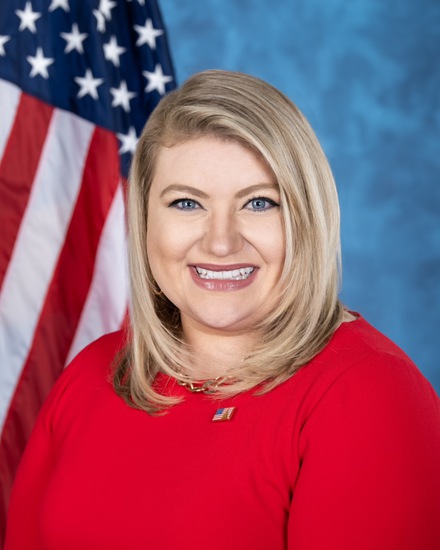
Rep. Kat Cammack
Sponsored bills
Hamas International Financing Prevention Act This bill imposes sanctions targeting Hamas, the Palestinian Islamic Jihad, and any affiliate or successor groups. The President shall periodically report to Congress a list of each foreign person or instrumentality that knowingly assists, provides significant support or services to, or is involved in a significant transaction with a senior member or supporter of any of the targeted groups. The President shall impose two or more sanctions on the named persons. Specifically, the person may be (1) denied credit and services from the Export-Import Bank, (2) barred from purchasing certain controlled defense articles, (3) denied exports of items on the U.S. Munitions List, (4) prevented from receiving exports of certain goods or technology controlled for national security reasons, (5) prohibited from receiving financing of more than $10 million from any U.S. financial institution, or (6) subject to property-blocking restrictions. The President shall periodically report to Congress a list of foreign governments that have repeatedly provided material support for the targeted groups' terrorist activities. The President shall bar these governments from receiving for one year (1) U.S. assistance, or (2) exports of controlled munitions. The Department of Treasury shall instruct U.S. leadership of international financial institutions to oppose the provision of assistance to an identified government for one year. The bill provides for certain exceptions and waivers, such as for transactions that would serve U.S. national interests. The President shall report to Congress and periodically provide briefings on other specified topics related to the targeted groups, such as where these groups secure financing and surveillance equipment.
This resolution calls on the people of the United States to observe Memorial Day to honor the men and women who died in the pursuit of freedom and peace.
This resolution expresses support for Israel's efforts of self-determination and collective security against external forces, recognizes Jerusalem as the legitimate capital city of Israel, and condemns actions by Hamas against the people of Israel.
This resolution condemns the rocket attacks by Hamas against Israel beginning the week of May 9, 2021. It also states that the United States must continue to invest in and support Israel's security and sovereignty.
United States Army Rangers Veterans of World War II Congressional Gold Medal Act This bill provides for the award of a single Congressional Gold Medal to the U.S. Army Rangers Veterans of World War II in recognition of their dedicated service during World War II.
Gigabit Opportunity Act This bill authorizes the designation of qualified gigabit opportunity zones in low-income communities and provides tax incentives for investments in such zones. Governors may submit nominations for a limited number of qualified gigabit opportunity zones in low-income communities to the Department of the Treasury for certification and designation and must give particular consideration to areas that are facing obstacles to economic development due to a lack of geographic broadband coverage or speed; are the focus of mutually reinforcing state, local, or private economic development initiatives; are poised for economic growth that requires access to high speed broadband for commercial purposes; and represent the areas of a state where such service would result in the highest return on investment. For eligible taxpayers who sell certain broadband services, the bill allows (1) deferrals, reductions, or exemptions from taxes on capital gains invested in certain property used to provide broadband services in a zone; and (2) immediate expensing of the costs of the property. The bill also allows tax-exempt private activity bonds to be used for certain broadband projects in the zones. Within one year of enactment of this bill, the Federal Communications Commission must publish a Uniform Model Broadband Deployment Act containing laws for the state regulation of the deployment of broadband services. Qualified zones must either adopt the Act or laws comparable to the Act.
Prohibiting TSP Investment in China Act This bill limits the investments of funds under the Thrift Savings Plan. Specifically, it prohibits funds, including funds that are accessible through a mutual fund window, from investing in any entity that is based in China or any subsidiary of such an entity.
Regulations from the Executive in Need of Scrutiny Act of 20 21 This bill revises provisions relating to congressional review of agency rulemaking. Specifically, the bill establishes a congressional approval process for a major rule. A major rule may only take effect if Congress approves of the rule. A major rule is a rule that results in (1) an annual effect on the economy of $100 million or more; (2) a major increase in costs or prices for consumers, individual industries, government agencies, or geographic regions; or (3) significant adverse effects on competition, employment, investment, productivity, innovation, or the ability of U.S.-based enterprises to compete with foreign-based enterprises. In addition, the bill establishes a congressional disapproval process for a nonmajor rule. A nonmajor rule may only take effect if Congress does not disapprove of the rule.
Lawful Interstate Transportation of Firearms Act This bill revises criminal provisions related to the interstate transportation of firearms and ammunition. An individual may transport a firearm between two places (e.g., states) where it is legal to possess, carry, or transport the firearm. During transport, the firearm must be unloaded and secured or securely stored. Additionally, an individual may transport ammunition, or a detachable magazine or feeding device, between two places where it is legal to possess, carry, or transport the ammunition, magazine, or feeding device. During transport, the ammunition, magazine, or feeding device must not be loaded into a firearm and must be securely stored. The term transport includes staying in temporary lodging; stopping for food, fuel, vehicle maintenance, an emergency, or medical treatment; or any other activity incidental to the transport. The bill prohibits the arrest or detention of an individual for a state or local firearm or ammunition violation unless there is probable cause to believe the individual failed to comply with the provisions of this bill, and there is probable cause to believe the individual committed another crime.