

Maddy summaryHRES 1080 is a symbolic resolution recognizing and celebrating Black History Month 2026, focusing on its theme "A Century of Black History Commemorations." It highlights historical figures and events central to Black history, including Carter G. Woodson’s founding of Negro History Week (the precursor to Black History Month), Juneteenth, and key moments like the 1865 Charleston commemoration. The resolution emphasizes how Black history commemorations counter historical erasure and affirm Black contributions to U.S. history, referencing figures like Mary McLeod Bethune and W.E.B. Du Bois. As a ceremonial resolution, it has no binding effect but aims to raise awareness of Black achievements through official recognition.
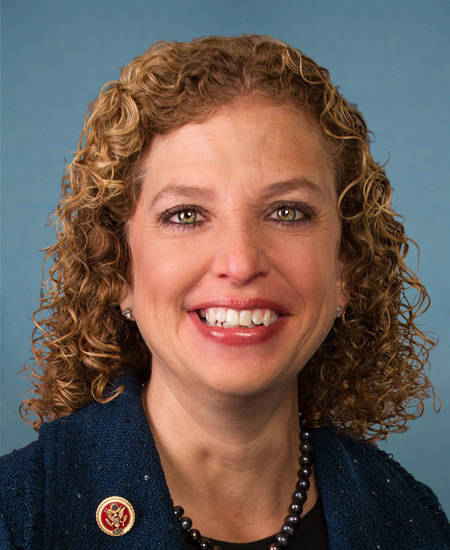
Rep. Debbie Wasserman Schultz
Sponsored bills
Maddy summaryThis bill directs U.S. agencies to support Iranian people's access to uncensored information and hold Iranian officials accountable for human rights abuses. It requires the State Department and FCC to report on technologies (like satellite networks and mesh systems) that could bypass internet restrictions in Iran, and authorizes $2 million annually to develop such tools. The bill also establishes a new "Iran Kleptocracy Initiative" at FinCEN to track corruption, freeze assets of Iranian regime officials and state-owned businesses, and coordinate with international partners. These measures apply to U.S. policy toward Iran but do not alter Iran's domestic laws; they focus on U.S. sanctions, technology development, and anti-corruption efforts targeting the Iranian regime.
Maddy summaryThis bill authorizes a Congressional Gold Medal to honor the Freedom House Ambulance Service, which pioneered the first paramedic-based emergency medical system in the U.S. in the 1960s. It recognizes the service's role in establishing professional pre-hospital care standards, training marginalized residents (including the first women paramedics), and influencing national EMS protocols despite being defunded in 1975. The medal will be presented to the National Museum of African American History and Culture for public display, as specified in the bill. The legislation is purely commemorative, with no new policy or funding changes, focusing on preserving the service's historical significance in medical innovation and civil rights.
Maddy summaryHR 7599 creates a federal framework for extreme risk protection orders (ERPOs), allowing family members or law enforcement to petition courts to temporarily prohibit individuals from possessing firearms when they pose a risk of harm to themselves or others. The bill establishes a process for issuing ex parte orders (up to 14 days) followed by a hearing within 72 hours to determine if a longer-term order (up to 180 days) should be issued, requiring respondents to surrender firearms to U.S. Marshals or designated law enforcement. Courts must consider specific factors like recent threats, violence, substance abuse, or cruelty to animals before issuing orders, with no fees for petitioners. The law requires law enforcement training to address bias, includes annual reporting requirements, and ensures firearms are returned once the order expires and the individual is eligible to own firearms under federal law.
Maddy summary# Summary of the Workplace Discrimination and Harassment Bill This comprehensive legislation aims to strengthen protections against workplace discrimination and harassment, with several key provisions: ## Key Provisions ### 1. Expanded Protections for Workers - Extends protections to independent contractors, interns, and volunteers - Clarifies that domestic service workers in households are covered under interstate commerce - Prohibits nondisclosure and nondisparagement clauses that cover harassment or discrimination ### 2. Nondisclosure Agreement Restrictions - Makes it unlawful for employers to require nondisclosure or nondisparagement clauses covering harassment or discrimination - Establishes specific requirements for valid settlement agreements: - Requires mutual agreement - Limits scope to statements with knowledge of falsity - Requires written advice to consult an attorney - Provides 21-day consideration period and 7-day revocation period - Prohibits enforcement of such clauses against workers reporting discrimination ### 3. Federal Contractor Compliance - Requires federal contractors to disclose labor and civil rights violations from the past 3 years - Establishes Labor Compliance Advisors within executive agencies - Creates procedures for pre-award and post-award compliance monitoring - Mandates annual reporting on contractor compliance ### 4. Nationwide Grant Programs - **National Grants**: For preventing and addressing employment discrimination through education, outreach, and complaint assistance - **Legal Assistance Grants**: For low-income workers facing employment discrimination - **State Advocacy System**: Creates state-level systems to protect workers' rights, with: - Independent lead entities - Authority to investigate discrimination - Annual reporting requirements - Coordination with federal and state agencies ### 5. Enforcement Mechanisms - Empowers the Equal Employment Opportunity Commission to enforce the bill - Establishes clear procedures and remedies for violations - Requires employers to provide specific information about their compliance with labor laws The bill represents a comprehensive approach to workplace rights, focusing on prevention, reporting, and enforcement mechanisms while ensuring workers can seek redress without fear of retaliation or silencing through restrictive agreements.
Maddy summaryHR 7543, the Plastic Pellet Free Waters Act, prohibits plastic pellets and pre-production plastic materials from being discharged into waterways through wastewater, spills, or runoff from specific facilities. It directly affects plastic manufacturing, molding, packaging, and transportation facilities regulated under existing environmental rules. Within 60 days of enactment, the EPA must issue a rule banning these discharges and update all relevant wastewater, stormwater, and performance standards in permits. The law requires all permits and standards for these facilities to reflect the new ban, ensuring plastic pellets cannot enter water systems. This is a concrete regulatory change to prevent plastic pollution at its source.
Maddy summaryThis bill requires most employers to provide workers with earned paid sick leave. Employees would earn 1 hour of paid sick time for every 30 hours worked, up to 56 hours per year, which can be used for their own illness, medical care, caring for family members (including children, parents, spouses, domestic partners, or other family-like relationships), or addressing domestic violence, sexual assault, or stalking situations. The bill prohibits employers from retaliating against workers who use this leave and requires employers to inform employees about their rights. It ensures that workers who leave and return to the same employer within a year can reinstate their unused sick leave. This law would not override more generous state or local paid leave policies.
Maddy summaryHR 7564, "Jaime’s Law," amends federal law to require background checks for ammunition transfers between unlicensed individuals. It mandates that unlicensed people cannot directly buy or receive ammunition; instead, they must go through a licensed dealer who conducts background checks and provides required notices. The bill specifically exempts transfers between family members, law enforcement, temporary safety-related transfers, and certain sporting activities. It does not create a national ammunition registry and leaves state laws intact.
Maddy summaryThis bill establishes the United States-Israel Defense Technology Cooperation Initiative to accelerate joint development and integration of defense technologies between the two countries. It directs the U.S. Secretary of Defense, with Israel’s agreement, to identify Israeli-origin technologies for rapid adoption into U.S. military systems, focusing on areas like counter-drone systems, missile defense (including "Golden Dome for America"), AI, cyber defense, and directed energy. The initiative requires annual congressional reporting on progress, partnerships with industry, and technology transitions, while authorizing $150 million annually for fiscal years 2027-2029. It aims to strengthen bilateral defense innovation and streamline the use of Israeli technologies within U.S. military programs.
Department of Homeland Security Appropriations Act, 2026 This bill provides FY2026 appropriations for various agencies and offices within the Department of Homeland Security (DHS), except for U.S. Immigration and Customs Enforcement (ICE), U.S. Customs and Border Protection (CBP), and management and oversight activities of the Office of the Secretary. Specifically, the bill provides appropriations to DHS for the Federal Protective Service, the Office of Inspector General, the Transportation Security Administration, the U.S. Coast Guard, the U.S. Secret Service, the Cybersecurity and Infrastructure Security Agency, the Federal Emergency Management Agency (FEMA), U.S. Citizenship and Immigration Services, the Federal Law Enforcement Training Centers, and the Science and Technology Directorate. The bill does not provide appropriations for some agencies and activities that have been funded in prior DHS appropriations acts, including ICE, CBP, and management and oversight activities of the Office of the Secretary.