Maddy summaryHR 3447, the Chip Security Act, requires manufacturers to equip specific advanced integrated circuits (classified under export control numbers like 3A090) with security mechanisms before exporting them. These mechanisms must verify location and prevent unauthorized access, diversion, or tampering. The law mandates this for covered chips within 180 days of enactment, with a follow-up assessment within one year to develop additional security requirements. It directly affects U.S. chip exporters and importers of these high-tech products, aiming to strengthen export control compliance and national security.
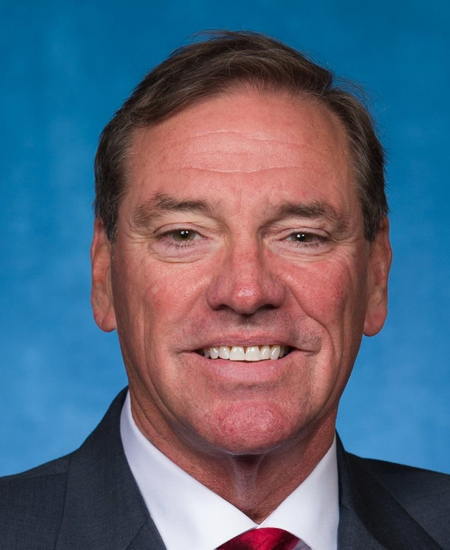
Rep. Neal P. Dunn
Sponsored bills
Maddy summaryThe FAIC Act requires Medicare to pay separately for certain high-cost cancer treatments starting in 2026, rather than bundling them into general outpatient service payments. This change applies to FDA-approved cancer drugs and biologics that do not receive special transitional payments and cost at least $350 per day. The separate payment amount will be based on the drug's average sales price or, if unavailable, its wholesale acquisition cost or mean unit cost. The law includes a budget neutrality provision to ensure total Medicare spending remains unchanged by adjusting other payments as needed.
Enhanced Iran Sanctions Act of 2025 This bill imposes sanctions on certain foreign persons (individuals and entities) that are involved in Iran's petroleum sector as well as certain associated persons. The bill also requires or authorizes actions to facilitate the enforcement of sanctions on Iran. Specifically, the bill requires the President to impose visa- and property-blocking sanctions on any foreign person that, after the bill's enactment, knowingly engages in any transaction related to the processing, export, or sale of oil, condensates, gas, liquefied natural gas, or other petrochemical products in whole or in part from Iran. The President must also impose sanctions on certain foreign persons associated with a sanctioned individual or entity. For example, the President must sanction the subsidiaries and corporate officers of a sanctioned business. The bill provides certain exceptions to these sanctions, including specifying that sanctions do not apply to the importation of goods or to conducting or facilitating transactions for humanitarian assistance. The Department of State must establish an interagency working group that shall seek to establish a multilateral contact group to coordinate international efforts to enforce sanctions on Iran. The bill expands the State Department rewards program to authorize a reward payment to any individual who furnishes information leading to the identification of a person (1) subject to sanctions under this bill, or (2) that has attempted or is attempting to evade sanctions under this bill.

Maddy summaryThis bill requires all motor carriers (including subcontractors and owner-operators) transporting Department of Defense freight to certify they are not owned/controlled by, or have significant business ties to, entities on the U.S. list of Chinese military companies (per Section 1260H of the 2021 Defense Authorization Act). It also creates a mandatory "Secure Defense Freight Carrier Registry" managed by the FMCSA and DoD, which carriers must join to bid on DoD contracts. To qualify, carriers must pass vetting for ties to Chinese military entities or other foreign adversaries, meet driver security standards, and undergo biennial reviews. The registry becomes mandatory one year after enactment, with false certifications risking contract suspension or fines.
Maddy summaryThis bill, titled the Safeguarding Women from Chemical Abortion Act, aims to revoke federal approval for the drug mifepristone (also known as RU-486) for use in terminating pregnancies. If enacted, the Food and Drug Administration's approval for mifepristone for this indication would be withdrawn within 14 days, making its introduction into interstate commerce for pregnancy termination a violation of federal law. Additionally, the bill establishes a new federal right for individuals to sue manufacturers of mifepristone if they experience bodily injury or harm to mental health attributed to its use for pregnancy termination. This legislation directly affects drug manufacturers, distributors, healthcare providers, and individuals seeking or having used medication abortion.
Maddy summaryHR 7871 (MVP Act) updates Medicaid drug rebate rules to allow manufacturers to report multiple "best price points" for drugs sold under outcome-based payment arrangements, requiring these arrangements to be offered to all states. It clarifies how average manufacturer price is calculated for such drugs and exempts certain outcome-linked payments from anti-kickback laws. The bill also mandates a GAO study to assess whether these arrangements improve patient access, lower costs, and reduce disparities in drug coverage. This affects Medicaid programs nationwide, drug manufacturers, and patients receiving covered outpatient drugs under Medicaid.
Maddy summaryThis bill establishes the Red Star Service Banner as an officially recognized symbol to honor U.S. service members and veterans who died by suicide, as well as first responders who died by suicide. The banner features a white field with a blue border and a single red star, and it may be displayed at private residences, workplaces, public buildings, community spaces, and other appropriate locations to recognize the sacrifice of those who died and support their families. The legislation clarifies that displaying the banner does not create new eligibility for benefits, requires VA approval for individual display, or establish any legal status beyond recognition. It also allows the Secretary of Veterans Affairs to promote awareness of the banner in coordination with the Department of Defense without requiring additional funding.
Maddy summaryThis bill clarifies that temporary medical staff (locum tenens physicians and advanced practitioners) working in rural or underserved areas are treated as independent contractors - not employees - by federal programs for key purposes. It specifically affects how these temporary workers are classified under the Fair Labor Standards Act, Civil Rights Act, Medicare, Medicaid, and other federal health programs, ensuring they aren’t deemed employees of the healthcare facility they temporarily serve. The bill requires a written agreement between the temporary staff and the facility, with an exception for cases where an explicit employer-employee contract is signed. It explicitly does not change tax treatment, state licensing rules, or eligibility for Medicare/Medicaid benefits.
Maddy summaryHR 7563 prohibits imports of rare earth magnets from "covered nations" (primarily China, as defined by existing law) into the U.S., except for limited cases where domestic supply is unavailable or national security requires it. It also restricts exporting electronic waste containing rare earth magnets to encourage domestic recycling and allows the Commerce Secretary to provide financial support (like price guarantees) to U.S. or partner-country manufacturers building rare earth magnet production facilities. The law applies to products containing these magnets, directly affecting U.S. manufacturers, importers, and recyclers of electronics and defense equipment. A report on implementation must be submitted to Congress within three years.
Maddy summaryThis bill amends the Department of Energy Organization Act to define "critical energy resources" as those essential to U.S. energy systems with vulnerable supply chains. It directs the Energy Secretary to assess supply chain risks, diversify sources, boost domestic production of these resources, develop alternatives, and improve recycling. The law specifically requires evaluating reliance on imports, adversarial nation tactics (like price manipulation), and impacts on energy technology development. The Department of Energy and energy sector stakeholders will implement these measures, directly affecting how the federal government manages energy security. The bill focuses on concrete policy actions, not outcomes or political advocacy.