

Give Kids a Chance Act of 2025 This bill expands the Food and Drug Administration’s (FDA’s) authority with respect to research on rare pediatric diseases, including by permitting the FDA to take enforcement action against drug sponsors that fail to satisfy pediatric study requirements and by reauthorizing programs that support pediatric research. Specifically, the bill modifies requirements relating to molecularly targeted pediatric cancer investigations to permit research on new drugs in combination with active ingredients that have already been approved, provided certain conditions are met; permits the FDA to take enforcement action against drug sponsors that fail to comply with pediatric study requirements, if such sponsors demonstrated a lack of due diligence in satisfying the requirement; renews the FDA’s authority to award priority review vouchers to sponsors of new products intended to treat rare pediatric diseases through September 30, 2029; and reauthorizes through FY2027 certain funding for the National Institutes of Health to support priority pediatric research. The bill also provides statutory authority for the FDA’s interpretation of the orphan drug exclusivity period. The bill specifies, consistent with FDA regulations, that the seven-year market exclusivity period for drugs for rare diseases or conditions (i.e., orphan drugs) prohibits the approval of the same drug for the same approved use or indication with respect to the disease or condition. (In Catalyst Pharmaceuticals, Inc. v. Becerra , a court rejected the FDA’s interpretation and held that orphan drug exclusivity extends to all uses or indications for the disease or condition.)
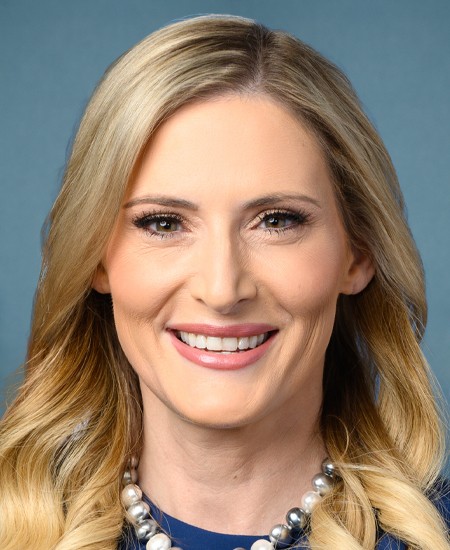
Rep. Laurel M. Lee
Sponsored bills
Maddy summaryThe ADOPT Act of 2025 creates federal offenses to prevent exploitation in private domestic interstate adoptions. It prohibits unlicensed groups from acting as intermediaries between birth parents and adoptive parents, restricts certain adoption advertising, and caps payments to birth parents at $2,500 before consulting a licensed agency or attorney. The bill directly affects unlicensed adoption facilitators, birth parents, and prospective adoptive parents by requiring all adoption services to occur through licensed providers or exempt entities like attorneys and nonprofit agencies. Violations carry fines up to $100,000 for organizations or $50,000 plus 5 years in prison for individuals, with exemptions for public agencies, licensed child-placing organizations, and attorneys.
Maddy summaryThis bill would require Medicare to cover early detection screening tests for Alzheimer's disease and related dementias starting January 1, 2028. It defines eligible tests as FDA-cleared genomic blood tests, blood product analyses, or equivalent medical imaging methods (like protein expression or whole genome sequencing) that detect pre-symptomatic or early-stage conditions. Medicare beneficiaries would receive this coverage without cost-sharing for these specific screenings. The bill amends Medicare coverage rules to explicitly include these tests under Section 1861(nnn) of the Social Security Act.
Maddy summaryThe VISIT USA Act directs the Treasury to transfer $160 million from unused tourism promotion funds to Brand USA (the Corporation for Travel Promotion) within 30 days of the bill's enactment. This funding is exempt from standard transfer limits and requires Brand USA to follow existing matching rules for these funds. The bill directly affects Brand USA, providing it with dedicated resources to support international tourism marketing and promotion efforts. It makes a concrete policy change by reallocating specific unobligated funds to boost the U.S. tourism marketing program.
Maddy summaryThe NEST Act (HR 6096) requires the federal government to provide newborn supply kits to new mothers, focusing on low-income families and communities with high maternal health risks. These kits include essential items like diapers, postpartum pads, breastfeeding supplies, blood pressure monitors, and health information resources. Funds for the kits come from a $5 million annual set-aside in Social Security Act funding, distributed through grants to community health centers, tribal organizations, and hospitals. Priority is given to rural areas, maternity care deserts, and mothers earning below 185% of the poverty line. The program mandates annual reporting on distribution demographics and health outcomes to Congress.
Maddy summaryHR 2659 creates a federal task force to address cyber threats from China's state-sponsored actors, specifically targeting groups like Volt Typhoon identified in a 2024 CISA advisory. The task force, led by CISA and FBI directors, coordinates federal agencies responsible for critical infrastructure security to detect and respond to cyberattacks. It must produce annual reports - including classified assessments of infrastructure risks and recommendations - to Congress within 540 days of formation and for five years after. These reports will guide federal efforts to protect critical infrastructure (like energy grids and transportation systems) and inform owners/operators through a public awareness campaign.
Maddy summaryHR 6068, the PROTECT Florida Act, extends the existing moratorium on oil and gas leasing and exploration in the Gulf of Mexico through 2032 and adds a new, permanent ban on these activities off Florida’s Atlantic coast. It directly affects federal agencies (like the Department of the Interior), which cannot issue permits for oil/gas exploration, seismic testing, or related activities in two specific zones: the Straits of Florida and the South Atlantic Planning Area south of Florida’s coastline. The bill blocks all leasing, preleasing, and exploration permits in these areas from enactment until June 30, 2032. This policy change prevents new offshore drilling and seismic surveys in Florida’s coastal waters, aiming to protect marine environments and coastal communities.
Maddy summaryThis bill requires all new passenger vehicles manufactured for sale in the U.S. to include AM radio as standard equipment (not an optional add-on) by 2027-2028, depending on manufacturer size. It mandates that AM radio receivers must be easily accessible to drivers and allows compliance through digital AM broadcast technology. During a transition period, manufacturers must clearly label vehicles without AM radio but cannot charge extra for this feature. The bill also mandates a GAO study on AM radio's role in emergency alerts and includes a 10-year sunset provision for the rule. It preempts state laws regarding AM radio access in vehicles.
Maddy summaryThis bill ensures that critical firearm-related government operations continue during federal shutdowns. It designates background checks (via the FBI's National Instant Criminal Background Check System), Bureau of Alcohol, Tobacco, Firearms and Explosives enforcement, and firearm export licensing (handled by Commerce and State Departments) as essential services that must remain operational. These functions would be treated as "excepted" under federal law, meaning their employees would continue working even if other government services halt. The bill affects how background checks and firearm export licenses are processed during shutdowns but does not change gun ownership laws or eligibility.
Maddy summaryThe Safer Supervision Act of 2025 reforms federal supervised release by requiring courts to assess each defendant’s individual needs before imposing supervision, rather than automatically applying it. It establishes clear pathways for early termination after defendants serve 50% of their term (or 66.6% for certain drug/firearm offenses), provided they demonstrate good conduct, comply with conditions, and pose no public safety risk. The bill also mandates courts to document their supervision decisions and expands access to legal counsel for defendants seeking early release. These changes aim to reduce caseloads for probation officers, encourage rehabilitation, and improve public safety by tailoring supervision to actual risk.