

Preventing Future Pandemics Act of 2021 This bill establishes measures to address global public health risks posed by wildlife markets, which are commercial markets that sell or slaughter wildlife for human consumption as food or medicine in communities where alternative nutritional or protein sources are available. Specifically, the bill prohibits importing, exporting, purchasing, or selling live wild animals in the United States for human consumption as food or medicine. The Department of the Interior must hire, train, and deploy at least 50 new U.S. Fish and Wildlife Service law enforcement attachés around the world, and the U.S. Agency for International Development must increase specified activities to address the threats and causes of zoonotic (animal-to-human transmission) disease outbreaks. Additionally, the United States must work with other United Nations member states to urge a global ban on commercial wildlife markets and enforcement of laws to end wildlife trafficking. Further, the President may impose sanctions against a foreign country or foreign nationals that the Department of State has determined are taking certain actions that enable or facilitate commercial wildlife markets. Among other reports required by the bill, the National Academies of Sciences, Engineering, and Medicine must conduct a study and submit a report that includes an evaluation of (1) the impact that consumption of terrestrial wildlife as food or medicine has on the transmission of novel viral and other pathogens, (2) the role of consuming terrestrial wildlife as food or medicine in the transmission of microbes from animals to humans, and (3) the conditions at live wildlife markets that lead to this transmission.
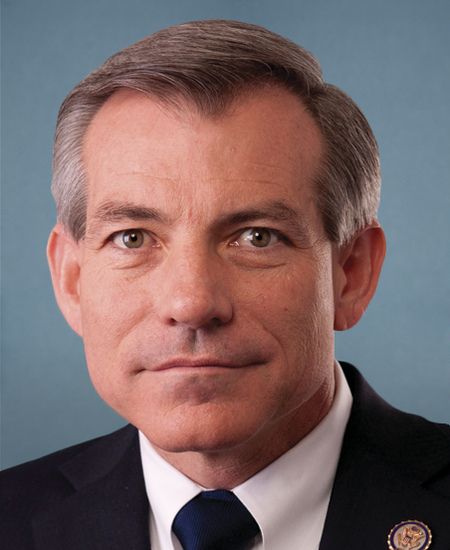
Rep. David Schweikert
Sponsored bills
This concurrent resolution calls for the removal of retired Lieutenant General Russel Honoré, U.S. Army, from his interim role investigating the events at the U.S. Capitol on January 6, 2021. Further, it urges the Speaker of the House of Representatives to appoint a nonpartisan, bicameral panel of former Members of Congress, law enforcement officials, and military servicemen to investigate those events.
Pandemic Relief for Working Seniors Act of 2021 This bill increases the amount of income that individuals who are younger than full retirement age may earn in taxable years 2020 and 2021 without reductions to their Old-Age, Survivors, and Disability Insurance (OASDI) benefits. Under current law, these individuals are subject to the retirement earnings test, which reduces their OASDI benefits if their earnings exceed an annual limit. This limit is set at $18,240 for 2020 and $18,960 for 2021 for most individuals. However, the limit for individuals who reach full retirement age in 2020 or 2021 is $48,600 or $50,520, respectively. This bill increases the applicable income limits to equal the amount of the contribution and benefit base. The contribution and benefit base serves as a cap on both the amount of earnings subject to the Social Security payroll tax and the amount of earnings used to calculate benefits. It is set at $137,700 for 2020 and $142,800 for 2021.
Concealed Carry Reciprocity Act This bill establishes a federal statutory framework to regulate the carry or possession of concealed firearms across state lines. Specifically, an individual who is eligible to carry a concealed firearm in one state may carry or possess a concealed handgun (other than a machine gun or destructive device) in another state that allows its residents to carry concealed firearms. It sets forth requirements for the lawful concealed carry across state lines. The bill preempts most state and local laws related to concealed carry and establishes a private right of action for a person adversely affected by interference with a concealed-carry right established by this bill.
This resolution supports the designation of National Tribal Colleges and Universities Week.
Enhancing Entrepreneurship for the 21st Century Act This bill requires the Department of Commerce to conduct an assessment and analysis of the reasons underlying the decreasing rate of formation of new businesses (i.e., startups) in the United States.
Patient Access to Higher Quality Health Care Act of 2021 This bill repeals provisions under the Stark law (i.e., the Physician Self-Referral Law) that limit, for purposes of Medicare participation, self-referrals by newly constructed or expanded physician-owned hospitals.
Permanent Tax Relief for Working Families Act This bill makes permanent the modifications to the child tax credit that were included in P.L. 115-97 (commonly known as the Tax Cuts and Jobs Act). (The provisions increased the amounts of the credit and created a nonrefundable credit for a taxpayer's dependents who are not qualifying children. Under current law, the provisions are scheduled to expire at the end of 2025.)
New Markets Tax Credit Extension Act of 2021 This bill makes the new markets tax credit permanent. It also modifies the credit to (1) provide for an inflation adjustment to the limitation amount for the credit after 2021, and (2) allow an offset against the alternative minimum tax for the credit (determined with respect to qualified equity investments initially made after 2020).
Keystone XL Pipeline Construction and Jobs Preservation Act This bill authorizes the TransCanada Keystone Pipeline to construct, connect, operate, and maintain the pipeline facilities in Phillips County, Montana, for the import of oil from Canada to the United States.