

Puppies Assisting Wounded Servicemembers for Veterans Therapy Act or the PAWS for Veterans Therapy Act This bill implements a program and a policy related to service dog therapy for veterans. Specifically, the bill requires the Department of Veterans Affairs (VA) to implement a five-year pilot program to provide canine training to eligible veterans diagnosed with post-traumatic stress disorder as an element of a complementary and integrative health program. Eligible veterans are those who are enrolled in the VA health care system and have been recommended for participation by a qualified mental health care provider or clinical team. The VA must seek to enter agreements containing specified elements with accredited nongovernmental entities that have demonstrated ability to provide canine training. Veterans who participate in the program are authorized to adopt the dog they assisted in training if their health provider determines it is in the best interest of the veteran. The VA must establish processes to document and track the progress of participating veterans with respect to health benefits and improvements. The Government Accountability Office must brief Congress and submit a report on the program. The bill also authorizes the VA to provide service dogs to veterans with mental illnesses, regardless of whether they have a mobility impairment.
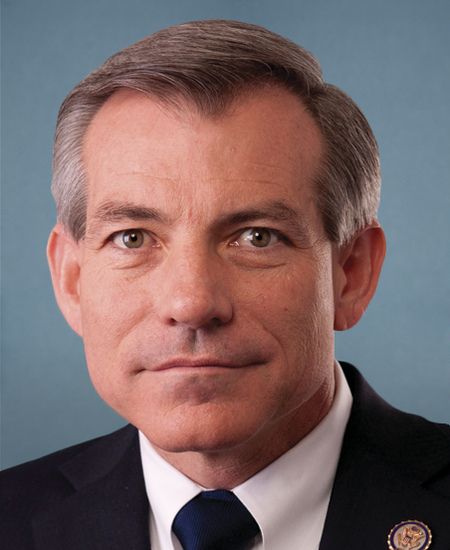
Rep. David Schweikert
Sponsored bills
This resolution condemns the President's failure to heed military and intelligence advisors about the speed and nature of the Taliban offense in Afghanistan and urges the President to commit to maintaining the evacuation operation as long as necessary to evacuate any U.S. citizen, lawful permanent resident, or Afghan partner who requests evacuation assistance .
Fair Sugar Policy Act of 20 21 This bill makes several modifications to the Department of Agriculture's sugar program. Among other modifications, the bill decreases the rate for price support loans, repeals the marketing allotments, revises the administration of import quotas, and repeals the Feedstock Flexibility Program.
Resilient Federal Forests Act This bill modifies and sets forth provisions regarding forest management activities on National Forest System, public, and tribal lands. The bill provides for, among other things the Departments of Agriculture (USDA) and Interior to conduct fireshed management projects in fireshed management areas, certain categorical exclusions for various purposes, the balancing of the short- and long-term effects of forest management activities while considering injunctive relief, USDA and Interior to establish their own discretionary arbitration pilot programs as an alternative dispute resolution process for forest management activities, increasing the maximum term for a stewardship end result contract to 20 years, demonstration projects to support the development and commercialization of biochar on Indian forest lands or rangelands and in nearby communities by providing reliable supplies of feedstock from federal lands, the decommissioning of certain Forest Service Roads within designated high fire-prone areas, repealing of the Eastside Screens requirements on National Forest System lands, making the Northwest Forest Plan Survey and Manage Mitigation Measure Standards and Guidelines inapplicable to any National Forest System lands or public lands, development of a protection plan for giant sequoia trees on National Forest System lands and public lands, and permanent rights of access to the Oregon and California Railroad grant lands and the Coos Bay Wagon Road grant lands for private landowners issued reciprocal road rights-of-way.
Refund to Rainy Day Savings Act This bill directs the Internal Revenue Service (IRS) to establish and implement the Refund to Rainy Day Savings program (i.e., a program to provide for unexpected expenses) to allow taxpayers to deposit 20% of their income tax refunds into the savings program. The bill sets forth rules for investments in and disbursement from the savings program. The bill also reauthorizes the Assets for Independence Act for FY2022-FY2026. The IRS may make grants to qualified entities to conduct AFI innovation projects. The bill directs the Department of Health and Human Services to establish a three-year matched savings account pilot program to encourage savings by participants in the savings program.
Revamping Appropriate Incentives for Solar Energy for the Roof Act or the RAISE the Roof Act This bill expands the residential energy efficient property and energy tax credits to include expenditures in new and existing solar roofs.
The Pioneering Antimicrobial Subscriptions To End Up surging Resistance Act of 2021 or the PASTEUR Act of 2021 This bill authorizes the Department of Health and Human Services (HHS) to enter into subscription contracts for critical-need antimicrobial drugs, provides $11 billion in appropriations for activities under the bill, and contains other related provisions. A manufacturer of a Food and Drug Administration-approved antimicrobial drug may apply to HHS to have the drug designated as a critical-need antimicrobial, and HHS may enter into a subscription contract for such a critical-need antimicrobial. The bill imposes certain requirements related to such contracts, including a mechanism to lower payments under the contract in certain instances to limit the manufacturer's revenue from the drug. Furthermore, HHS and the Centers for Disease Control and Prevention (CDC) shall award grants to support efforts to encourage the appropriate use of antimicrobial drugs and efforts to combat antimicrobial resistance. The CDC shall also track and assess data relating to antibacterial resistance and human antibiotic use and make such data publicly available. HHS shall also establish a Committee on Critical Need Antimicrobials. The committee shall develop a list of prioritized infections for which new antimicrobial drug development is needed, among other duties. Within six years of the bill's enactment, the Government Accountability Office shall report to Congress a study on the bill's effectiveness in developing priority antimicrobial drugs.
Don't Weaponize the IRS Act This bill codifies regulations promulgated by the Trump Administration exempting certain tax-exempt organizations from specified reporting requirements. Specifically the bill increases from $5,000 to $50,000 the gross receipts threshold used to determine the eligibility of tax-exempt organizations for the exemption from certain disclosure and reporting requirements; expands the definition of organization to include tax-exempt charitable organizations and organizations with no significant activities relating to lobbying, political activity, and the operation of a trade or business; exempts from disclosure the names and addresses of contributors to an organization in its annual informational return; and extends exemptions from reporting requirements to political action committees (i.e., 527 organizations).
Alexander Lofgren Veterans in Parks (VIP) Act This bill makes the America the Beautiful-National Parks and Federal Recreational Lands Pass available, without charge, to members of the Armed Forces, veterans, and Gold Star Families. The pass covers the entrance fee and standard amenity recreation fee for all federal recreational lands and waters.
This resolution denounces socialism and opposes the implementation of socialist policies in the United States.