

Broadband Permitting Modernization Act This bill modifies, and requires reports about, permitting requirements for broadband activities on federal lands. Specifically, the Department of the Interior and the Department of Agriculture (USDA) must report on communication use authorizations (i.e., authorizations to modify or locate communications facilities on public land administered by Interior or National Forest System land). Among other topics, the report must assess barriers to reviewing the authorizations and describe the process for prioritizing reviews. Interior and USDA must also each establish an online portal to manage the Form 299 (used to apply for rights to install, modify, or maintain a communications facility on federal real property) approval process. The National Telecommunications and Information Administration must (1) report to Congress every 60 days on the status of the portals until they are established, and (2) publish links to each established portal on its website. The bill also authorizes the delegation of federal environmental compliance for certain broadband projects to states and Indian tribes. Interior and USDA must establish a voluntary program whereby states or Indian tribes may conduct (subject to specified terms) environmental reviews for broadband projects within an operational right-of-way (i.e., all real property interests acquired for the construction or operation of a project) on land managed by Interior, National Forest System land, or Indian land. USDA and Interior shall also establish broadband permit streamlining teams to coordinate and expedite permitting decisions for broadband projects.
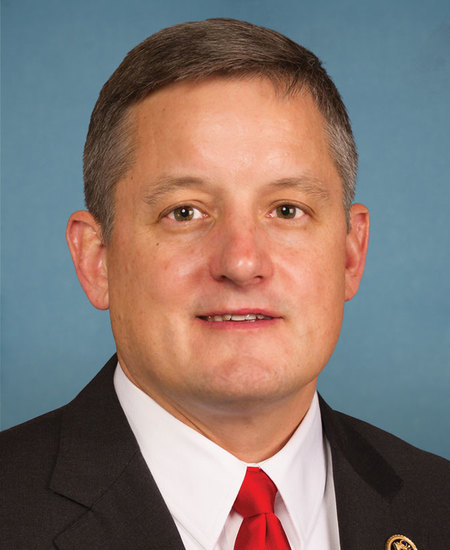
Rep. Bruce Westerman
Sponsored bills
Preserving Rules Ordered for The Entities Covered Through 340B Act of 2021 or the PROTECT 340B Act of 2021 This bill prohibits pharmacy benefit managers (PBMs) and health insurance plans from discriminating against health providers participating in the 340B drug pricing program, including pharmacies contracted with such providers to dispense 340B drugs. The 340B program allows certain providers to receive covered outpatient drugs at reduced prices from manufacturers. Specifically, PBMs and insurance plans may not reimburse 340B participants at a lower rate than other entities not participating in the program; impose differing terms (such as fees, charge-backs, or audits) on 340B participants; interfere with an individual's choice to receive drugs from a 340B participant; require 340B participants to identify which drugs fall within the program; or refuse to contract with a 340B participant on the basis that they utilize the program. Violations of this bill are subject to a civil penalty of not more than $5,000 per violation per day. These prohibitions also apply to prescription drug (Part D) sponsors under Medicare. The bill also provides for a process to prevent duplicate 340B drug discounts to states under Medicaid.
Public Land Renewable Energy Development Act of 2021 This bill sets forth provisions regarding development of geothermal, solar, or wind energy on public lands. The Department of the Interior shall establish priority areas on its land for geothermal, solar, and wind energy projects, consistent with the principles of multiple use and the renewable energy permitting goal. Among applications for a given renewable energy source, proposed projects located in priority areas for that renewable energy source shall be given the highest priority for incentivizing deployment, and be offered the opportunity to participate in any regional mitigation plan developed for the relevant priority areas. The bill provides for the disposition of revenues from the development of wind or solar energy. The bill establishes the Renewable Energy Resource Conservation Fund to make funds available to federal, state, and tribal agencies for distribution in regions in which renewable energy projects are located on federal land for (1) restoring and protecting natural water bodies and fish and wildlife habitat and corridors, and (2) preserving and improving recreational access to federal land and water in an affected region.
This resolution honors the suppliers of the National Aeronautics and Space Administration (NASA) for the work they are doing on the Artemis missions.
Disaster Reforestation Act This bill sets forth a special rule for the tax deduction for casualty losses of uncut timber (including pre-merchantable timber). It provides that in losses of any uncut timber from fire, storm, insects, invasive species, drought, or other casualty, or from theft, the basis for determining the amount of the deduction for such loss shall not be less than the excess of the value of such timber determined immediately before such loss was sustained, over the salvage value of such timber. To be eligible for the casualty loss deduction, the uncut timber subject to the loss must be reforested not later than the close of the five-year period beginning on the date of the loss.
Increasing Health Coverage through HRAs Act of 2021 This bill provides statutory authority for the Department of the Treasury, the Department of Labor, and the Department of Health and Human Services rule dated June 20, 2019, which provides for the integration of health reimbursement arrangements and other account-based health plans with individual health insurance coverage or Medicare.
Keeping Our Promises Act This bill expands the list of diseases that are provided a presumption of service-connection for veterans who served in the Republic of Vietnam between January 9, 1962, and May 7, 1975. The bill extends through September 30, 2030, the requirement for the Department of Veterans Affairs (VA) to make determinations and submissions related to the connection between herbicide exposure and occurrence of disease. Additionally, the VA is prohibited from taking the costs of compensation into account when determining the association between exposure to an herbicide agent and occurrence of a disease. The bill requires the VA to determine within 120 days (currently 60) whether a presumption of service-connection is warranted for diseases covered by a National Academy of Sciences report.
This bill requires the Department of Veterans Affairs to ensure that, if it creates a presumption of service-connection between the occurrence of a disease and exposure to an herbicide agent while serving in the Armed Forces between January 9, 1962, and June 30, 1976, at a military base in Thailand, such presumption must also apply to exposure at any military base in Thailand, regardless of where on the base the veteran was located or what military job specialty the veteran performed.
National Strategic and Critical Minerals Production Act of 2021 This bill sets forth environmental review requirements for the mine permitting process and limits the review to 30 months. Under the bill, projects that provide minerals vital to job creation, energy infrastructure, coastal resilience and restoration, economic competitiveness, and national security must be considered to be infrastructure projects as described in Executive Order 13807, titled Establishing Discipline and Accountability in the Environmental Review and Permitting Process for Infrastructure Projects and dated August 15, 2017.This order directed agencies to ensure that the environmental review and permitting process for infrastructure is coordinated, predictable, and transparent. The Bureau of Land Management (BLM)or the Forest Service must appoint a project lead for the mine permitting process to coordinate with other agencies to ensure that the agencies minimize delays, set and adhere to timelines for completion of the permitting process, set clear permitting goals, and track progress against goals. The project lead must also determine the amount of financial assurance required for reclamation of a mineral exploration or mining site. The bill considers the requirements of the National Environmental Policy Act of 1969to be satisfied if the BLM or the Forest Service determines that the agency issuing the permit will address specified factors, such as environmental impacts of the permit or alternatives to issuance of the permit. Additionally, the bill exempts projects on National Forest System land from regulations that prohibit timber tree cutting and road construction in areas without roads.
Manufacturing API, Drugs, and Excipients in America Act or the MADE in America Act This bill establishes a tax credit for taxpayers engaged in medical production activities in certain areas and contains other provisions related to pharmaceuticals. An eligible taxpayer may claim a tax credit equal to 25% of qualified expenditures related to the production of pharmaceuticals, medical devices, or other related items in a designated qualified opportunity zone with a poverty rate higher than 30%. The bill provides for increases to this tax credit in certain situations, such as if a substantial portion of the employees reside in areas with certain poverty levels. In addition, the Food and Drug Administration (FDA) must continue programs to facilitate the development and review of new drug or biological products that are manufactured using certain advanced manufacturing technologies. The bill imposes various requirements on these programs, including deadlines for evaluating such a technology. Furthermore, the Department of Health and Human Services must ensure timely and effective internal coordination and alignment between FDA field investigators and the staff of the Center for Drug Evaluation and Research's Office of Compliance and Drug Shortage Program regarding reports and feedback related to facility inspections.