

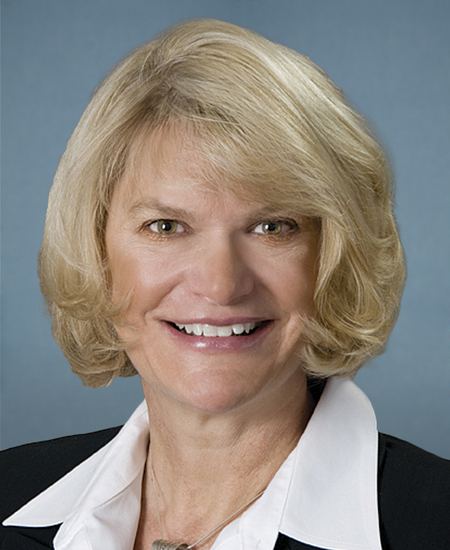
Combating Human Rights Abuses Act of 2022 This bill requires the Department of Commerce to offer guidance to U.S. businesses, including those considering transactions with entities subject to the influence of countries where significant human rights abuses have occurred, about issues such as (1) the human rights abuses perpetuated by China's government, (2) risk factors that may be used to identify entities subject to the influence of governments implicated in human rights abuses, and (3) ways to avoid doing business with such entities. Commerce must also provide training related to human rights issues to Commerce employees who provide counseling services to businesses.
Sponsored bills
Children and Teens' Online Privacy Protection Act This bill extends to minors (ages 12–16) privacy protections previously applicable only to children (ages 0–12) and otherwise establishes greater online privacy protections for children and minors. Specifically, the bill prohibits an operator of a website, online service, online application, or mobile application directed to, or used or reasonably likely to be used by, a child or minor from collecting the user's personal information without providing notice and obtaining consent, providing a parent or minor with certain information upon request, conditioning participation by a user on the provision of personal information, establishing and maintaining reasonable procedures to protect the personal information collected from users. The bill also prohibits targeted marketing directed to a child or directed to a minor without the minor's consent.
Mandatory Materiality Requirement Act of 2022 This bill limits additional disclosure requirements applicable to issuers of securities. Specifically, the Securities and Exchange Commission may only require an additional disclosure if the commission determines that there is a substantial likelihood that a reasonable investor of the issuer would consider the information important with respect to an investment decision.
Improving Digital Identity Act of 2022 This bill establishes the Improving Digital Identity Task Force to establish a government-wide effort to develop secure methods for governmental agencies to protect the privacy and security of individuals and support reliable, interoperable digital identity verification in the public and private sectors. The Government Accountability Office shall submit to Congress a report on the estimated potential savings, due to the increased adoption and widespread use of digital identification, of (1) the federal government from averted fraud, and (2) the U.S. economy and consumers from averted identity theft.
National R & D Strategy for Distributed Ledger Technology Act of 2022 This bill provides for a national strategy and research and development regarding technologies related to distributed ledgers (e.g., blockchain or Bitcoin). A distributed ledger is a ledger that is shared across and synchronized between a set of distributed nodes (i.e., devices or processes) in a network that store a complete or partial replica of the ledger and meet other requirements. The Office of Science and Technology Policy must develop a national strategy for the research and development of distributed ledger technologies and their applications, including applications of public and permissionless distributed ledgers. The office must coordinate with the National Science and Technology Council and other relevant federal agencies, as appropriate, on the strategy. The national strategy shall include plans to support public and private sector investment and partnerships in research and technology development for societally beneficial applications of distributed ledger technologies, and an identification of additional resources, administrative action, or legislative action recommended to assist with the implementation of such strategy. The National Science Foundation shall make competitive awards to institutions of higher education or nonprofit organizations (or their consortia) to support research, including interdisciplinary research, on distributed ledger technologies and their applications. The National Institute of Standards and Technology may carry out an applied research project to study and demonstrate the potential benefits and unique capabilities of distributed ledger technologies.
This resolution designates November 13, 2022, as National Warrior Call Day to encourage individuals to talk with members of the Armed Forces and veterans to connect them with support.
Tribal Trust Land Homeownership Act of 2021 This bill sets forth requirements for the processing of a proposed residential leasehold mortgage, business leasehold mortgage, land mortgage, or right-of-way document by the Bureau of Indian Affairs. The bureau must notify lenders upon receipt of such documentation, perform a preliminary review of such documents not later than 10 days after receipt, and approve or disapprove of such documents within 20 or 30 days, depending on the type of application. Additionally, the bill sets forth requirements for the bureau regarding (1) response times for the completion of certified title status reports, (2) notification of delays in processing, and (3) the form of notices and delivery of certain reports. The bill also provides relevant federal agencies and Indian tribes with read-only access to the Trust Asset and Accounting Management System maintained by the bureau. The Government Accountability Office must report on digitizing documents for the purpose of streamlining and expediting the completion of mortgage packages for residential mortgages on Indian land. Finally, the bill establishes within the bureau's Division of Real Estate Services the position of Realty Ombudsman.
Truck Parking Safety Improvement Act This bill directs the Department of Transportation (DOT) to provide competitive grants to Indian tribes, states, metropolitan planning organizations, and local governments for projects that provide parking for commercial motor vehicles and improve the safety of commercial motor vehicle drivers on federal-aid highways or on a facility with reasonable access to such a highway or a freight facility. In providing grants, DOT must prioritize applicants that demonstrate a shortage of commercial motor vehicle parking capacity in the corridor in which the project is located; consultation with motor carriers, commercial motor vehicle drivers, public safety officials, and private providers of commercial motor vehicle parking; the project will likely increase the availability or utilization of commercial motor vehicle parking, facilitate the efficient movement of freight, and improve highway safety, traffic congestion, and air quality; and the ability to provide for the maintenance and operation of the facility.
Colorado River Basin Conservation Act This bill reauthorizes the Department of the Interior to fund or participate in pilot projects to increase Colorado River System water in Lake Mead and the Colorado River Storage Project reservoirs through FY2026. Interior administers these pilot projects to address the effects of drought conditions on the Colorado River Basin, which includes the Upper Basin states (Colorado, New Mexico, Utah, and Wyoming) and Lower Basin states (Arizona, California, and Nevada). The bill also requires Interior to submit an updated report to Congress by the end of FY2027 on the effectiveness of the pilot projects and a recommendation on whether to continue the program.
No Emergency Crude Oil for Foreign Adversaries Act This bill prohibits exports of crude oil from the Strategic Petroleum Reserve (SPR) to China, Russia, North Korea, and Iran. Specifically, the bill directs the Department of Energy (DOE) to require as a condition of any sale of crude oil from the SPR that the oil not be exported to such countries. However, DOE may issue a waiver of the prohibition if the sale of crude oil is in the national security interests of the United States. In addition, DOE must report on (1) the route to destination and place of refinement of all crude oil sold at auction from the SPR since November 23, 2021, and (2) the ownership of the refinement facilities at which such crude oil was refined.