

Maddy summaryThis bill (SJRES 122) seeks to block an Environmental Protection Agency (EPA) rule that established procedures for calculating emissions charges on petroleum and natural gas operations, including how companies can net emissions or claim exemptions. It directly affects oil and gas companies that would have been subject to the EPA's new compliance framework. If passed, the resolution would nullify the EPA rule under a specific legal process (chapter 8 of title 5, U.S. Code), preventing it from taking effect. The rule, published November 18, 2024, aimed to streamline how the industry reports and manages emissions-related charges. The resolution does not change the underlying emissions requirements but stops this specific procedural rule from being implemented.
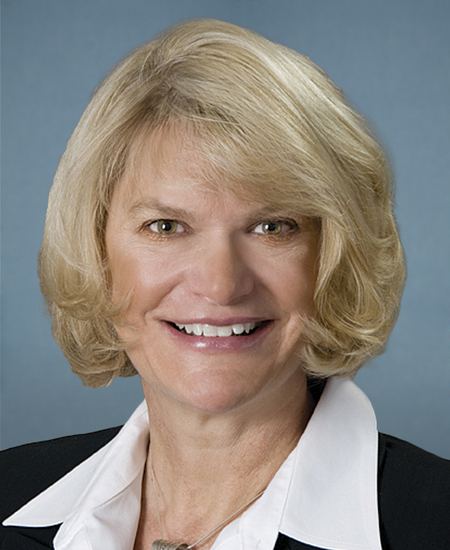
Sponsored bills
Maddy summaryThe Good Samaritan Remediation of Abandoned Hardrock Mines Act of 2024 establishes a pilot program allowing qualified individuals or organizations (defined as "Good Samaritans") to remediate historic mine residue at abandoned hardrock mine sites without facing liability for their actions. The Environmental Protection Agency would grant up to 15 permits for projects that address pollution from abandoned mines, with applicants required to demonstrate they meet specific eligibility criteria (not being responsible owners/operators, having no role in creating the residue, and possessing adequate resources). The program includes liability protection for permitted activities, requires detailed remediation plans with baseline condition assessments, public notice, and environmental reviews, and establishes a fund for long-term operations and maintenance. This 7-year pilot program would directly affect communities near abandoned mine sites and qualified remediation groups seeking to address environmental contamination.
Maddy summaryS 1478 designates the segment of U.S. Route 20 running through Oregon, Idaho, Montana, Wyoming, Nebraska, Iowa, Illinois, Indiana, Ohio, Pennsylvania, New York, and Massachusetts as the "National Medal of Honor Highway" to honor Medal of Honor recipients. The bill updates all federal references in laws, maps, and documents to use this new name for the designated highway segment. It does not create new benefits or obligations but serves as a commemorative designation recognizing military valor.
Maddy summarySRES 733 is a Senate resolution honoring Patrick Gottsch, founder of Rural Media Group and RFD-TV, for his work promoting rural and agricultural issues through media. It recognizes his career in agricultural programming, including founding RFD-TV and other media outlets that educated millions about rural America. The resolution expresses the Senate's gratitude for his legacy and requests a copy be sent to his family. As a commemorative resolution, it does not create policy or affect any individuals.
Maddy summaryThe FAIR Act of 2024 (S 5512) fundamentally changes civil forfeiture by requiring all property seizures to go through judicial process rather than allowing government agencies to seize property without court involvement. It raises the government's burden of proof from "preponderance of the evidence" to "clear and convincing evidence" to establish a property connection to criminal activity. The bill establishes new timelines for notifying property owners and requires courts to consider factors like hardship to property owners when making forfeiture decisions. These changes directly affect individuals whose property is seized by federal agencies in connection with alleged criminal activity.
Maddy summarySRES 925 is a Senate resolution honoring the late Senator Fred R. Harris of Oklahoma, who died on November 23, 2024, at age 94. The resolution expresses the Senate’s sorrow at his passing, requests that his family be notified, and directs the Senate to adjourn in his memory. It does not create new laws or affect any policies - it is a formal expression of respect for a former senator’s legacy.
Maddy summaryThe TAKE IT DOWN Act (S 4569) makes it a federal crime to intentionally share nonconsensual intimate images or deepfakes (AI-generated fake images/videos) without consent, with penalties including fines and up to 3 years in prison for offenses involving minors. It directly affects individuals whose private images are exploited and requires major online platforms (like social media sites hosting user content) to establish a 48-hour removal process for reported nonconsensual content. Platforms must remove such material upon valid requests from affected individuals, while being shielded from liability if they act in good faith. The law excludes email, broadband providers, and pre-curated content sites from these requirements.
Maddy summaryThe Colorado River Salinity Control Fix Act revises cost-sharing for salinity control projects in the Colorado River Basin. It requires the federal government to cover 70% to 85% of construction, operation, and maintenance costs for different project types (e.g., 85% for on-farm measures), reducing financial burdens on states and local water management entities. For fiscal years 2024 and 2025, the bill temporarily increases federal coverage for certain projects. This directly affects agricultural users and water agencies in the basin by altering their cost responsibilities under the Colorado River Basin Salinity Control Act.
Maddy summarySRES 909 is a non-binding Senate resolution designating November 21, 2024, as "National Rural Health Day." It formally recognizes the contributions of rural health care providers and the unique challenges faced by rural communities, including hospital closures and access barriers. The resolution celebrates rural health care workers and the millions they serve, while expressing the Senate's commitment to improving rural health care accessibility and affordability. This is a ceremonial designation with no new policy or funding changes.
Maddy summaryThis resolution designates December 2, 2024, as "World Nuclear Energy Day" to commemorate the historical milestones of nuclear energy development, including the first controlled nuclear chain reaction (1942) and the first commercial nuclear power plant (1957). It recognizes nuclear energy's role in providing nearly 20% of U.S. electricity, supporting over 70,000 direct jobs, and contributing to carbon-free power and national security. The resolution encourages public acknowledgment of nuclear energy's contributions to clean power, innovation, and global energy leadership, without creating new laws or affecting specific groups.