

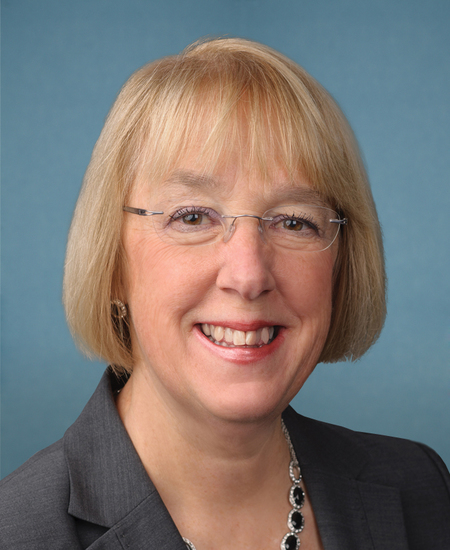
Photo of Patty Murray
D United States Senate · Washington

Sen. Patty Murray

Compare
Total votes
1,054
all sessions
Attendance
97%
34 missed
Lower than 95% of chamber peers
With party
99%
of cast votes
Higher than 84% of chamber peers
Bipartisan score
1%
crosses aisle rarely
Lower than 86% of chamber peers
Sponsored
1,138
bills & resolutions
Near the chamber average
Committees
18
assignments
1,138 bills and resolutions

Sponsored bills

Total
1,138
Primary
149
Co-sponsor
989
This page
1,138
matching current filters
Co-sponsor S 2085
In committee · United States Senate · Co-sponsor
Medicare Multi-Cancer Early Detection Screening Coverage Act

Maddy summaryThis bill adds multi-cancer early detection screening tests to Medicare Part B coverage, directly affecting Medicare beneficiaries. It creates a new coverage category for FDA-approved blood tests (like those analyzing cell-free DNA) that screen for multiple cancer types simultaneously, as defined in the bill. Medicare would cover these tests once every 12 months, and the bill clarifies that this change does not impact existing coverage for standard cancer screenings like mammograms or colonoscopies. The policy change ensures beneficiaries can access these new screening options without unnecessary delays after FDA approval.

In committee Jun 21, 2023 1 co-sponsor
Co-sponsor SRES 258
In committee · United States Senate · Co-sponsor
A resolution reaffirming the importance of the United States promoting the safety, health, and well-being of refugees and displaced persons in the United States and around the world.

Maddy summaryThis Senate resolution (SRES 258) reaffirms the U.S. commitment to supporting refugees and displaced persons globally and domestically. It urges the administration to meet robust refugee admissions goals (noting only 31,797 arrived in the U.S. by May 2023, far below the 125,000 target), uphold asylum protections under the Refugee Act of 1980, and strengthen partnerships with the UNHCR. The resolution specifically calls for increased U.S. leadership in humanitarian aid, addressing root causes of displacement, and ensuring refugees have access to education and livelihoods. It directly affects refugees seeking resettlement in the U.S. and global host countries bearing the burden of displacement crises.

In committee Jun 20, 2023 1 co-sponsor
Co-sponsor S 2053
In committee · United States Senate · Co-sponsor
Freedom to Travel for Health Care Act of 2023

Maddy summaryThe Freedom to Travel for Health Care Act of 2023 prohibits states from restricting or penalizing individuals for traveling to another state to access legal reproductive health care, including abortion services. It also bans discrimination against those who assist with such travel or provide the care, and overrides conflicting state laws that interfere with these rights. The bill allows individuals, healthcare providers, and the federal government to sue to enforce these protections in court, with remedies including injunctions and attorney fees. It directly affects patients seeking care across state lines, healthcare providers, and organizations facilitating such travel.

In committee Jun 20, 2023 1 co-sponsor
Co-sponsor S 2048
In committee · United States Senate · Co-sponsor
Equal Access to Justice for Victims of Gun Violence Act

Maddy summaryThis bill repeals legal protections that previously shielded gun manufacturers from civil lawsuits related to gun violence. It allows gun violence victims to use firearm trace data from the ATF's database as evidence in civil court cases (including state, federal, and administrative proceedings). The key change makes gun trace information admissible and subject to discovery, meaning victims' legal teams can subpoena this data to prove how guns were obtained. This directly affects victims pursuing civil claims against gun manufacturers or dealers.

In committee Jun 20, 2023 1 co-sponsor
Co-sponsor S 2038
In committee · United States Senate · Co-sponsor
LIFT the BAR Act of 2023

Maddy summaryThe LIFT the BAR Act of 2023 would expand access to basic public benefits for lawfully present noncitizens by removing restrictions established by the 1996 welfare law. It repeals specific provisions of the Personal Responsibility and Work Opportunity Reconciliation Act of 1996 that limited access to programs like food assistance, Medicaid, housing, and child nutrition benefits based on immigration status. The bill redefines "qualified alien" as "qualified noncitizen" and specifically includes categories of noncitizens who were previously excluded, such as those with special immigrant juvenile status, pending nonimmigrant visa applications, and those who qualified under the Deferred Action for Childhood Arrivals (DACA) program. This would allow states to not deny benefits based on immigration status for these programs, ensuring more lawfully present noncitizens can access essential services.

In committee Jun 15, 2023 1 co-sponsor
Co-sponsor S 2024
In committee · United States Senate · Co-sponsor
Reproductive Health Care Training Act of 2023

Maddy summaryS 2024, the Reproductive Health Care Training Act of 2023, authorizes $25 million annually (2024-2028) to fund federal grants for health care training programs. The bill provides grants to eligible entities - such as accredited schools, academic health centers, and safety-net providers - in states where abortion care training is permitted, to expand clinical training for students and clinicians in abortion care. Key provisions require grantees to prioritize training focused on medically underserved communities, racial and ethnic minorities, people with disabilities, Tribal populations, and telehealth integration, while also developing recruitment strategies for underrepresented groups. The program must supplement, not replace, existing federal health training funds and requires annual reporting on trainee numbers, partnerships, and program impact.

In committee Jun 15, 2023 1 co-sponsor
Primary S 1995
In committee · United States Senate · Lead sponsor
Public Health Infrastructure Saves Lives Act

Maddy summaryThe Public Health Infrastructure Saves Lives Act (S 1995) provides federal grants to strengthen public health systems across the U.S. It directly affects state, territorial, and local health departments serving 500,000+ people, plus tribal health departments. Key mechanisms include: 50% of funds for formula-based grants to all states/territories (prioritizing population, disease burden, and poverty), 30% for competitive grants targeting departments with highest infrastructure needs, and a requirement for grantees to achieve accreditation by 2027. The bill allocates increasing annual funding - $750 million in 2024 rising to $4.5 billion annually by 2028 - with 3% reserved specifically for tribal health departments. It defines "core public health infrastructure" to include surveillance, emergency response, equity-focused services, and workforce capacity.

In committee Jun 14, 2023 0 co-sponsors
Co-sponsor S 1992
In committee · United States Senate · Co-sponsor
Working Families Tax Relief Act of 2023

Maddy summaryThe Working Families Tax Relief Act of 2023 expands tax benefits for low-to-moderate income workers and families with children. It lowers the minimum age for the Earned Income Credit from 25 to 19 (with exceptions for students, former foster youth, and homeless youth), removes the age 65 maximum, and increases credit amounts and income thresholds. The bill also establishes a permanent system for monthly advance payments of the Child Tax Credit, with higher payments ($300 monthly) for children under age 6 compared to $250 for older children. It includes inflation adjustments to maintain the value of these credits over time and creates mechanisms for determining eligibility and recapturing payments in certain circumstances. The provisions apply to all states and U.S. territories, including Puerto Rico and American Samoa.

In committee Jun 14, 2023 1 co-sponsor
Co-sponsor S 1983
In committee · United States Senate · Co-sponsor
Private Prison Information Act of 2023

Maddy summaryThis bill requires federal agencies that use private or state/local facilities to house federal prisoners to treat records about those facilities as government records under the Freedom of Information Act (FOIA). It directly affects federal agencies (like the Department of Justice), private prison operators, and state/local facilities under contract with the federal government. Key provisions mandate that these entities maintain records in searchable formats, allow public access to information (unless specific legal exemptions apply), and include disclosure requirements in all relevant contracts. The law aims to increase transparency around conditions and operations in non-federal correctional facilities used by the federal government.

In committee Jun 14, 2023 1 co-sponsor
Co-sponsor S 1998
In committee · United States Senate · Co-sponsor
Tribal Conservation Priorities Inclusion Act

Maddy summaryThis bill amends several conservation programs under the Food Security Act of 1985 to explicitly include Indian Tribes and tribal lands. It adds "tribal" before "local" and specifies that programs must consider "an area on tribal land" (as defined in the Energy Policy Act of 1992) alongside state or local areas. The changes apply to key programs like the Environmental Quality Incentives Program, Conservation Stewardship Program, and stewardship contracts, ensuring tribal lands are recognized in conservation planning and funding decisions. This policy adjustment directly affects federally recognized tribes and USDA conservation programs by expanding eligibility criteria to include tribal lands without creating new programs or funding.

In committee Jun 14, 2023 1 co-sponsor
Showing 591 to 600 of 1,138 bills
Previous 1 … 59 60 61 … 114 Next