Maddy summaryThis bill requires timeshare companies to provide buyers with a clear, single-document breakdown of all upfront and ongoing costs (including fees that may change) before finalizing a sale. It mandates disclosure of termination options and a 14-day cancellation period without penalty. The Federal Trade Commission (FTC) will enforce these requirements as part of its authority over unfair or deceptive practices. The law directly affects timeshare buyers by increasing transparency and timeshare companies by setting new disclosure standards for sales agreements.
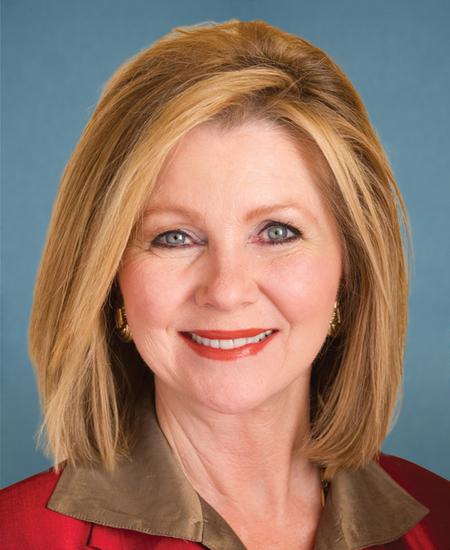
Sen. Marsha Blackburn
Sponsored bills
Maddy summaryS 3515 requires the Secretaries of Defense and Veterans Affairs to create a single, unified system for medical provider credentialing (like verifying licenses and qualifications) used across both the Department of Defense and Veterans Affairs. This bill directly affects military and VA medical staff, as it aims to replace their separate current systems with one shared platform that can exchange provider information. Key provisions mandate a joint report on existing systems by 120 days after enactment, selection of a unified system by January 1, 2027, and certification of its operational implementation by January 1, 2028. The goal is to eliminate duplicate processes and improve data sharing for medical providers serving military personnel and veterans.
Maddy summaryThis bill removes the tax-exempt status for the Council on American-Islamic Relations (CAIR) under federal tax law. It specifically prevents CAIR from being classified as a tax-exempt charitable organization under Section 501(c)(3) of the Internal Revenue Code. The change applies to tax years beginning after the bill's enactment date. This policy directly affects CAIR's tax classification but does not alter its legal standing or other activities.
Maddy summaryThis bill would allow health insurance companies to sell individual health insurance policies across state lines by designating a single "primary state" whose regulations govern the policies, while being exempt from most regulations of other states ("secondary states"). It prohibits insurers from changing premiums based on health status or medical history, requires clear disclosure to consumers about which state's laws apply, and mandates independent review processes for denied claims. Secondary states would still be able to require insurers to pay taxes, register with the state insurance commissioner, and participate in guaranty associations. This would primarily affect health insurance issuers and consumers who purchase policies across state lines, potentially expanding policy options while reducing some state-specific consumer protections.
Maddy summaryThe Federal Reserve Transparency Act of 2025 requires the Comptroller General of the United States to audit the Federal Reserve System's Board of Governors and Federal Reserve banks within 12 months of the law's enactment. The audit must be completed within that timeframe, and a detailed report of findings, conclusions, and recommendations must be submitted to Congress within 90 days of completion. This report will be shared with congressional leaders and made available to any member of Congress who requests it. The bill directly affects the Federal Reserve System by imposing new transparency requirements for its operations and financial activities.
Sentencing Accountability For Exploitation Act or the SAFE Act This bill directs the U.S. Sentencing Commission to review and amend its guidelines and policy statements applicable to federal criminal offenses involving the production, receipt, transport, shipment, or distribution of child sexual abuse material to (1) account for the actual and potential harm from the offense and changes since the last amendments with respect to the typical offense behavior and modern technologies, and (2) better reflect the spectrum of offender culpability.
Stop Sextortion Act This bill criminalizes threats to distribute child sexual abuse material to intimidate, coerce, extort, or cause substantial emotional distress. This practice is commonly referred to as sextortion . The bill also increases criminal penalties for related offenses that involve the use of child sexual abuse material to intimidate, coerce, extort, or cause substantial emotional distress. Specifically, the bill establishes new federal criminal offenses for threatening to distribute child pornography or a visual depiction of a minor engaging in sexually explicit conduct with intent to intimidate, coerce, extort, or cause substantial emotional distress. An offense, or an attempt or conspiracy to commit the offense, is subject to criminal penalties. Additionally, the bill increases the maximum prison term for various offenses involving the sexual exploitation of children if those offenses involve the use of child pornography or a visual depiction of a minor engaged in sexually explicit conduct with intent to intimidate, coerce, extort, or cause substantial emotional distress.
Ending Coercion of Children and Harm Online or the ECCHO Act This bill establishes a federal framework to combat the online coercion of minors to commit harm. The bill creates new criminal offenses, expands reporting of instances involving the online coercion of minors, facilitates the prosecution of offenders, and expands protections for minors who testify in court. Specifically, the bill makes it a crime to intentionally coerce a minor to commit suicide (or attempt to); kill someone (or attempt to); kill a pet, emotional support animal, service animal, or horse (or attempt to); physically harm an individual (including the minor), pet, emotional support animal, service animal, or horse; or commit (or attempt to commit) arson or certain other acts such as doxxing or swatting. A violation (or conspiracy or attempt to commit a violation) is subject to a fine, a prison term, or both. The bill requires electronic communication service providers and remote computing service providers to report instances of online coercion of minors to the National Center for Missing & Exploited Children via the CyberTipline. The bill facilitates the federal prosecution of offenses committed by (1) individuals as part of a child exploitation enterprise, and (2) minors in certain circumstances. The bill extends various protections for minors who testify in court (e.g., certain privacy protections) to those who are victims of or witnesses to crimes involving mental injury (i.e., psychological or intellectual harm to a child) or the negligent treatment of a child.

Maddy summaryThis bill specifies the location for a World War II Women's Memorial already authorized by law. It directs that the memorial, honoring over 18 million women who worked on the home front during WWII, be placed on federal land in Washington, D.C. Specifically, it allows the memorial to be situated either in "Area I" on the National Mall (as defined by a 2003 map) or within the National Mall's "Reserve" area. The bill does not create new policy or change memorial requirements - it only clarifies the physical location on federal land.
Maddy summarySRES 536 is a non-binding Senate resolution designating December 2, 2025, as "World Nuclear Energy Day." It commemorates nuclear energy's role in clean power generation, highlighting historical milestones like the first nuclear chain reaction (1942) and the first commercial nuclear plant (1957). The resolution celebrates nuclear energy's contributions to U.S. electricity (18% of generation, 43% carbon-free), job creation (over 70,000 direct jobs), and national security, without creating new laws or affecting any group. It serves as a symbolic recognition of the industry's achievements.