

Maddy summaryThis joint resolution (SJRES 7) seeks congressional disapproval of a 2023 rule defining "Waters of the United States" (WOTUS), which would have changed how federal agencies regulate wetlands and waterways. It targets a rule jointly issued by the Army Corps of Engineers, EPA, and other agencies (88 Fed. Reg. 3004, Jan. 18, 2023), directly affecting landowners, developers, and environmental regulators by altering jurisdiction over water resources. If passed, the resolution would nullify the rule under a specific disapproval process in Title 5 of U.S. Code, preventing it from taking effect. The resolution does not create new regulations but aims to block an existing federal rule. This is a procedural step, not a new law.
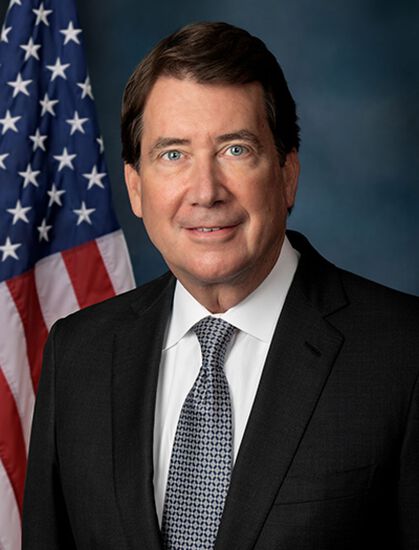
Sen. Bill Hagerty
Sponsored bills
Maddy summaryThis proposed constitutional amendment (SJRES 13) would require the federal government to balance its annual budget, meaning spending could not exceed revenue unless Congress passes a specific exception with a two-thirds vote. It also sets a limit of 18% of GDP for total government spending, with similar supermajority requirements to exceed this cap. The bill would mandate the President to submit a balanced budget proposal to Congress each year and require a two-thirds vote for tax increases or debt limit hikes. As a proposed amendment, it would only take effect if ratified by three-fourths of state legislatures.
Maddy summaryThis joint resolution (SJRES 12) seeks congressional disapproval of the District of Columbia Council’s approval of the Revised Criminal Code Act of 2022 (D.C. Act 24-789). It directly affects D.C. residents and local government, as the resolution targets the District’s newly enacted criminal code. The mechanism is a formal congressional disapproval under the District of Columbia Home Rule Act, requiring passage by both chambers to block the D.C. law from taking effect. The resolution does not alter the D.C. code itself but aims to halt its implementation through federal action.
Maddy summaryThis bill amends federal murder law to treat distributing fentanyl that causes death as felony murder. It specifically targets individuals who distribute fentanyl (2+ grams of a mixture containing fentanyl, or 0.5+ grams of its analogues) knowing it contains the substance and causing death. The law adds a new provision stating that distributing fentanyl resulting in death constitutes first-degree murder, punishable by death or life imprisonment. This directly affects fentanyl distributors whose actions lead to fatalities, with the penalty applying when the distributor knew or should have known the substance contained fentanyl or its analogues.
Maddy summaryThe TAILOR Act of 2023 requires federal banking regulators (like the FDIC and Federal Reserve) to adjust rules based on each financial institution’s specific risk level and business model, particularly reducing regulatory burdens for smaller community banks. It mandates that regulators document how they tailor rules in rulemaking notices and submit annual reports to Congress on implementation. The bill also directs a review of existing regulations issued over the past seven years to apply these tailoring principles retroactively. A key provision simplifies reporting requirements for community banks eligible under the Community Bank Leverage Ratio framework. This aims to make oversight more practical for smaller institutions while maintaining regulatory oversight.
Maddy summaryThis joint resolution seeks congressional disapproval of a Department of Labor rule published in the Federal Register on December 1, 2022 (87 Fed. Reg. 73822), which addressed "Prudence and Loyalty in Selecting Plan Investments and Exercising Shareholder Rights." If enacted, it would block the rule from taking effect, directly affecting retirement plan fiduciaries (such as those managing 401(k) plans) who must follow these standards. The resolution uses a specific disapproval process under Chapter 8 of Title 5, U.S. Code, to nullify the rule without altering its content. This is a procedural action targeting the rule's implementation, not a new policy.
Maddy summaryS 293, the Fair Access to Banking Act, prohibits large financial institutions (with $10 billion+ in assets) from denying banking services to lawful businesses based on political reasons, bias, or industry category. It requires these "covered banks" to justify service denials using documented, objective risk assessments - not subjective political judgments - and to provide written explanations for denials. The bill directly affects businesses operating legally in industries often targeted by banks (like cannabis or firearms), ensuring equal access to services like loans, credit cards, or payment processing. Violations allow affected businesses to sue for treble damages and attorney fees, with payment networks and credit unions also barred from blocking access based on "reputational risk."
Maddy summaryThis bill (S 256) terminates existing U.S. sanctions waivers that permitted specific nuclear activities in Iran under the 2015 Iran nuclear deal (JCPOA). It ends exemptions for activities like modernizing Iran's Arak reactor, modifying centrifuges at Fordow, operating the Bushehr nuclear plant, and transferring uranium or heavy water. The bill takes effect upon enactment, prohibiting the President from issuing new waivers for these activities. It directly affects Iran's nuclear program by reinstating sanctions on these specific cooperation areas. The legislation targets the JCPOA-related waivers, not broader sanctions.
Maddy summaryThis bill would allow individuals with valid concealed carry permits from their home state to carry concealed handguns in other states that either permit concealed carry for residents or don't ban it. It requires permit holders to have a government-issued ID, meet federal firearm possession rules, and carry only handguns (excluding machineguns or destructive devices). Carrying would still follow local restrictions in the destination state, such as bans in schools or government buildings. The bill does not change how states issue permits but creates automatic recognition of valid permits across participating states.
Maddy summaryThis Senate resolution designates the week of January 22-28, 2023, as "National School Choice Week." It encourages parents to learn about K-12 education options - including public, charter, private, and homeschooling - and promotes public events to raise awareness about educational choice during that week. The resolution does not create new laws or regulations but formally recognizes the annual observance through symbolic congressional support.