

Maddy summaryThis bill requires the General Services Administration (GSA) to prioritize classical or traditional architectural styles for new or renovated federal buildings costing over $50 million, including courthouses, agency headquarters, and District of Columbia buildings. It defines "preferred architecture" as classical styles (like Neoclassical or Georgian) that "uplift public spaces" and "command respect," while limiting approvals of modern styles like Brutalism or Deconstructivism. The GSA must notify Congress and justify any deviation from preferred designs, including cost comparisons and public input, and submit annual reports on building styles. The bill creates a 5-year advisory council to recommend design policy updates and ensure compliance with these standards.
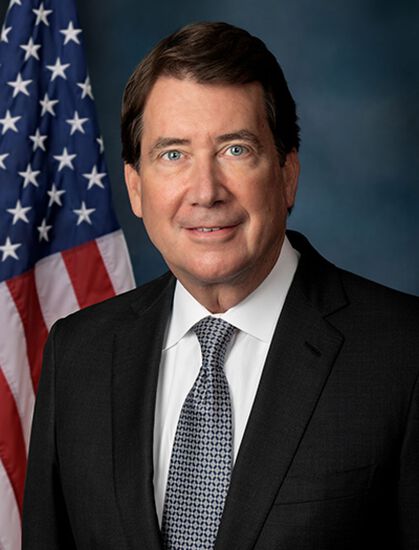
Sen. Bill Hagerty
Sponsored bills
Maddy summaryS 1926 would expand US-Uruguay economic ties by adding Uruguay to a trade program offering tariff benefits, enabling US businesses to access Uruguay under specific visa programs (E-1/E-2), and requiring a review of Uruguay's eligibility for the US visa waiver program. It directly affects US businesses seeking to operate in Uruguay and Uruguayan citizens seeking US business visas. Key provisions include updating trade designations, treating Uruguay as a qualifying country for business visas, and mandating a 90-day report on visa waiver eligibility. The visa waiver review is a procedural requirement, not an immediate policy change.
Maddy summaryS 1907, the Federal Firearms Licensee Protection Act of 2023, increases penalties for crimes committed against licensed firearm businesses. It amends federal law to impose a maximum 20-year prison term for knowingly violating firearm licensing rules or attempting to do so. If a burglary or robbery occurs on a licensed dealer’s, manufacturer’s, or importer’s business premises, the law mandates minimum sentences of 3 years for burglary and 5 years for robbery. This bill directly affects federal firearms licensees by strengthening criminal penalties for attacks on their business locations.
Maddy summarySRES 242 is a Senate resolution commending the Tennessee Valley Authority (TVA) on the 90th anniversary of the 1933 TVA Act. It recognizes the TVA’s historic role in improving river navigation, controlling floods, providing affordable electricity, and promoting economic development across seven states (Alabama, Georgia, Tennessee, Mississippi, Kentucky, North Carolina, and Virginia). The resolution honors the TVA’s mission since its founding during the Great Depression and requests that a copy be delivered to its leadership for display. As a symbolic gesture, it does not create new laws or policies.
Maddy summaryS 1843 (End Child Trafficking Now Act) requires adults (18+) entering the U.S. with minors under 18 to prove a family relationship through documents or a witness, with DNA testing as a last resort if proof is insufficient. If an adult refuses DNA testing or fails to provide valid proof, they may be denied entry and the minor treated as an unaccompanied child. The bill also creates a new federal crime ("recycling of minors") for adults who repeatedly use a minor they aren’t related to for illegal entry, punishable by up to 10 years in prison. This directly affects adults traveling with minors, immigration officers, and law enforcement handling entry-related trafficking cases.
Maddy summaryThis bill requires proxy advisory firms (companies that provide voting recommendations to investors) to register with the SEC and disclose their methodologies, conflicts of interest, and staff qualifications. It mandates these firms to ensure recommendations are based on accurate information, correct errors promptly, and avoid using recommendations influenced by clients' other business with the firm. The bill also requires large investment advisors and pension funds to report how they use proxy advice and provide customers with mechanisms to indicate their voting preferences. Additionally, it prohibits automatic "robovoting" based on proxy firm recommendations and requires ESG funds to disclose performance comparisons with non-ESG index funds.
Maddy summaryThis bill expands U.S. sanctions against individuals and entities involved in human rights abuses against Uyghurs and other ethnic groups in Xinjiang, China. It requires the Treasury Secretary to identify Chinese entities complicit in serious human rights abuses and add them to sanctions lists, and mandates disclosures to the Securities and Exchange Commission about business ties to Xinjiang-related entities. The bill authorizes physical and psychological support for Uyghurs, Kazakhs, and other ethnic groups who have experienced atrocities in China and are now outside China. It also includes provisions for countering Chinese propaganda about the situation in Xinjiang and prohibits U.S. government contracts with certain entities.
Maddy summaryThis joint resolution (SJRES 18) disapproves a Department of Homeland Security rule that would have expanded the "public charge" standard for immigration. The rule, published in the Federal Register on September 9, 2022, aimed to deny visas or green cards to immigrants who might rely on public benefits like housing or food assistance. By passing this resolution, Congress blocks the rule from taking effect, meaning immigrants applying for visas or permanent residency would not face this specific eligibility barrier. The resolution directly affects non-citizens seeking to enter or remain in the U.S. under immigration processes.
Maddy summaryThe Main Street Tax Certainty Act permanently extends the 20% tax deduction for qualified business income (QBI), which currently applies to owners of pass-through businesses like sole proprietorships, partnerships, and S corporations. The bill achieves this by amending the tax code to remove an expiration date (via striking subsection (i) of Section 199A of the Internal Revenue Code). This change directly affects small business owners who rely on the QBI deduction to reduce their taxable income. The key provision eliminates uncertainty about the deduction’s future, ensuring continued eligibility without requiring future legislative action.
Maddy summaryThe Indo-Pacific Strategic Energy Initiative Act (S 1720) creates a framework for U.S. government support of energy infrastructure projects in the Indo-Pacific region, primarily focusing on promoting U.S. liquefied natural gas exports. The bill directs agencies like the State Department and Energy Department to provide diplomatic and financial assistance for projects that improve energy security and diversify energy sources in countries including Australia, India, Japan, and ASEAN nations. It establishes mechanisms for project selection, funding through the U.S. International Development Finance Corporation, and annual reporting requirements to track U.S. energy export support. The legislation aims to reduce reliance on energy sources from countries like Russia and China by supporting infrastructure for cleaner energy alternatives with lower emissions.