

Maddy summaryS 4727 (SOPRA) amends federal law to change how courts review agency actions. It requires federal courts to decide all legal questions about agency rules and interpretations "de novo" (from scratch), rather than giving deference to agency explanations. This directly affects courts, federal agencies, and individuals or groups challenging agency regulations in court. The key provision mandates that courts must re-examine all agency interpretations of statutes, rules, and guidance documents without relying on prior agency views. The bill does not alter agency powers but changes the judicial review process for legal challenges.
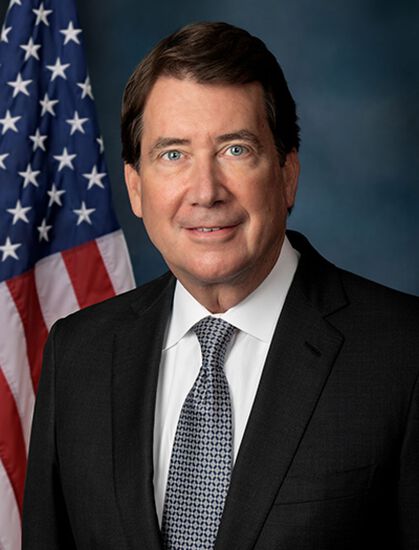
Sen. Bill Hagerty
Sponsored bills
Maddy summarySRES 765 is a Senate resolution honoring the late Senator James M. Inhofe of Oklahoma following his death on July 9, 2024. The resolution commemorates his 28-year Senate service (1994-2023) and 52 years in public office, highlighting his work on defense policy, aviation legislation, infrastructure projects, and support for military bases in Oklahoma. This procedural resolution expresses the Senate's condolences and formally recognizes his legacy, rather than enacting any policy changes.
Maddy summaryThe FORTIFY Act establishes a TRUST database to catalog Chinese entities involved in defense research and prohibits federal funding for fundamental research that would be conducted jointly with entities from countries of concern (like China) for military or security purposes. It requires research institutions to disclose foreign connections and imposes repayment requirements for grants if institutions fail to disclose foreign collaborations or compensation. The bill also creates new penalties for false statements in grant applications and enhances visa requirements for individuals seeking to acquire sensitive technologies. These provisions aim to protect U.S. research from potential security threats while maintaining transparency in research funding.
Maddy summarySRES 756 is a Senate resolution designating June 19, 2024, as "Juneteenth Independence Day" to commemorate June 19, 1865 - the date Union troops announced the end of slavery in Texas. This symbolic resolution recognizes the historical significance of Juneteenth, when news of emancipation reached enslaved people in the Southwestern U.S. after the Civil War. It does not create new laws or affect any group; it solely serves to honor this date as part of U.S. history and encourage nationwide observance.
Maddy summaryThe Secure Payments Act of 2024 requires the Federal Reserve to study the impacts of its proposed "Reg II" rule on debit card transaction fees. The study must examine effects on consumers (including access to low-cost bank accounts), merchants' costs, fraud mitigation, and small banks' finances. The Federal Reserve must complete this analysis and submit a report to Congress before finalizing the Reg II rule, ensuring the report informs the final decision. This bill directly affects consumers, merchants, and small financial institutions by delaying the rule's finalization until the study is complete.
Maddy summaryThis joint resolution (SJRES 97) seeks to block a Department of Labor rule finalized in April 2024 that redefined overtime exemptions for certain white-collar workers. The rule would have changed how employers classify executive, administrative, professional, outside sales, and computer employees for overtime pay purposes. By invoking Chapter 8 of Title 5, U.S. Code, this resolution aims to nullify the rule, preventing it from taking effect. It directly affects employers and workers covered by the rule, but the resolution itself does not change existing labor standards - it only prevents the rule from being implemented.
Maddy summaryThis bill requires Medicare Advantage plans (private insurance plans that cover Medicare benefits) to implement electronic systems for prior authorization requests by 2027, replacing outdated methods like fax. Starting in 2026, these plans must publicly report detailed data on prior authorization decisions - including approval/denial rates, appeal outcomes, and processing times - to the government. The government will publish this data online so seniors and providers can see how plans handle requests. These changes aim to reduce delays in care for seniors by making the process more transparent and timely.
Maddy summaryThis bill (S 4521) changes how the Consumer Financial Protection Bureau (CFPB) is funded by requiring it to seek annual appropriations through Congress, rather than receiving automatic funding from the Federal Reserve's budget. It also modifies civil penalty handling: if the CFPB collects fines and pays victims, any leftover funds must be transferred to the U.S. Treasury's general fund. These changes directly affect the CFPB's budget process and financial management, shifting oversight to Congress. The provisions take effect October 1, 2025.
Maddy summaryS 4499, the Youth Lead Act of 2024, amends an existing provision in the Agricultural Research, Extension, and Education Reform Act of 1998. It extends the expiration date for grants to youth organizations from 2023 to 2029, specifically modifying Section 410(d)(2). This change directly affects organizations currently receiving or eligible for these agricultural education and youth development grants. The bill makes a procedural adjustment to the grant program's sunset date without altering funding levels or program requirements. It does not create new programs or change who qualifies for these specific grants.
Maddy summaryThis joint resolution (SJRES 92) seeks to block an Environmental Protection Agency (EPA) rule that established new greenhouse gas emission standards for fossil fuel power plants and repealed an earlier rule. It targets the EPA's specific rule (published May 9, 2024), which set performance standards for new/modified plants, emission guidelines for existing plants, and removed the Affordable Clean Energy Rule. The resolution uses a procedural mechanism under the Congressional Review Act to disapprove the rule, meaning it would prevent the EPA rule from taking effect. If passed, the rule would have no legal force, directly affecting how power plants regulate emissions under federal law.