

Maddy summaryThis bill increases the tax exclusion for capital gains when selling a primary residence. It doubles the exclusion amount from $250,000 (for single filers) to $500,000 and from $500,000 (for married couples) to $1,000,000. The bill also adds an inflation adjustment for amounts after 2025, tying future increases to the cost-of-living adjustment. It directly affects homeowners who sell their primary residence and would otherwise owe tax on profits exceeding the previous limits. The changes apply to sales after the bill's enactment date.
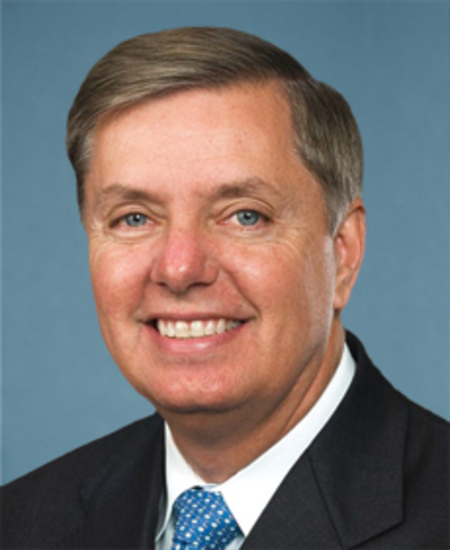
Sen. Lindsey Graham
Sponsored bills
Maddy summaryThis bill changes federal rules for detaining defendants before trial. It creates a new rule that non-citizen defendants (including non-permanent residents) are presumed to be a flight risk unless they provide strong proof they won't flee or pose a danger to others. Family ties or employment in the U.S. cannot be used to challenge this presumption. The change applies only to non-citizens, not U.S. citizens.
Maddy summaryThis Senate resolution (SRES 463) expresses symbolic condemnation of China's persecution of religious minorities, specifically highlighting the detention of Pastor Ezra Jin Mingri and Zion Church leaders following a reported October 10, 2025, abduction. It directly addresses the Chinese Communist Party (CCP) government, calling on it to release detained religious leaders and end violence against Christians, Muslims, and Buddhists. The resolution reaffirms U.S. policy commitments under the International Religious Freedom Act of 1998 and the Frank R. Wolf Act, emphasizing the U.S. global role in promoting religious freedom. It does not create new laws or funding but serves as a diplomatic statement urging China to respect internationally recognized religious freedom rights.
Maddy summaryS 107, the Lumbee Fairness Act, extends federal recognition to the Lumbee Tribe of North Carolina. This bill directly affects the Lumbee Tribe and its members residing in Robeson, Cumberland, Hoke, and Scotland counties, North Carolina. Key provisions include making the Tribe eligible for all federal services and benefits provided to federally recognized tribes, authorizing the Secretary of the Interior to take land into trust for the Tribe, and establishing that members in those counties are deemed to reside near an Indian reservation for service delivery. The bill amends the 1956 Act to remove previous restrictions and formally recognize the Tribe under federal law.
Maddy summarySRES 482 is a ceremonial Senate resolution recognizing November 3-7, 2025, as "National Veterans Small Business Week." It does not create new laws or policies but formally acknowledges veteran-owned small businesses, which employ nearly 3.3 million people and generate over $952 billion in annual sales. The resolution expresses support for these businesses and appreciation for veterans' entrepreneurship, while highlighting the Senate Committee on Small Business and Entrepreneurship’s annual observance of this week. It has no direct impact on regulations, funding, or veteran business operations.
Maddy summaryThis bill would require the U.S. Secretary of State to certify within 60 days whether kidnapped Ukrainian children have been reunited with families and reintegration into Ukrainian society is underway. If not certified, it mandates designating Russia as a State Sponsor of Terrorism under existing U.S. laws, triggering sanctions and restrictions. The designation could be rescinded only after Russia certifies it has stopped supporting terrorism, returned all abducted children, and confirmed reintegration efforts are active. The bill directly affects U.S. foreign policy tools targeting Russia and focuses on accountability for actions related to Ukrainian children.
Maddy summaryThis bill implements the Porto Declaration by creating a "Ukraine Support Fund" to use Russian sovereign assets frozen in Europe (primarily held by G7/EU nations excluding the U.S.) for Ukraine’s benefit. It requires the U.S. government to transfer these assets into the fund without confiscation and mandates quarterly disbursements of at least $250 million to Ukraine until the war ends. The bill also requires the President to report to Congress on Russian assets held in covered countries (G7/EU members) and urges diplomatic efforts to persuade those nations to repurpose 5% of their assets quarterly for Ukraine. These provisions amend the existing "Rebuilding Economic Prosperity and Opportunity for Ukrainians Act" to operationalize the asset transfer mechanism.
Maddy summaryS 1000 creates a new position for a U.S. Ambassador-at-Large for Arctic Affairs within the State Department. This official, appointed by the President with Senate approval, will coordinate U.S. foreign policy across Arctic-related issues including national security, environmental protection, indigenous engagement, resource management, and scientific research. The role will oversee efforts involving multiple federal agencies and work with Arctic Council nations (U.S., Canada, Denmark, Iceland, Norway, Sweden, Finland, and Russia). The bill defines the "Arctic region" to include northern U.S. territories, Arctic waters, and the Aleutian Chain, establishing this position to centralize U.S. policy coordination in the region.
Maddy summarySJRES 94 proposes a constitutional amendment requiring U.S. Congress members to forfeit their salaries during any government shutdown caused by funding gaps. The bill would automatically withhold members' pay for the duration of the shutdown period, directly affecting all senators and representatives. Forfeited funds would be transferred to the federal treasury to reduce the national debt. This amendment must be ratified by three-fourths of state legislatures to become part of the Constitution.
Maddy summaryThis bill ensures the U.S. Capitol Police continue receiving pay during fiscal year 2026 funding gaps by authorizing temporary funds for salaries, benefits (including hazard pay and retirement), and contractor support. It directly affects Capitol Police officers (classified as "excepted employees" during emergencies), their civilian support staff, and contractors providing essential services. The funding mechanism provides immediate payments for the period starting October 1, 2025, and lasts until Congress passes regular appropriations for the Capitol Police or September 30, 2026, whichever comes first.