

Affordable Housing Credit Improvement Act of 2021 This bill revises provisions of the low-income housing tax credit and renames it as the affordable housing credit . The bill increases the per capita dollar amount of the credit and its minimum ceiling amount beginning in 2021 and extends the inflation adjustment for such amounts. The bill modifies tenant income eligibility requirements and the average income formula for determining such income. It also revises rules for student occupancy of rental units and tenant voucher payments, and prohibits any refusal to rent to victims of domestic abuse. The bill further modifies the credit to increase state allocations of the credit; repeal the qualified census tract population cap; prohibit local approval and contribution requirements; increase the credit for certain projects designated to serve extremely low-income households; increase the credit for certain bond-financed projects designated by state agencies; eliminate the basis reduction for properties that receive certain energy-related tax benefits; and increase the population cap for difficult development areas (i.e., areas with high construction, land, and utility costs relative to area median gross income). The bill also includes Indian and rural areas as difficult development areas and modifies other requirements relating to casualty losses, acquisition credits, and foreclosures.
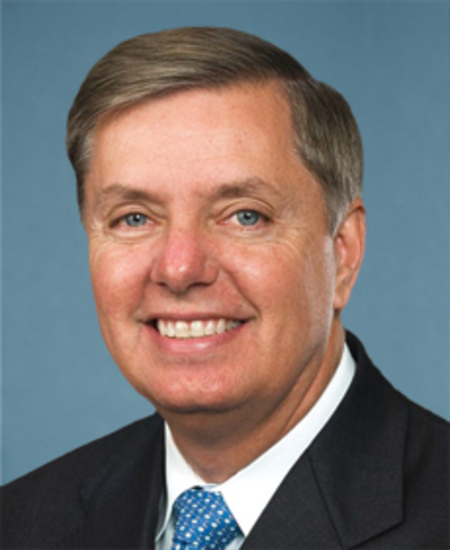
Sen. Lindsey Graham
Sponsored bills
This resolution honors the memory of U.S. Capitol Police Officer William Francis "Billy" Evans for the selfless acts of heroism he displayed on April 2, 2021.
Defenders of Bataan and Corregidor Congressional Gold Medal Act This bill provides for the award of a Congressional Gold Medal to the troops from the United States and the Philippines who defended Bataan and Corregidor, in recognition of their personal sacrifice and service during World War II.
Flexible Financing for Rural America Act of 202 1 This bill allows rural utility service providers to submit to the Department of Agriculture (USDA) a request to adjust the interest rate or modify the terms of certain loans. The request shall include a report summarizing how the adjustment or modification will assist the borrower in providing critical utility services to a rural community. Specifically, on receipt of a request, USDA or the Department of the Treasury (in the case of a loan owned by the Federal Financing Bank) must adjust the interest rate on the loan to match certain interest rates for obligations of comparable maturity to the term remaining on the loan (or a higher rate requested by the borrower), and make modifications to the loan terms as necessary to address changes in the financial position of the borrower due to the COVID-19 public health emergency and to promote the financial sustainability of the borrower. In carrying out the adjustments or modifications, USDA or Treasury shall not impose or collect any fee from, or impose any penalty on, a borrower. The bill also provides funding to implement the adjustments and modifications and for the liquidation of residual intragovernmental amounts owed by the Federal Financing Bank in connection with certain loans.
State Funding for Internet Expansion Act of 2021 or the State Fix Act of 2021 This bill requires the Federal Communications Commission to establish a freestanding program that expands broadband access in unserved areas and underserved areas and for unserved anchor institutions (e.g., elementary schools, libraries, and museums) by using reverse auctions. The program must be separate from any universal service program and may not base the eligibility of a funding recipient on their eligibility or ineligibility for other telecommunications programs.
Secure and Protect Act of 2021 This bill makes changes to the handling of unaccompanied alien children and asylum applications. The Flores settlement (a court settlement imposing conditions on the treatment of detained alien minors) shall not restrict any activities. The Department of Homeland Security (DHS) shall have sole discretion as to detention standards of alien minors. Statutory provisions governing the handling of unaccompanied alien children from U.S.-bordering countries shall now govern all unaccompanied alien children. The bill provides for requirements relating to the handling of such alien children. Certain immigration officer determinations relating to unaccompanied alien children shall be unreviewable. DHS may detain accompanied alien children pending the completion of removal proceedings (some courts have ruled that Flores limits the detention of certain alien children to 20 days). States may not impose licensing requirements for family detention facilities. An unaccompanied alien child shall not be released from custody while immigration or removal proceedings are pending, with some exceptions. The bill limits asylum eligibility to aliens entering the United States at a designated port of entry and provides for additional grounds for asylum ineligibility. A credible fear of persecution is redefined to mean that it is more likely than not that the alien would be able to establish eligibility for asylum. The Department of State shall establish refugee application and processing centers in Mexico and Central America. The bill requires the hiring of additional immigration judges, support staff, and U.S. Immigration and Customs Enforcement attorneys.
Parris Island Protection Act This bill prohibits the use of federal funds to close or realign Marine Corps Recruit Depot, Parris Island, in South Carolina, or to conduct any planning or other activity related to such closure or realignment.
College Transparency Act This bill requires the National Center for Education Statistics to establish a secure and privacy-protected data system that contains information about postsecondary students. Specifically, the data system must evaluate student enrollment patterns, progression, completion, and postcollegiate outcomes, and higher education costs and financial aid; provide complete and customizable information for students and families making decisions about postsecondary education; reduce the requirements for reporting by institutions of higher education; and periodically match with other federal systems of data. The bill also establishes a postsecondary student data system advisory committee.
Major Richard Star Act This bill allows a veteran with a combat-related disability and fewer than 20 years of creditable service to receive retirement pay, without reduction, concurrent with disability compensation.
Ensuring Lasting Smiles Act This bill requires private health insurance plans to cover diagnosis and treatment of congenital anomalies and birth defects, such as reconstructive services and items. Coverage must include services and items that functionally improve, repair, or restore any body part that is medically necessary for normal bodily functions or appearance, as determined by the treating physician. Coverage limits and cost-sharing requirements for such services and items may not be more restrictive than those applicable to all medical and surgical benefits under the plan.