

Maddy summaryThe Dream Act of 2023 would create a pathway to permanent resident status for certain individuals who entered the United States as children. To qualify, applicants must have entered the U.S. before age 18, maintained continuous physical presence in the country for at least 4 years before the bill's enactment, and have a high school diploma or equivalent. The bill provides for "permanent resident status on a conditional basis" for 8 years, with requirements to remove the conditional status including completing higher education, serving in the military for 2 years, or working for 3 years. It also includes provisions to protect applicants' information from immigration enforcement and specifically allows DACA recipients to apply for this status.
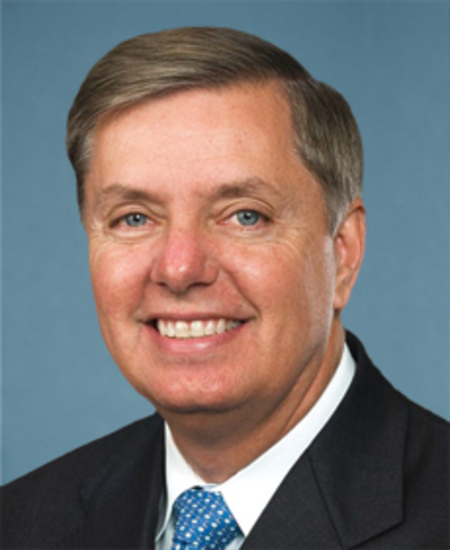
Sen. Lindsey Graham
Sponsored bills
Maddy summaryS 356 establishes a senior coordinator within the U.S. government to manage efforts related to ISIS-affiliated individuals and displaced persons in Syria. It requires an interagency strategy within 180 days focused on repatriating, prosecuting, or reintegrating camp residents (including women and children at facilities like al-Hol) while improving humanitarian conditions and security. The bill mandates annual reports detailing camp conditions, repatriation numbers, security risks, and international cooperation efforts. It directly affects U.S. agencies (State, Defense, Justice, etc.), Syrian displaced persons camps, and partner nations working on ISIS-related detainee resolution. The law modifies existing NDAA 2020 provisions to strengthen coordination and accountability for closing camps by 2025.
Maddy summaryThis bill allows veterans with combat-related disabilities and less than 20 years of service to receive both military retired pay and VA disability compensation simultaneously. Previously, such veterans had their retired pay reduced to avoid "concurrent receipt" of both benefits. The bill removes the 20-year service requirement for this group, applying specifically to those retired under Chapter 61 of Title 10 with a combat-related disability as defined in existing law. It does not change eligibility for veterans with non-combat disabilities or those with 20+ years of service.
Maddy summaryThis bill excludes certain federal broadband grants from recipients' taxable income, directly affecting internet service providers, local governments, tribes, and other entities receiving qualifying grants under specific programs. Key provisions clarify that grant money from programs like the Infrastructure Investment and Jobs Act's Broadband Equity, Access, and Deployment Program (Section 60102) or State Digital Equity Grants (Section 60304) is not counted as income. It also prevents double tax benefits by disallowing deductions for expenses covered by these grants and reducing the adjusted basis of related property. The rule applies to grants received after March 11, 2021, and covers grants funded through federal broadband initiatives or state/local programs using specific federal funds.
Maddy summaryS 377, titled the "Domestic Reinvestment Act of 2023," actually prohibits the government from recouping certain import duties paid by businesses. It stops the Secretary of Homeland Security from requiring repayment or offsetting past, current, or future antidumping/countervailing duties collected since 2001 (specifically payments made on imports from any country distributed after January 1, 2001). The bill mandates refunds for any such recouped payments collected after January 2017 and requires immediate distribution of withheld duties. Exceptions apply for cases involving fraud, misconduct, or court-ordered refunds. (Note: The bill's title is misleading; it addresses duty recoupment, not "reinvestment.")
Maddy summaryThis joint resolution seeks congressional disapproval of a Department of Labor rule published in the Federal Register on December 1, 2022 (87 Fed. Reg. 73822), which addressed "Prudence and Loyalty in Selecting Plan Investments and Exercising Shareholder Rights." If enacted, it would block the rule from taking effect, directly affecting retirement plan fiduciaries (such as those managing 401(k) plans) who must follow these standards. The resolution uses a specific disapproval process under Chapter 8 of Title 5, U.S. Code, to nullify the rule without altering its content. This is a procedural action targeting the rule's implementation, not a new policy.
Maddy summaryS 293, the Fair Access to Banking Act, prohibits large financial institutions (with $10 billion+ in assets) from denying banking services to lawful businesses based on political reasons, bias, or industry category. It requires these "covered banks" to justify service denials using documented, objective risk assessments - not subjective political judgments - and to provide written explanations for denials. The bill directly affects businesses operating legally in industries often targeted by banks (like cannabis or firearms), ensuring equal access to services like loans, credit cards, or payment processing. Violations allow affected businesses to sue for treble damages and attorney fees, with payment networks and credit unions also barred from blocking access based on "reputational risk."
Maddy summaryThis Senate resolution (SRES 25) recognizes January 2023 as "National Mentoring Month" to highlight the importance of mentoring relationships for young people. It acknowledges that one in three U.S. youth lacks a mentor outside their home and emphasizes mentoring's role in improving academic success, mental health, career development, and reducing delinquency. The resolution promotes expanding quality mentoring programs nationwide but does not create new laws or allocate funding. It serves as a symbolic gesture to encourage community, school, and workplace efforts supporting youth development through mentoring.
Maddy summaryThis bill would allow individuals with valid concealed carry permits from their home state to carry concealed handguns in other states that either permit concealed carry for residents or don't ban it. It requires permit holders to have a government-issued ID, meet federal firearm possession rules, and carry only handguns (excluding machineguns or destructive devices). Carrying would still follow local restrictions in the destination state, such as bans in schools or government buildings. The bill does not change how states issue permits but creates automatic recognition of valid permits across participating states.
Maddy summaryThis Senate resolution designates the week of January 22-28, 2023, as "National School Choice Week." It encourages parents to learn about K-12 education options - including public, charter, private, and homeschooling - and promotes public events to raise awareness about educational choice during that week. The resolution does not create new laws or regulations but formally recognizes the annual observance through symbolic congressional support.