

Maddy summaryS 1554, the National American Indian Veterans Charter Act, grants a federal charter to the existing nonprofit organization National American Indian Veterans, Incorporated. This charter formally recognizes the group as a federally chartered entity under Title 36 of the U.S. Code, authorizing it to operate as a nonprofit dedicated to serving American Indian veterans. Key provisions include granting the organization exclusive rights to its name and insignia, requiring it to maintain tax-exempt status, and mandating annual reports to Congress on its activities (though these reports are not public documents). The bill directly affects American Indian veterans by legally solidifying the organization’s role as their representative body for advocacy, outreach, and support services.
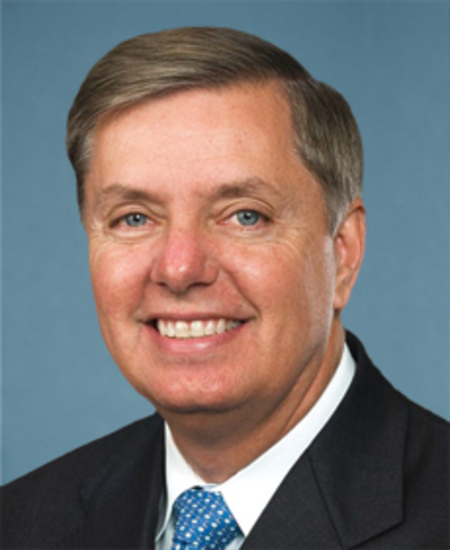
Sen. Lindsey Graham
Sponsored bills
Maddy summaryThis bill, the "Back the Blue Act of 2023," strengthens federal protections for law enforcement officers by creating new criminal penalties for killing or assaulting them while on duty. It makes it a federal crime to kill or attempt to kill law enforcement officers, federal judges, or federally funded public safety officers (including firefighters and first responders) during official duties, with penalties ranging from 10 years to life in prison or death if the victim dies. The bill also establishes a new federal offense for fleeing interstate to avoid prosecution for killing law enforcement officers and adds a new aggravating factor for death penalty cases involving officers. Additionally, it expands law enforcement officers' rights to carry firearms in certain circumstances and limits federal habeas corpus relief for murder convictions involving law enforcement officers.
Maddy summarySRES 106 is a 2023 U.S. Senate resolution condemning China's implementation of the Hong Kong national security law and related actions. It specifically criticizes the law's use to suppress dissent, target figures like pro-democracy advocate Jimmy Lai and Cardinal Zen, and undermine Hong Kong's autonomy under the "one country, two systems" framework. The resolution urges governments to hold China accountable, supports Hong Kong residents' fundamental freedoms, and calls for dropping all national security law charges against detainees. It does not create new laws or impose direct consequences but serves as a symbolic expression of congressional concern about Hong Kong's political rights and rule of law.
Maddy summaryThe RESTART Act (S 1449) streamlines environmental reviews under the National Environmental Policy Act by setting page limits (150 pages for standard environmental impact statements, 300 for complex projects) and strict timelines (2 years for final environmental impact statements, 1 year for environmental assessments). It limits judicial review by requiring lawsuits to be filed within 60 days of publication and setting 180-day deadlines for courts to resolve cases. The bill also modifies Clean Water Act permitting requirements and includes specific provisions expediting approval for the Mountain Valley Pipeline project. These changes primarily affect federal agencies conducting environmental reviews, project sponsors seeking permits, and states involved in environmental permitting processes.
Maddy summaryThis bill creates an exemption from federal environmental liability for fire departments and facilities using specific firefighting foam. It protects entities with approved fire suppression systems that release PFAS-containing foam during lawful activities like training or emergency responses, provided the system meets current fire codes and engineering standards. The exemption does not apply if the entity acts with gross negligence or continues using the foam 5 years after safer alternatives become available. This directly affects fire departments, airports, and industrial facilities that use aqueous film-forming foam (AFFF) containing PFAS chemicals, shielding them from CERCLA cleanup cost claims for routine discharges.
Maddy summaryThis bill protects airport sponsors (like public airports or joint-use facilities) from federal environmental liability claims related to PFAS chemicals used in firefighting foam. It specifically exempts them from costs under the federal environmental law (CERCLA) if the PFAS release resulted solely from using the foam as required by the FAA for safety compliance and following FAA guidelines. The exemption does not apply if the airport sponsor acted with gross negligence or willful misconduct in using the foam. This law directly affects airports that use FAA-mandated firefighting foam but does not shield them from liability for reckless conduct.
Maddy summaryThis bill protects certain waste and compost facilities from federal environmental liability for PFAS releases under CERCLA. It exempts owners/operators of solid waste facilities and compost processors from lawsuits if PFAS was released during permitted disposal of municipal waste residuals, biosolids management, or compost processing under state law. The exemption does not apply if the facility acted with gross negligence or willful misconduct. This directly affects waste management companies, compost businesses, and government entities operating these facilities.
Maddy summaryThis bill protects public water systems, wastewater treatment facilities, and related entities from liability under federal environmental law for PFAS releases, provided they follow all applicable laws during treatment or disposal. It exempts these "protected entities" from cost-recovery claims under CERCLA when handling PFAS in ways consistent with existing water treatment practices, such as managing biosolids, discharging treated water, or disposing of filter media. The exemption does not apply if a facility acts with gross negligence or willful misconduct in handling PFAS. This directly affects water utilities and municipalities managing PFAS-contaminated water or byproducts under current federal and state regulations.
Maddy summaryThis bill exempts agricultural operations from liability under the federal CERCLA law for releases of specific PFAS chemicals used in farming. It directly affects farmers and agricultural businesses (defined as "protected entities") who produce or harvest crops, shielding them from lawsuits or cleanup costs related to covered PFAS substances. The exemption applies to non-volatile PFAS hazardous substances (excluding gases) used in agricultural practices, but does not protect against liability for gross negligence or willful misconduct. The law changes existing environmental liability rules to specifically exclude routine agricultural activities involving these chemicals.
Maddy summarySRES 188 is a symbolic Senate resolution celebrating the 75th anniversary of Israel's founding on May 14, 2023. It formally recognizes Israel's establishment, reaffirms the U.S.-Israel partnership, and highlights shared democratic values, security cooperation, and diplomatic achievements like the Abraham Accords. The resolution has no policy impact or direct effect on individuals or legislation - it serves solely as a ceremonial expression of support. It was introduced by a bipartisan group of senators and passed without implementing new laws or funding.