

Maddy summaryThis bill amends the de minimis import rule (allowing low-value shipments under $800 to enter duty-free) to block duty-free entry for goods from nonmarket economy countries (like China or Russia) or countries on a U.S. trade watch list. It requires importers to submit detailed documentation about the item's origin, value, shipper, and importer to U.S. Customs. Importers who provide false information face civil penalties of $5,000 for the first violation. The law directly affects businesses importing small shipments from targeted countries and increases U.S. Customs’ authority to detain and process such goods.
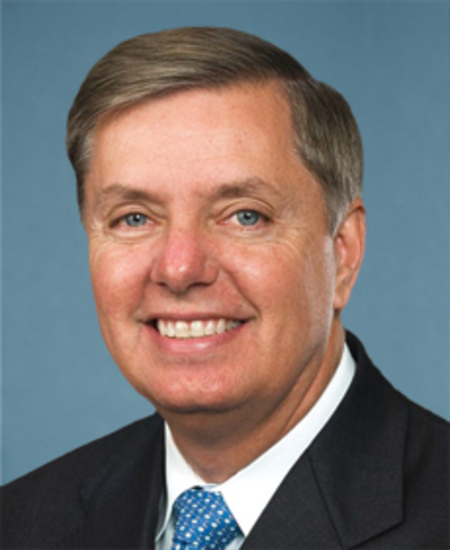
Sen. Lindsey Graham
Sponsored bills
Maddy summaryThe SAFE Act of 2023 amends a federal law to prohibit the slaughter of horses and other equines (such as donkeys) for human consumption. It extends an existing ban on slaughtering dogs and cats for food to include equines, closing a gap in current law. The key change modifies Section 12515 of the 2018 Agriculture Improvement Act to replace "dog or cat" with "dog, cat, or equine" in the prohibition language. This directly affects meat processors and businesses that might have engaged in slaughtering equines for human consumption, making such activity illegal under federal law.
This resolution celebrates the 246th anniversary of the creation of the U.S. flag, recognizes that the Pledge of Allegiance has been a valuable part of life for the people of the United States for generations, and defends the constitutionality of the pledge.
Maddy summaryThis bill requires the Director of National Intelligence to notify Congress within 48 hours if Iran enriches uranium to over 60% purity or produces more than 10 kilograms of enriched uranium. It mandates a follow-up classified 1-page document to Congress within 24 hours of the initial notification. The notification must be sent to specific congressional committees and leadership, including Armed Services, Foreign Relations, and Intelligence committees in both chambers. The bill directly affects Congress by establishing binding notification timelines for monitoring Iran's nuclear enrichment activities.
Maddy summaryS 305 authorizes the U.S. Mint to produce and sell commemorative coins (gold, silver, and half-dollar denominations) to mark the U.S. Marine Corps' 250th anniversary in 2025. Each coin sale includes a surcharge ($5 to $35 per coin) that will fund the Marine Corps Heritage Center's educational programs, with proceeds paid directly to the Marine Corps Heritage Foundation. The coins will be sold from January 1 to December 31, 2025, and the surcharge structure ensures no net cost to taxpayers by covering production expenses through sales. This bill directly affects the U.S. Mint (in coin production), the Marine Corps Heritage Foundation (as recipient of funds), and the public (as potential buyers).
Maddy summaryS 1907, the Federal Firearms Licensee Protection Act of 2023, increases penalties for crimes committed against licensed firearm businesses. It amends federal law to impose a maximum 20-year prison term for knowingly violating firearm licensing rules or attempting to do so. If a burglary or robbery occurs on a licensed dealer’s, manufacturer’s, or importer’s business premises, the law mandates minimum sentences of 3 years for burglary and 5 years for robbery. This bill directly affects federal firearms licensees by strengthening criminal penalties for attacks on their business locations.
Maddy summaryThis bill allows airports to use federal funds for hydrogen storage and distribution infrastructure at or near airports, directly affecting airport authorities and aviation infrastructure developers. It updates research partnerships to include hydrogen and battery technology for aircraft engines, and mandates the ASCENT research center to expand its work on hydrogen to support aviation decarbonization. The bill requires the FAA to include hydrogen research in its National Aviation Research Plan, adding it to existing focus areas like sustainable fuels. These changes aim to accelerate the development and adoption of hydrogen-powered aviation technology.
Maddy summaryS 1906, the Promising Pathway Act, creates a faster FDA approval pathway for new drugs treating serious or life-threatening conditions, allowing provisional approval within 90 days of application. It requires drug sponsors to establish patient registries tracking usage and outcomes (with 90% participation minimum), mandates insurers to cover these drugs identically to fully approved drugs, and sets 2-year provisional approval periods renewable up to three times (max 8 years total). The bill includes safety monitoring, with withdrawal if serious side effects outweigh benefits or if full approval isn’t sought within 180 days. This directly affects drug manufacturers, patients with serious conditions, and health insurers by altering approval timelines, coverage rules, and post-approval monitoring.
Maddy summaryThis bill expands the use of assets seized from individuals or entities subject to U.S. sanctions related to Russia’s aggression in Ukraine. It broadens the definition of eligible assets to include property owned by sanctioned parties, involved in violations of export restrictions (e.g., illegal exports to Russia/Belarus), or tied to schemes supporting Russian aggression in Ukraine (including Crimea and the Donbas regions). The bill requires the Attorney General, Treasury, and State Department to submit semiannual reports on asset transfers and their impact on remedying harms to Ukraine, plus a 30-day implementation plan. It directly affects U.S. federal agencies managing asset forfeitures and aims to redirect existing seized assets to support Ukraine.
Maddy summaryS 1902, the Hydrogen Aviation Strategy Act, directs the Department of Transportation (via the FAA) and the Department of Energy to lead federal efforts in advancing hydrogen use for cleaner aviation. It requires them to study hydrogen’s role in decarbonizing flights (including as fuel input), review policies to accelerate hydrogen-powered aircraft, and establish an advisory committee with industry stakeholders like airlines, manufacturers, and airport operators. The law mandates an annual report to Congress detailing progress on policies, regulatory updates, and timelines for implementing hydrogen-friendly aviation standards. This bill directly affects aviation stakeholders by shaping future regulations and incentives for hydrogen technology adoption.