

Maddy summaryThis non-binding resolution expresses Congress's support for Israel by declaring it is not a racist or apartheid state, rejecting antisemitism and xenophobia, and affirming the U.S. as a steadfast partner. It serves as a symbolic statement of bipartisan backing without creating new laws, funding, or obligations. Introduced by Senators Cotton, Cruz, and others in July 2023, it reflects congressional sentiment rather than policy change.
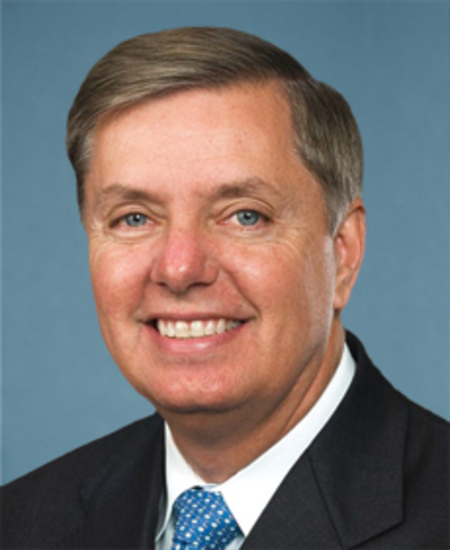
Sen. Lindsey Graham
Sponsored bills
Maddy summaryThis resolution designates September 2023 as "National Childhood Cancer Awareness Month" in the U.S. Senate. It requests federal, state, local governments, and nonprofits to observe the month with programs aimed at increasing public awareness about childhood cancer risks. The resolution also encourages ongoing health monitoring for childhood cancer survivors and honors children facing cancer, while acknowledging the disease's significant impact (over 15,500 annual diagnoses and 1,700 deaths in children under 19). As a symbolic measure with no legal force, it does not change policies or allocate funding but seeks to raise national attention on childhood cancer.
Maddy summaryThe Pay Our Military Act of 2023 ensures that military personnel, Defense Department civilians supporting them, and qualifying Defense contractors continue receiving pay during any funding gap in fiscal year 2024. It appropriates funds from the Treasury to cover military pay, allowances, and support staff salaries when regular budget legislation is delayed. The funding remains available until either a full budget is passed, a continuing resolution is enacted, or January 1, 2025, whichever occurs first. This bill directly affects active-duty service members, reserve components, Defense civilians, and contracted support staff by guaranteeing their compensation during fiscal uncertainty.
Maddy summaryThe SEVER Act of 2023 requires U.S. officials to deny visas to United Nations representatives who are subject to U.S. sanctions under Executive Order 13876 (relating to Iran-related sanctions) as of September 10, 2023. This bill directly affects UN officials personally sanctioned by the U.S. government for Iran-related activities. The key provision amends existing visa denial law to add this new category of individuals for whom visas must be denied. The bill does not create new sanctions but integrates existing Iran sanctions into visa enforcement procedures.
Maddy summaryThis bill requires car manufacturers to include AM radio receivers as standard equipment in all new vehicles sold in the U.S., without additional cost to buyers. It mandates that AM radio controls be clearly visible on the dashboard for drivers. For vehicles sold before the rule takes effect, manufacturers must label them to disclose the absence of AM radio. The bill aims to maintain access to AM radio broadcasts, which are used for emergency alerts, but does not mandate new emergency systems.
Maddy summaryThis bill amends the Elementary and Secondary Education Act to allow schools to use existing federal funds for student sports clubs, teams, training, and related outdoor wellness activities. It directly affects K-12 schools by removing a previous restriction that barred such uses of ESEA funds. The key mechanism is an exception added to Section 8526(7), explicitly permitting these activities before the period ending that section. The change applies to funds already allocated under the ESEA, not creating new spending.
Maddy summaryThis non-binding Senate resolution expresses the chamber's support for nuclear power as a clean, reliable energy source critical to achieving a secure, low-emission grid. It commits the Senate to promoting nuclear energy development, including establishing domestic uranium production, strengthening the nuclear supply chain, and cultivating a skilled workforce. The resolution also highlights nuclear energy as an export opportunity for U.S. manufacturing expertise. As a procedural resolution, it does not create new laws or directly affect policy implementation.
Maddy summaryThe Digital Consumer Protection Commission Act of 2023 establishes a new federal agency, the Digital Consumer Protection Commission (DCC), to regulate dominant digital platforms. The DCC will enforce transparency requirements for content moderation decisions, data privacy protections, and competition rules, requiring platforms to provide clear policies, allow data portability, and prevent anti-competitive practices. Dominant platforms must obtain and maintain a license from the DCC, with potential civil penalties of up to 15% of annual revenue for violations. The law directly affects major technology companies with significant user bases or market influence, imposing new obligations on their data handling, content moderation, and business practices. The DCC will have investigative authority, enforcement powers, and the ability to refer violations to other agencies for criminal prosecution.
Maddy summaryThe Strong Communities Act of 2023 creates a new grant program (COPS Strong Communities Program) under the Omnibus Crime Control Act. It provides competitive federal grants to local law enforcement agencies to cover training costs for officers and recruits at eligible entities like colleges or police departments, with the requirement that participants serve full-time in their local communities for at least four years within specified distances from their long-term residence. If participants don't complete this service, they must repay the training benefits, though regulations will allow for exceptions due to extenuating circumstances. This directly affects local law enforcement agencies, officers, and recruits who participate in the training program.
Maddy summaryThe ACCESS Act of 2023 requires large online platforms (with over 100 million U.S. monthly active users that profit from user data) to enable users to easily transfer their data to competing services and to allow those services to interoperate with them. It mandates that these platforms provide transparent technical tools for data portability and interoperability on fair, reasonable, and non-discriminatory terms, while prohibiting platforms from using data from competing services for commercial gain. The bill also establishes rules for third-party agents (delegated by users to manage accounts) requiring registration, security safeguards, and restrictions on data use. The Federal Trade Commission will enforce these requirements, with penalties including fines based on each affected user.