

Maddy summarySRES 834 is a symbolic Senate resolution reaffirming the U.S. support for the Philippines' claim to Second Thomas Shoal (Ayungin Shoal) within its exclusive economic zone. It condemns China's repeated aggressive actions against Philippine vessels near the shoal - including ramming, water cannons, and harassment - and urges increased U.S. military assistance to help the Philippines defend its maritime operations. The resolution specifically reaffirms the 1951 U.S.-Philippines Mutual Defense Treaty, which covers attacks on Philippine vessels in the South China Sea. It directly affects the Philippines' Coast Guard and naval operations by signaling U.S. diplomatic backing against Chinese pressure.
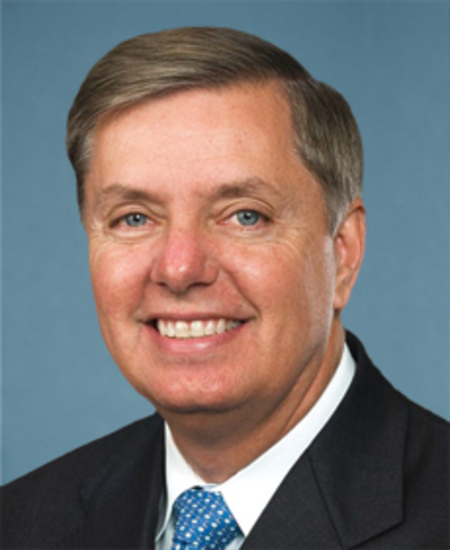
Sen. Lindsey Graham
Sponsored bills
Maddy summaryS 3187, the Southern Border Transparency Act of 2023, requires U.S. Customs and Border Protection (CBP) and the Department of Homeland Security (DHS) to publish detailed immigration data monthly and quarterly. It mandates CBP to post on its website the number of people granted parole at ports of entry, broken down by nationality, age group (like minors or families), and location. DHS must submit quarterly reports to Congress and post them online, detailing apprehensions, processing outcomes (such as parole, removal, or asylum screenings), and demographic breakdowns along the southern border. The bill also updates annual reporting requirements to track parolees' status, including employment authorization and whether their parole ended or was extended. These requirements directly affect CBP and DHS operations, aiming to increase public and congressional transparency about border processing.
Maddy summaryThis resolution designates October 8, 2024, as "National Hydrogen and Fuel Cell Day" to recognize hydrogen and fuel cell technologies. It does not create new laws, funding, or regulations; it is a ceremonial designation. The resolution highlights hydrogen's role in energy, transportation, and space programs through supportive language in its preamble. It directly affects no specific group or policy, serving only as a symbolic observance.
Maddy summaryThe Stand with Ukraine Act of 2024 authorizes sustained U.S. military and economic support for Ukraine over a 10-year period, endorsing a bilateral security agreement between the two countries. It establishes mechanisms to prioritize defense transfers to Ukraine, treats Ukraine as a major non-NATO ally for defense purposes, and streamlines military sales processes to accelerate delivery of weapons and equipment. The bill requires annual reports on funding needs for Ukraine's security, including specific provisions for modernizing Ukraine's military capabilities and supporting recovery efforts. It directly affects the Ukrainian government and military by providing enhanced security assistance to defend against Russian aggression and rebuild after conflict. The legislation focuses on concrete policy changes rather than speculative outcomes, emphasizing measurable support mechanisms for Ukraine's defense and reconstruction.
Maddy summaryThis bill reauthorizes an existing program that provides support and treatment services for law enforcement officers experiencing mental health crises. It extends the funding period for this program from 2020-2024 to 2025-2029 under the Omnibus Crime Control and Safe Streets Act. The key mechanism is simply updating the expiration dates in the law to continue current funding without altering the program's scope or eligibility. The bill directly affects law enforcement officers who access these crisis support services through participating agencies.
Maddy summaryThis joint resolution authorizes the U.S. President to use military force against Iran if they determine Iran is planning or carrying out attacks against U.S. government officials (including former, current, or incoming officials) or senior military personnel. It directly affects U.S. officials who face credible threats, such as former cabinet members and military leaders. The key mechanism requires the President to make a formal determination before authorizing force, expanding the scope of existing authorization to include threats against former officials. The resolution cites Iran's history of plotting attacks on U.S. officials, including specific examples like former Secretaries of State Pompeo and Hook. It does not impose new protections but provides a legal basis for military action in response to identified threats.
Maddy summarySRES 800 is a symbolic Senate resolution introduced on August 1, 2024, by a bipartisan group of senators. It condemns the July 13, 2024, attempted assassination of Donald J. Trump at a Butler, Pennsylvania, rally and honors three individuals affected: Corey D. Comperatore (who died shielding his family), David Dutch (critically injured), and James Copenhaver (critically injured). The resolution calls for national unity and civility following the violent incident. As a non-binding resolution, it does not create new laws or policies but expresses the Senate's stance on the event.
Maddy summaryS 4948 establishes a $10 million grant program through the Commerce Department to reduce harmful interactions between ocean users (like ships, fishermen, and tourism operators) and North Atlantic right whales and other large whales. The program, managed by the National Fish and Wildlife Foundation, funds research on new technologies, awareness campaigns, and infrastructure to help ocean users avoid whale collisions and injuries. Grants prioritize projects that directly reduce harm, involve collaboration among ocean users, and support small U.S. businesses in fishing and tourism. The program runs through 2030, with annual funding and reporting requirements to Congress on its effectiveness.
Maddy summaryThis bill establishes a dedicated DOJ task force within the Criminal Division to investigate and prosecute international trade crimes, such as tariff evasion, smuggling, and fraud affecting imports/exports. It directly impacts American industries and workers by targeting violations of laws related to duties, tariffs, and trade restrictions under statutes like 18 U.S.C. 545 and 18 U.S.C. 371. Key provisions include creating new DOJ prosecutor positions, requiring coordination with Customs and Border Protection, and mandating annual reports to Congress on case volumes, funding use, and future needs. The bill authorizes $20 million for fiscal year 2025 to support these efforts, with 80% allocated to criminal prosecutions.
Maddy summaryThe Freedom from Unfair Gun Taxes Act (S 4960) prohibits states and local governments from imposing excise taxes on the sale of firearms, ammunition, or firearm parts when the transaction occurs in interstate or foreign commerce. This directly affects state tax policies and firearm manufacturers or dealers conducting sales across state lines. The bill explicitly states it does not alter the federal Pittman-Robertson Wildlife Restoration Act tax, which remains unchanged. Its key mechanism bans state-level excise taxes for these items in interstate commerce, preventing potential tax barriers for cross-state firearm transactions.