

Frank Harrison, Elizabeth Peratrovich, and Miguel Trujillo Native American Voting Rights Act of 2021 This bill addresses the voting rights of Native American and Alaska Native voters and voting access on tribal lands. The bill includes provisions expanding the types of facilities that can be used as voter registration agencies; increasing polling site accessibility, including by expanding early in-person voting and providing ballot drop boxes; providing enforcement power to citizens and attorneys general; requiring approval for actions like moving a polling place; validating certain tribal identification for voting or registering to vote; permitting voters to designate another individual to return a ballot on their behalf; and expanding requirements for bilingual voting accessibility. In addition, the bill establishes a Native American voting task force grant program for the purpose of increasing voter outreach, education, registration, turnout, and accessibility for Native American communities. The bill also directs the Government Accountability Office to study and report on (1) the prevalence of nontraditional or nonexistent mailing addresses among Indians, members of tribes, and individuals residing on Indian lands; and (2) the alternatives for removing barriers to voter registration, receipt of voter information and materials, and receipt of ballots.
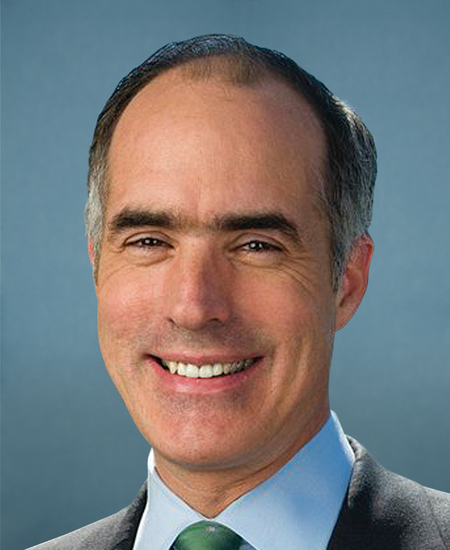
Sen. Robert P. Casey, Jr.
Sponsored bills
Diversifying Investigations Via Equitable Research Studies for Everyone Trials Act or the DIVERSE Trials Act This bill requires activities to increase diversity in clinical trials. It also expands reporting by laboratories that test for and diagnose COVID-19 and requires a study on data collection and data sharing during public health emergencies. Specifically, the Food and Drug Administration (FDA) must issue guidance on decentralized clinical trials to promote meaningful demographic and geographic diversity in patient engagement, enrollment, and participation. Decentralized clinical trials include those executed through telemedicine or other digital technologies to allow for the remote collection and assessment of clinical trial data. The FDA may also work with foreign regulators to harmonize international regulations governing decentralized clinical trials and the use of digital health technology. In addition, the Department of Health and Human Services (HHS) may support community education, outreach, and recruitment activities for clinical trials of treatments for conditions that disproportionately impact populations underrepresented in clinical trials. The bill also specifies that drug or device manufacturers may provide, subject to some limits, free digital health technologies and other remuneration to patients in approved clinical trials without violating laws that address fraud and abuse in federal programs. Furthermore, laboratories that test for and diagnose COVID-19 must report additional demographic data, including information about social determinants of health. HHS must also contract with the National Academy of Medicine to study and propose a design for an interoperable platform to facilitate data sharing during public health emergencies.
This resolution addresses issues related to individuals with disabilities. Specifically, the resolution recognizes the importance of independent living for individuals with disabilities made possible by the enactment of the Americans with Disabilities Act of 1990 and encourages all Americans to celebrate the advancement of inclusion and equality of opportunity made possible by its enactment; pledges to continue to work on a bipartisan basis to identify and address the remaining barriers that undermine the national goals of equality of opportunity, independent living, economic self-sufficiency, and full participation for individuals with disabilities; pledges to work with states to improve access to home- and community-based services for individuals with disabilities; calls on the Department of Labor to provide information, resources, and technical assistance to enable individuals with disabilities to achieve economic self-sufficiency; and calls on the Department of Health and Human Services to provide information, resources, and technical assistance regarding such services that enable individuals with disabilities to live independently.
This resolution expresses the condolences of the Senate regarding the death of the Honorable Maurice Robert Gravel, former Senator from Alaska.
9/11 Responder and Survivor Health Funding Correction Act This bill increases funding for and otherwise modifies a federal program that provides medical monitoring and treatment to responders and survivors who suffer from health conditions related to the September 11, 2001, attacks on the World Trade Center. Among the changes, the bill allows certain health care providers other than physicians to determine whether an individual's health condition is related to the attacks, and it establishes a research program to study the impacts of the attacks on health and educational outcomes of individuals who were 21 years of age or younger when the attacks occurred.
Elder Justice Reauthorization and Modernization Act of 2021 This bill reauthorizes, provides funding through FY2025 for, and otherwise makes changes to, programs for preventing, detecting, and treating abuse, neglect, and exploitation of older adults. Specifically, the bill provides funding for states and localities to enhance adult protective services and long-term care ombudsman programs. Additionally, the bill modifies an existing long-term care workforce grant program, including by requiring that grant recipients use funds to provide employees with wage subsidies, educational assistance, and access to affordable child care and transportation. Furthermore, the bill establishes new grant programs for states to (1) link health care and social services for older adults, including through medical-legal partnerships and legal services hotlines; and (2) prevent and address social isolation among older adults and individuals with disabilities. The bill also provides funding for reporting by the Department of Health and Human Services on the effectiveness of various programs and activities in addressing abuse, neglect, and exploitation of older adults.
21st Century Assistive Technology Act This bill reauthorizes through FY2026, modifies the funding allocations for, and makes administrative and other changes to programs that increase access to assistive technology devices and assistive technology services for individuals with disabilities. An assistive technology device includes any item, piece of equipment, or system that is used to maintain or improve the functional capabilities of individuals with disabilities (e.g., wheelchairs, hearing aids, or screen readers and computer software), and an assistive technology service is a service that directly assists an individual with a disability with selecting or using such devices, including by evaluating the individual's needs or expanding access to such devices and technology. Specific changes include expanding the scope of certain technical assistance to support grant recipients with data collection, increasing collaboration between agencies that are implementing certain assistive technology grants and state agencies that receive other sources of federal funding for this technology, and adding a more specific focus on older adults in these programs.
Medicare Access to Radiology Care Act of 2021 This bill provides for Medicare coverage of services that are furnished by a certified radiologist assistant under the supervision of a radiologist. Payment must be made to the supervising radiologist.
Disaster Relief Medicaid Act This bill establishes a series of programs and requirements relating to Medicaid coverage of individuals affected by a federally declared major disaster. In particular, the bill provides for specific disaster relief coverage under Medicaid for individuals who meet specified income eligibility standards and, during the seven-day period preceding the disaster, were either residents of the impacted area or were employed in the impacted area (and subsequently lost employment). Coverage is effective for two years after the date of the disaster declaration. State Medicaid programs must provide disaster relief coverage that is at least as comprehensive as the state's Medicaid coverage and the Medicaid coverage of the individual's home state, as applicable. The bill applies a 100% Federal Medical Assistance Percentage (i.e., federal matching rate) to such coverage and related administrative expenses.
Family Strengthening Infrastructure Act of 2021 This bill provides additional funding through FY2031 for state and community-based child abuse prevention and treatment programs.