

Maddy summaryThis bill (S 4917) updates securities laws to exempt certain retirement plans used by charities and educational institutions from registration requirements. It specifically clarifies that 403(b) plans meeting ERISA standards, with employer fiduciary oversight for investment choices, and pre-approved investments qualify for exemption under the Securities Act of 1933 and Securities Exchange Act of 1934. The key change removes administrative barriers for these organizations, allowing them to offer retirement plans without additional SEC registration. This directly affects non-profits, schools, and similar institutions that provide 403(b) retirement benefits to employees. The policy change streamlines access to tax-advantaged retirement options without altering plan benefits.
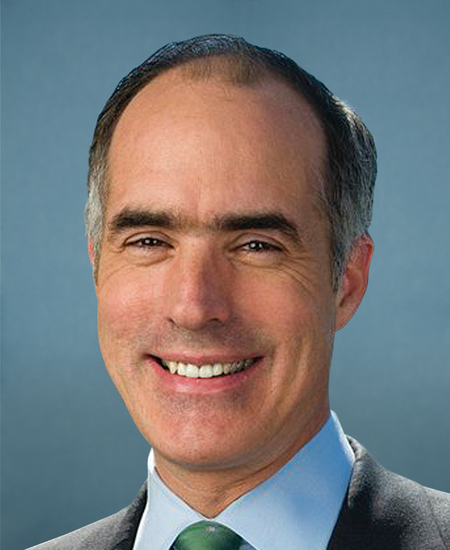
Sen. Robert P. Casey, Jr.
Sponsored bills
Maddy summaryThe Residential Recovery for Seniors Act (S 4860) expands Medicare Part A coverage to include three types of residential substance use disorder treatment services for seniors: clinically managed low-intensity, high-intensity, and medically managed residential care. The bill defines specific program requirements for facilities providing these services, including 24-hour supervision, clinical assessments, medication management, and regular need reviews (every 10-30 days depending on intensity level). It adds these specialized facilities as Medicare providers and establishes a prospective payment system to cover these services starting in 2025, with payment rates based on facility costs and adjusted annually. This legislation directly affects seniors with substance use disorders who require residential treatment but currently face limited Medicare coverage for such services.
Maddy summaryThis bill creates a federal grant program to help states, local governments, and tribal entities hire and retain prosecutors. It provides up to 75% federal funding (with possible waiver of the 25% local match requirement) for prosecutor offices to hire, train, or retain staff, prioritizing rural, tribal, and areas affected by budget cuts that laid off prosecutors. The program requires grantees to track outcomes and report progress, with $10 million authorized annually for fiscal years 2025-2029. It directly affects prosecutor offices seeking to strengthen staffing capacity through federal financial support.
Maddy summaryThis resolution recognizes the progress made by the Americans with Disabilities Act of 1990 in advancing independent living and economic self-sufficiency for people with disabilities, while highlighting persistent challenges like high poverty rates, employment barriers, and inaccessible services. It calls on multiple federal agencies - including the Department of Labor, Health and Human Services, and the Federal Communications Commission - to take specific actions, such as developing employment policies, improving accessibility in communications, and expanding home- and community-based services. The resolution urges bipartisan efforts to dismantle systemic barriers and strengthen opportunities for people with disabilities to fully participate in work and community life. As a non-binding resolution, it does not create new laws but serves as a formal statement of congressional intent and a framework for future policy action.
Maddy summarySRES 771 is a symbolic Senate resolution designating August 26-30, 2024, as "National Community Health Worker Awareness Week" (the second annual observance). It recognizes community health workers - frontline professionals who bridge communities and health services - as vital to improving health access and reducing disparities in underserved areas. The resolution encourages federal, state, and local collaboration to raise awareness of their roles, which include cultural mediation, health education, care coordination, and advocacy. This resolution has no binding effect or policy changes; it is purely a statement of support.
Maddy summaryThe ASSET Act removes asset limits from key federal assistance programs, allowing low-income families to save money without losing eligibility. It eliminates restrictions on savings for Temporary Assistance for Needy Families (TANF), Supplemental Nutrition Assistance Program (SNAP), and Low-Income Home Energy Assistance Program (LIHEAP) benefits. The bill also updates Supplemental Security Income (SSI) resource limits to $20,000 for individuals and $10,000 for couples in 2024, with annual inflation adjustments. These changes directly affect millions of households who previously faced barriers to building financial security while receiving public assistance.
Maddy summaryS 4781, the PACE Anytime Act, allows individuals eligible for the Program of All-Inclusive Care for the Elderly (PACE) to enroll in a PACE program at any time during a month, rather than being restricted to specific enrollment periods. This change applies to all PACE participants, with states required to opt-in to permit enrollment anytime for dual-eligible beneficiaries (those covered by both Medicare and Medicaid). The bill also requires prorated payments for PACE providers when enrollment begins mid-month, ensuring payments align with the actual enrollment period. The law takes effect January 1, 2025.
Maddy summaryThis bill requires the Access Board to create guidelines for accessible exercise equipment and fitness services within 18 months. It directly affects fitness centers (like gyms in hotels, schools, or standalone facilities) that are public accommodations under the ADA. Key provisions include setting standards for equipment meeting ASTM accessibility guidelines, requiring proper placement of accessible machines, and mandating that providers train staff to assist people with disabilities and notify them about available support. The Department of Justice must then issue enforceable regulations based on these guidelines.
Maddy summaryThe Section 508 Refresh Act of 2024 updates federal accessibility requirements for information and communications technology (ICT), replacing outdated terminology throughout the law. It requires federal agencies to routinely involve people with disabilities in developing, testing, and remedying ICT, establishes a uniform complaint process for accessibility violations, and mandates pre-acquisition testing for compliance. The bill imposes mandatory civil penalties of at least 3% of a contract's value for noncompliant vendors and requires agencies to appoint accessibility compliance officers who must annually certify compliance on agency websites. It also creates a "Good Samaritan" bonus program for vendors who identify missing accessibility requirements before contracts are finalized. The act aims to strengthen enforcement of accessibility standards across all federal ICT, making government services more accessible to people with disabilities.
Maddy summaryThis bill amends the Older Americans Act to add new home modification services for older individuals (60+). It directly affects older adults by authorizing: (1) air-quality improvements like ventilation upgrades and reducing indoor pollutants from gas appliances; (2) energy-efficient home modifications prioritizing low-emission technologies; and (3) assistance with utility costs through existing programs. The key mechanism expands eligibility to include multi-family dwellings, rental units, and homes occupied by older individuals living with non-older residents. These provisions aim to improve indoor air quality, reduce energy costs, and lower emissions without creating new federal programs.