Schedules That Work Act This bill provides employees with the right to request changes to their work schedules related to the number of hours they are required to work or be on call, the location of the work, the amount of notification about work schedule assignments, and fluctuations in work hours. Employers must negotiate in good faith with employees who make such requests and comply with certain work schedule notice and split shift pay requirements for retail, food service, cleaning, hospitality, or warehouse employees.
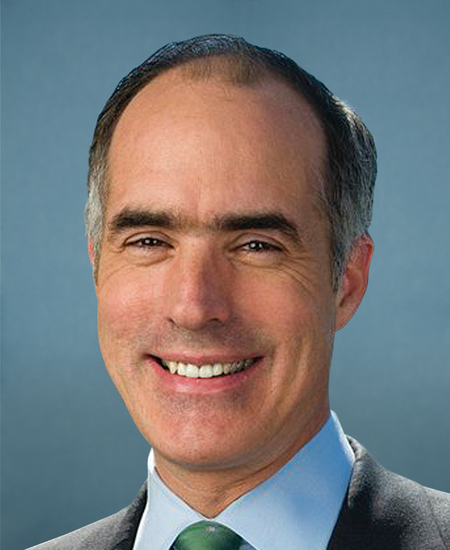
Sen. Robert P. Casey, Jr.
Sponsored bills
Part-Time Worker Bill of Rights Act This bill modifies various employment, leave, and pension rules with respect to part-time workers. Specifically, the bill removes the requirement that employees work a minimum number of hours during the preceding 12-month period before becoming eligible for family and medical leave. The bill also sets the maximum length of service on which employers may condition the eligibility of part-time employees for a qualified pension plan (e.g., 401(k) retirement plan). Except as required by an applicable collective bargaining agreement, such service requirement may be no longer than two consecutive 12-month periods of at least 500 hours of service for part-time employees who have reached the age of 21 by the end of such period. The bill further prohibits employers of more than 15 employees from setting disparate terms of employment or working conditions for part-time employees, including with respect to compensation, notice of work hours, and promotion opportunities. Additionally, the bill requires such employers to offer available, qualified part-time employees additional work hours before hiring new employees for such hours. Among other enforcement methods, employers must maintain three years of records for offers of additional hours and employee responses to such offers. The bill also provides a private right of action for employees to enforce the nondiscrimination requirements of this bill.
Maddy summarySRES 510 is a Senate resolution designating January 25, 2022, as "National Poll Worker Recruitment Day." It recognizes the vital role of poll workers in elections and encourages eligible citizens to volunteer for the 2022 elections. The resolution does not create new laws or requirements but serves as a symbolic call to action to address poll worker shortages. It directly aims to engage the public in supporting election infrastructure through voluntary service.
Program of All-Inclusive Care for the Elderly Expanded Act or the PACE Expanded Act This bill modifies requirements regarding Programs of All-Inclusive Care for the Elderly (PACE). PACE is a program under Medicare and Medicaid that provides in-home and community services for certain individuals as an alternative to nursing home care. The bill allows Medicare beneficiaries to enroll in a PACE program at any time and provides states with the option to allow Medicaid beneficiaries to do the same. Entities may also apply to become PACE providers at any time, upon specified assurances relating to staffing and other requirements. The bill also (1) allows the Center for Medicare and Medicaid Innovation to test a model for expanded PACE eligibility that targets high-need and high-cost populations, and (2) requires an evaluation of the effectiveness of PACE in rural and underserved areas.
Violence Against Women Act Reauthorization Act of 2022 This bill modifies and reauthorizes through FY2027 programs and activities under the Violence Against Women Act that seek to prevent and respond to domestic violence, sexual assault, dating violence, and stalking. The bill also authorizes new programs, makes changes to federal criminal laws, and establishes new protections to promote housing stability and economic security for victims of domestic violence, sexual assault, dating violence, and stalking.
Eliminating Abusive and Rampant Neglect of Interactive Technologies Act of 2022 or the EARN IT Act of 2022 This bill revises the federal framework governing the prevention of online sexual exploitation of children. The bill establishes the National Commission on Online Child Sexual Exploitation Prevention. The commission must develop best practices for interactive computer services providers (e.g., Facebook and Twitter) to prevent, reduce, and respond to the online sexual exploitation of children. Additionally, the bill limits the liability protections of interactive computer service providers with respect to claims alleging violations of child sexual exploitation laws. The bill replaces various statutory references to child pornography and material that contains child pornography with child sexual abuse material . Finally, the bill makes changes to the reporting requirements for electronic communication service providers and remote computing service providers (providers) who report apparent instances of crimes involving the sexual exploitation of children to the National Center for Missing and Exploited Children. Among the changes, the bill requires providers to report facts and circumstances sufficient to identify and locate each minor and each involved individual. The bill also increases the amount of time that providers must preserve the contents of a report.

Fostering Success in Higher Education Act of 2022 This bill requires the Department of Education to provide formula grants to states for activities to improve college access, retention, and completion rates for foster and homeless youth. States that receive such grants must award subgrants to institutions of higher education to carry out these activities in partnership with child welfare agencies and organizations serving homeless youth.
First Rhode Island Regiment Congressional Gold Medal Act This bill provides for the award of a single Congressional Gold Medal to the First Rhode Island Regiment, collectively, in recognition of their dedicated service during the Revolutionary War.
This resolution supports the goals of National Catholic Schools Week, an event cosponsored by the National Catholic Educational Association and the U.S. Conference of Catholic Bishops and established to recognize the contributions of Catholic elementary and secondary schools in the United States.
Connect Unserved Americans Act of 2022 This bill modifies administration of and requirements for broadband deployment programs. Specifically, it requires the Department of the Treasury to participate in interagency activities to coordinate federally supported broadband deployment. The bill also increases the percentage (from 50% to 80%) of rural households that a project must serve in order to receive a grant or a loan to expand access to broadband for distance learning and telemedicine in rural areas.