

This resolution condemns violence and threats of violence against historically Black colleges and universities (HBCUs) and reaffirms the federal government's commitment to combating violence against HBCU students, faculty, and staff.
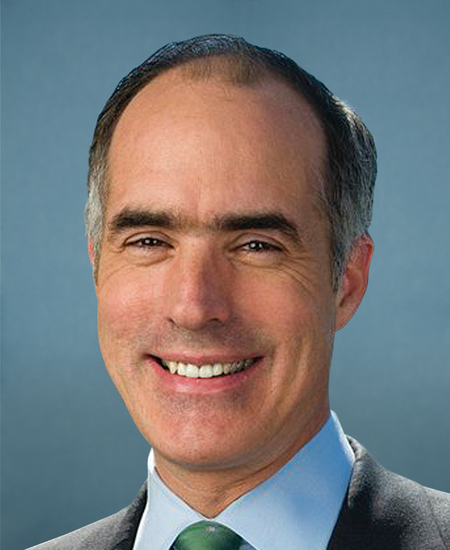
Sen. Robert P. Casey, Jr.
Sponsored bills
Striking Workers Healthcare Protection Act This bill prohibits an employer from terminating or significantly altering the employer-provided health insurance coverage of an employee engaged in a lawful strike. An employer that violates this prohibition is subject to a maximum civil penalty of $50,000 for each violation.
This bill shortens the maximum time, from three consecutive 12-month periods of at least 500 hours of service to two such periods, that an employer may require before a part-time employee is eligible for participation in certain employer-sponsored retirement plans.
Arbitration Fairness for Consumers Act This bill deems as invalid or unenforceable a predispute arbitration agreement or joint-action waiver related to a consumer financial product or service.
Strengthening American Cybersecurity Act of 2022 This bill addresses cybersecurity threats against critical infrastructure and the federal government. The Cybersecurity and Infrastructure Security Agency (CISA) must perform ongoing and continuous assessments of federal risk posture. An agency, within a specified time frame, must (1) determine whether notice to any individual potentially affected by a breach is appropriate based on a risk assessment; and (2) as appropriate, provide written notice to each individual potentially affected. Each agency must (1) provide information relating to a major incident to specified parties, and (2) develop specified training for individuals with access to federal information or information systems. The bill requires reporting and other actions to address cybersecurity incidents. Entities that own or operate critical infrastructure must report cyber incidents and ransom payments within specified time frames. The bill limits the use and disclosure of reported information. The bill establishes (1) an interagency council to standardize federal reporting of cybersecurity threats, (2) a task force on ransomware attacks, and (3) a pilot program to identify information systems vulnerable to such attacks. The bill provides statutory authority for the Federal Risk and Authorization Management Program (FedRAMP) within the General Services Administration (GSA). FedRAMP is a government-wide program that provides a standardized approach to security assessment, authorization, and continuous monitoring for cloud computing products and services. The bill establishes a FedRAMP Board to examine the operations of FedRAMP and the Federal Secure Cloud Advisory Committee.
Highlands Conservation Reauthorization Act of 2021 This bill extends through FY2028 the Highlands Conservation Act, which provides for land conservation in Highlands states (i.e., Connecticut, New Jersey, New York, and Pennsylvania). The bill authorizes the Fish and Wildlife Service to add a municipality to the Highlands region upon the request of a Highlands state. The bill revises the way in which land is identified for conservation to require using the best available science and geographic information systems. The bill allows political subdivisions of states to enter into agreements with the Department of the Interior for land conservation projects. A Highland state that receives funds for a land conservation partnership project may not use more than 5% of the funds to administer that project. The bill extends through FY2028 Forest Service and other Department of Agriculture programs to conserve land and natural resources in the Highlands region.
Health Care for Burn Pit Veterans Act This bill updates policies and procedures related to Department of Veterans Affairs (VA) health care and benefits for veterans who have been exposed to toxic substances. Specifically, the bill extends the eligibility period for VA hospital care, medical services, and nursing home care for combat veterans who served after September 11, 2001, and were exposed to toxic substances, radiation, or other conditions, including those who did not enroll to receive VA care during the eligibility period. The VA must incorporate into its existing health care screening a screening to help determine potential exposures to toxic substances during military service. Among other requirements, the VA must also provide annual training to health care and benefits personnel with respect to veterans who were exposed to toxic substances; analyze total and respiratory disease mortality in veterans who served in specified locations on specified dates; conduct an epidemiological study on the health trends of veterans who served in the Armed Forces after September 11, 2001; conduct a study to determine trends in the rates of the incidence of cancer in veterans; publish a list of VA resources for veterans who were exposed to toxic substances, families and caregivers of such veterans, and survivors of such veterans who are receiving death benefits; and report on the data quality of the Individual Longitudinal Exposure Record and its usefulness in supporting veterans in receiving VA health care and benefits.
Harriet Tubman Bicentennial Commemorative Coin Act This bill directs the Department of the Treasury to mint and issue 50,000 $5 gold coins, 400,000 $1 silver coins, and 750,000 half-dollar clad coins emblematic of the legacy of Harriet Tubman as an abolitionist. The Secretary may issue coins under this bill only during the period of January 1, 2024, through December 31, 2024. All surcharges received by Treasury from the sale of such coins must be paid equally to the National Underground Railroad Freedom Center in Cincinnati, Ohio, and The Harriet Tubman Home, Inc. in Auburn, New York, for the purpose of accomplishing and advancing their missions.
This concurrent resolution recognizes that people with disabilities experience barriers to access every day and pledges to make universal and inclusive design a guiding principle for all infrastructure bills and projects.
This resolution supports the designation of February 19-February 26, 2022, as National FFA Week. It also (1) recognizes the important role of the National FFA Organization (Future Farmers of America) in developing the next generation of leaders who will change the world, and (2) celebrates 70 years of the National FFA Organization's membership magazine.