This resolution celebrates the 50th anniversary of the Federal Pell Grant program and expresses support for the designation of June 23 as National Pell Grant Day.
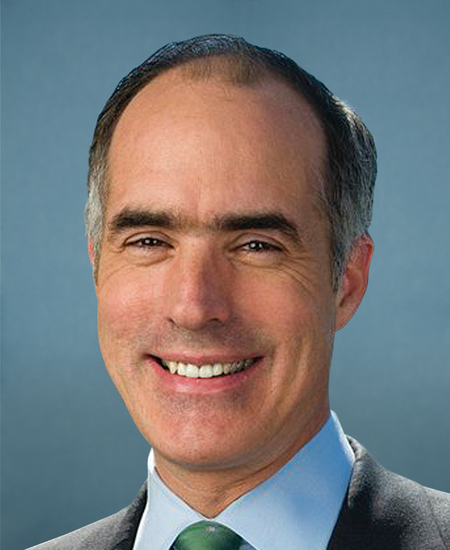
Sen. Robert P. Casey, Jr.
Sponsored bills
Kids' Mental Health Improvement Act This bill requires the Department of Health and Human Services to issue certain guidance and reports on ways to expand access to behavioral health services (particularly for children), including guidance to states on (1) how to expand mental, emotional, and behavioral health services and telehealth services under Medicaid; and (2) existing regulatory flexibilities for hospitals and other providers to support children in crisis or in need of more intensive services.
Grandfamilies Act of 20 22 This bill expands access to specified programs for children living with grandparents or other family members who are not their legal guardian. Specifically, the bill provides that a child of a relative eligible for Old-Age and Survivors Insurance benefits is eligible for such benefit payments if that child (1) began living with such relative before age 18, (2) receives at least 50% of their support from such relative, and (3) has lived with such relative pursuant to a court order for at least 12 months. Additionally, the bill revises the Temporary Assistance for Needy Families (TANF) eligibility requirements for children living with specified caretaker relatives. First, the bill lessens the requirement for TANF applicants to assign their rights to child support when such assignment may impact the likelihood of reunifying the child with their noncustodial parent, such as where the noncustodial parent is working to gain financial stability so they may reunify with their child. Further, when a child, but not the caretaker relative, receives TANF benefits (i.e., child-only cases), or if the caretaker relative is 55 or older, the bill (1) excludes such caretaker’s income from that child’s eligibility determination, (2) removes the 5-year cap on assistance, and (3) exempts such caretaker relatives from TANF work requirements. The bill also (1) encourages states to enact temporary guardianship laws, (2) provides grants for state plans to support caretaker relatives, and (3) requires the Administration for Community Living to provide grants for establishing cross-sector partnerships that support families with caretaker relatives.

Health Care Capacity for Pediatric Mental Health Act of 2022 This bill establishes programs to support the provision of pediatric mental, emotional, behavioral, and substance use disorder services, particularly in underserved and other high-need areas. The Health Resources and Services Administration must award funding to children's hospitals and other facilities that provide such pediatric services for integrating and coordinating the provision of services to meet community needs, workforce training, and constructing new sites of care or otherwise expanding capacity at existing sites to provide services.
Public and Federally Assisted Housing Fire Safety Act of 2022 This bill requires each unit of federally assisted housing to contain hardwired or tamper-resistant battery-powered smoke alarms. The bill also requires the Department of Housing and Urban Development to complete a national campaign to educate the general public about health and safety requirements and how to properly use safety features in housing.
Eleanor Smith Inclusive Home Design Act of 2022 This bill requires certain newly constructed, federally assisted housing, including single-family homes and town houses, to contain at least one level that complies with specified minimum standards of accessibility for individuals with disabilities. An aggrieved person may commence a civil action with respect to a violation of this requirement.
Informing Grandfamilies Act This bill requires states to notify kinship caregivers (e.g., grandparents or other relatives caring for a minor child) about (1) the care and placement options under federal, state, and local laws; (2) the requirements to become a foster family home; (3) whether the state has elected to make guardianship assistance payments; and (4) other policies under the state program that may assist such caregivers.
Truth and Healing Commission on Indian Boarding School Policies Act This bill establishes the Truth and Healing Commission on Indian Boarding School Policies in the United States and sets forth its powers, duties, and membership. Among other duties, the commission must investigate the impacts and ongoing effects of the Indian Boarding School Policies (federal policies under which American Indian, Alaska Native, and Native Hawaiian children were forcibly removed from their family homes and placed in boarding schools). Further, the commission must develop recommendations on ways to (1) protect unmarked graves and accompanying land protections; (2) support repatriation and identify the tribal nations from which children were taken; and (3) discontinue the removal of American Indian, Alaska Native, and Native Hawaiian children from their families and tribal communities by state social service departments, foster care agencies, and adoption agencies.
Protecting the Right to Organize Act of 20 21 This bill expands various labor protections related to employees' rights to organize and collectively bargain in the workplace. Among other things, it revises the definitions of employee , supervisor , and employer to broaden the scope of individuals covered by the fair labor standards; permits labor organizations to encourage participation of union members in strikes initiated by employees represented by a different labor organization (i.e., secondary strikes); and prohibits employers from bringing claims against unions that conduct such secondary strikes. The bill also allows collective bargaining agreements to require all employees represented by the bargaining unit to contribute fees to the labor organization for the cost of such representation, notwithstanding a state law to the contrary; and expands unfair labor practices to include prohibitions against replacement of, or discrimination against, workers who participate in strikes. The bill makes it an unfair labor practice to require or coerce employees to attend employer meetings designed to discourage union membership and prohibits employers from entering into agreements with employees under which employees waive the right to pursue or a join collective or class-action litigation. Finally, the bill addresses the procedures for union representation elections, modifies the protections against unfair labor practices that result in serious economic harm, and establishes penalties and permits injunctive relief against entities that fail to comply with National Labor Relations Board orders.
Pregnant Workers Fairness Act This bill prohibits employment practices that discriminate against making reasonable accommodations for qualified employees affected by pregnancy, childbirth, or related medical conditions. A qualified employee is an employee or applicant who, with or without reasonable accommodation, can perform the essential functions of the position, with specified exceptions. Specifically, the bill declares that it is an unlawful employment practice to fail to make reasonable accommodations to known limitations of such employees unless the accommodation would impose an undue hardship on an entity's business operation; require a qualified employee affected by such condition to accept an accommodation other than any reasonable accommodation arrived at through an interactive process; deny employment opportunities based on the need of the entity to make such reasonable accommodations to a qualified employee; require such employees to take paid or unpaid leave if another reasonable accommodation can be provided; or take adverse action in terms, conditions, or privileges of employment against a qualified employee requesting or using such reasonable accommodations. The bill sets forth enforcement procedures and remedies that cover different types of employees in relation to such unlawful employment practices. The Equal Employment Opportunity Commission must provide examples of reasonable accommodations that shall be provided to affected employees unless the employer can demonstrate that doing so would impose an undue hardship. The bill prohibits state immunity under the Eleventh Amendment to the Constitution from an action for a violation of this bill.