

Maddy summaryThis bill allows physical therapists to use temporary replacement providers (locum tenens) under Medicare, aligning their coverage rules with those already available to physicians. It directly affects physical therapists and Medicare beneficiaries by enabling uninterrupted access to physical therapy services during provider shortages. The key change amends Medicare rules to treat outpatient physical therapy services the same as physician services for temporary staffing purposes. This policy shift takes effect after the bill's enactment, ensuring physical therapy care can continue without disruption during staffing gaps.
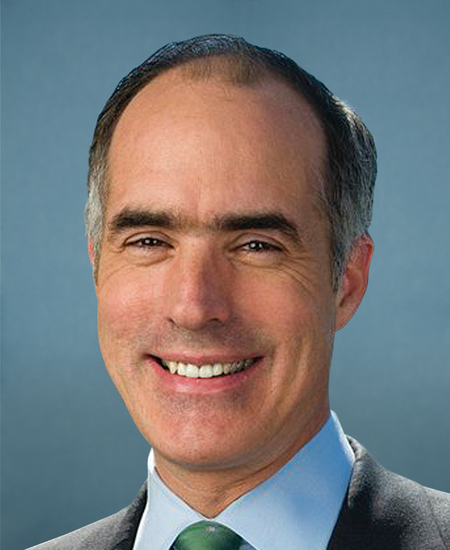
Sen. Robert P. Casey, Jr.
Sponsored bills
Maddy summarySRES 104 is a symbolic Senate resolution recognizing the heritage, culture, and contributions of Latinas in the United States. It highlights that nearly 30 million Latinas live in the U.S. (1 in 6 women), emphasizing their roles across diverse fields like business (over 2 million Latina-owned businesses), military service (45,710 active-duty Latinas), arts (Selena, Rita Moreno), and essential work during the pandemic. The resolution notes ongoing challenges, including Latinas earning only 57 cents for every dollar earned by White, non-Hispanic men. It formally celebrates Latinas' achievements while acknowledging the need for further progress toward equality. As a non-binding resolution, it does not create new laws or allocate funds.
This resolution designates March 9, 2023, as National Slam the Scam Day to raise awareness about scams involving individuals impersonating government employees, encourage policies to prevent such scams, recognize those who work to prevent such scams, and encourage the public to report and share information about such scams.
Maddy summaryS 737, the No Tax Breaks for Union Busting (NTBUB) Act, denies tax deductions for employers who spend money to influence employees about union activities or collective bargaining. It amends the tax code to make non-deductible expenses related to swaying union elections, labor disputes, or collective actions - such as anti-union consulting fees, captive audience meetings, or legal settlements over unfair labor practices. Employers must report such spending on tax returns (using new Form 6720D) and face penalties for non-compliance, including fines up to $100,000. The bill directly affects businesses that engage in union-avoidance tactics, aiming to remove tax incentives for undermining workers’ rights under labor laws.
Maddy summaryThe MINDS Act establishes a dedicated Mental Health and Psychosocial Support (MHPSS) Coordinator at USAID to oversee the integration of mental health services across all U.S. international development and humanitarian assistance programs. It mandates that all such programs must be evidence-based, culturally competent, trauma-informed, and prioritize vulnerable groups like conflict-affected children, displaced populations, and those impacted by diseases like Ebola or COVID-19. The bill requires annual reports to Congress detailing funding, program integration progress, and barriers to implementation, with a 5-year sunset provision. This legislation directly affects USAID and State Department programming worldwide, aiming to systematically address mental health needs in global aid efforts.
Maddy summaryThe Stop Forced Organ Harvesting Act of 2023 requires the U.S. government to address forced organ harvesting by mandating annual reports on the issue in foreign countries and allowing passport denial or revocation for individuals convicted of organ trafficking. It directs the President to impose sanctions - including asset blocking and visa bans - on individuals or entities involved in forced organ harvesting, with exceptions for humanitarian aid. The bill defines "forced organ harvesting" as organ removal by coercion, deception, or abuse of power, and "trafficking" as recruiting or transporting people for organ removal through similar means. These provisions aim to hold accountable those exploiting vulnerable individuals for organ removal.
Maddy summaryThe HCBS Access Act (S 762) requires states to provide Medicaid coverage for home and community-based services (HCBS) to eligible individuals with disabilities and older adults, aiming to eliminate waiting lists and ensure access to community-based care. The bill establishes a comprehensive definition of HCBS that includes personal assistance, transportation, respite care, housing support, and other services necessary for community living. It mandates states to develop implementation plans to expand access, improve compensation and working conditions for direct care workers, and report on quality measures and demographic data related to HCBS access. The bill also creates a national technical assistance center to support workforce development and ensures services are provided in settings meeting specific quality standards.
Maddy summaryThis bill reauthorizes the Healthy Food Financing Initiative (HFI) through specific annual funding levels for fiscal years 2024-2028. It directs the USDA to use Commodity Credit Corporation funds, setting $25 million for 2024, $30 million for 2025, $35 million for 2026, $40 million for 2027, and $50 million annually starting in 2028. The initiative provides grants and loans to support grocery stores and food retailers in underserved communities, particularly in low-income areas lacking access to healthy food. This reauthorization ensures continued federal funding for programs that expand access to affordable, nutritious food options.
Maddy summaryThis bill amends the National School Lunch Act to require public schools receiving federal nutrition funding to integrate mental health into their wellness policies. It mandates schools to establish multidisciplinary teams (including school-based mental health providers when available) to develop, implement, and update these policies, specifically adding mental health promotion, assessments, and resilient school environments. The bill updates reporting deadlines for these policies, changing the required review year from 2014 to 2026. These changes directly affect all participating schools by expanding their wellness policy requirements to include mental health support and services.
Maddy summaryThe Tax Fairness for Workers Act (S 738) allows employees to deduct certain work-related expenses from their taxable income. It creates an above-the-line deduction for union dues and adds a new exception permitting miscellaneous itemized deductions for other employee expenses, such as uniforms or tools, that were previously limited. This directly affects wage-earning workers who pay union dues or have unreimbursed job costs. The changes apply to taxable years beginning after December 31, 2022, and remove prior restrictions on these deductions.