

Maddy summaryThis bill creates a federal grant program to fund training for law enforcement officers on interacting with people with disabilities and older adults with cognitive impairments. Nonprofit disability organizations will receive grants to develop training programs requiring at least 8 hours of mandatory training for new officers (including 4 hours of interactive learning with covered individuals) and 4 hours of annual refresher training for existing officers. The training covers communication strategies, de-escalation techniques, identifying disabilities, and community resources, with a requirement that covered individuals serve as instructors. Funded at $100 million annually through 2026, the program aims to reduce violent encounters based on findings that people with disabilities are 2.5 times more likely to be victims of violent crime and disproportionately affected by police violence.
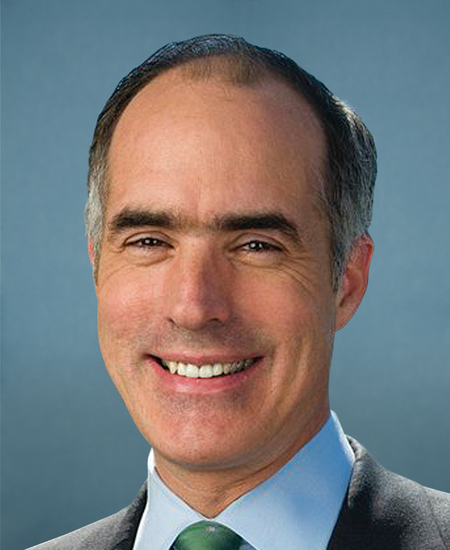
Sen. Robert P. Casey, Jr.
Sponsored bills
Maddy summaryThis bill requires law enforcement agencies to collect and report disability status data during interactions with individuals with disabilities. It establishes an advisory council (with over 50% members having disabilities) to develop standardized data collection methods, which the Bureau of Justice Statistics must implement in its Police-Public Contact Survey. The bill also amends death-in-custody reporting to mandate inclusion of disability status in all federal submissions. These requirements apply to state and federal law enforcement agencies that report to federal databases.
Maddy summaryThe HELP Act of 2023 allocates federal funding to strengthen 211 information and referral services and 988 mental health crisis services nationwide. It requires states to coordinate these services to ensure 24/7 availability, improve accessibility for people with disabilities, and reduce inappropriate 911 calls by connecting individuals with human services instead of law enforcement. The bill authorizes $550 million annually for 2024-2025 (split between 211 and 988 services) and $450 million annually for 2026-2030, with states required to establish oversight bodies to monitor service quality and racial equity. States must use funds to expand access to mental health and human services, particularly in underserved communities, while tracking how many 911 calls are diverted to appropriate services.
Beneficiary Enrollment Notification and Eligibility Simplification 2.0 Act or the BENES 2.0 Act This bill requires Social Security account statements for individuals attaining ages 60 to 65 to include information about Medicare eligibility, late enrollment penalties, benefit coordination, and related resources. Statements with the required information must be mailed to individuals at least three months before they turn 65; the required information must also be mailed to those who are age 65 or over and are entitled to Social Security benefits three months before their initial Medicare enrollment period begins.
Maddy summaryThe Affordability is Access Act of 2023 requires health insurance plans to cover over-the-counter contraceptives approved by the FDA without cost-sharing (such as copays or deductibles). It directly affects millions of people, especially those who rely on birth control but face cost barriers, including low-income individuals and people in contraceptive deserts. The bill clarifies that insurance coverage must include FDA-approved OTC contraceptives even without a prescription, and it mandates retailers to provide accurate information about these products without interfering with access. Retailers may refuse to sell the product if payment cannot be made, but they cannot block access or spread misinformation.
Maddy summaryThis bill prohibits the use of "unlawful seclusion or restraint" in schools receiving federal funding, including mechanical, chemical, and certain physical restraints that pose risks to students. It requires schools to implement positive behavioral interventions instead of restraint, mandates staff training in crisis intervention, and establishes procedures for reporting and following up after restraint incidents. The bill requires states to create monitoring plans and collect detailed data on restraint use, with specific reporting requirements for schools and Head Start programs. Schools must provide immediate parent notification after restraint incidents and hold meetings to discuss prevention strategies. The bill applies to public schools, special education schools, and other federally funded programs, but does not affect private schools not receiving federal support or home schools.
Maddy summaryThe HERMAN Act modifies Medicare rules to prevent employer health plans from reducing benefits for workers who could enroll in Medicare Part B but choose not to. It specifically applies to employees of small employers (with fewer than 20 full-time workers) who are not enrolled in Medicare Part B. The law requires employer plans to maintain full coverage for these individuals, regardless of their potential Medicare eligibility, unless the worker actively elects Medicare Part B. If the worker chooses Medicare Part B, the employer plan may then stop or reduce coverage. This change takes effect after the bill is signed into law.
Maddy summarySRES 215 is a Senate resolution designating May 9, 2023, as National Fentanyl Awareness Day. It supports raising public awareness about the dangers of fake or counterfeit fentanyl pills, which are often disguised as legitimate medications and contribute to overdose deaths. The resolution encourages existing law enforcement efforts to combat counterfeit pill distribution and acknowledges the severe impact of fentanyl on young people, citing statistics on rising overdose deaths. It does not create new laws or funding but formally recognizes the issue through congressional support.
Maddy summaryThis resolution designates the week of May 14-20, 2023, as "National Police Week" to honor law enforcement officers who have died in the line of duty. It recognizes 444 officers killed in 2022 (including specific names listed in the resolution) and acknowledges 32 officers killed in 2023, while expressing support for law enforcement personnel. The resolution encourages the public to observe this week by honoring law enforcement officers and promoting awareness of their essential service. As a ceremonial resolution, it does not create new policy or alter existing laws.
Maddy summarySRES 203 is a symbolic Senate resolution recognizing Jewish American Heritage Month (observed in May) as a time to celebrate Jewish Americans' contributions to U.S. society and culture. It does not create new laws or allocate funds but formally acknowledges the community's historical impact and calls on leaders to combat antisemitism. The resolution highlights Jewish Americans' roles in government, arts, science, and their 350-year history in the U.S., while referencing rising antisemitic incidents and Holocaust awareness gaps. It aligns with annual bipartisan Senate resolutions since 2006, emphasizing education and inclusion without proposing concrete policy changes.