

Maddy summaryThe Public Health Infrastructure Saves Lives Act (S 1995) provides federal grants to strengthen public health systems across the U.S. It directly affects state, territorial, and local health departments serving 500,000+ people, plus tribal health departments. Key mechanisms include: 50% of funds for formula-based grants to all states/territories (prioritizing population, disease burden, and poverty), 30% for competitive grants targeting departments with highest infrastructure needs, and a requirement for grantees to achieve accreditation by 2027. The bill allocates increasing annual funding - $750 million in 2024 rising to $4.5 billion annually by 2028 - with 3% reserved specifically for tribal health departments. It defines "core public health infrastructure" to include surveillance, emergency response, equity-focused services, and workforce capacity.
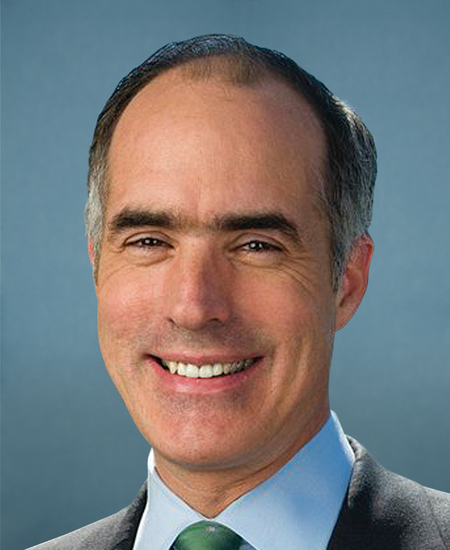
Sen. Robert P. Casey, Jr.
Sponsored bills
Maddy summaryThe Working Families Tax Relief Act of 2023 expands tax benefits for low-to-moderate income workers and families with children. It lowers the minimum age for the Earned Income Credit from 25 to 19 (with exceptions for students, former foster youth, and homeless youth), removes the age 65 maximum, and increases credit amounts and income thresholds. The bill also establishes a permanent system for monthly advance payments of the Child Tax Credit, with higher payments ($300 monthly) for children under age 6 compared to $250 for older children. It includes inflation adjustments to maintain the value of these credits over time and creates mechanisms for determining eligibility and recapturing payments in certain circumstances. The provisions apply to all states and U.S. territories, including Puerto Rico and American Samoa.
Maddy summaryThis bill requires federal agencies that use private or state/local facilities to house federal prisoners to treat records about those facilities as government records under the Freedom of Information Act (FOIA). It directly affects federal agencies (like the Department of Justice), private prison operators, and state/local facilities under contract with the federal government. Key provisions mandate that these entities maintain records in searchable formats, allow public access to information (unless specific legal exemptions apply), and include disclosure requirements in all relevant contracts. The law aims to increase transparency around conditions and operations in non-federal correctional facilities used by the federal government.
Maddy summaryThis Senate resolution condemns Russia's deportation and forcible transfer of Ukrainian children from occupied territories, calling these actions violations of the Genocide Convention and Fourth Geneva Convention. It specifically references Russia's breaches of international law, including the unlawful transfer of children to Russia and efforts to erase Ukrainian identity through forced adoptions. The resolution declares these acts constitute genocide, targeting Ukrainian children to undermine Ukraine's future cultural and national identity. It directly addresses the Russian government's actions, which have affected thousands of children separated from their families since Russia's 2022 invasion.
Maddy summaryThe Bridge Corrosion Prevention and Repair Act of 2023 requires federal funding for highway and railroad bridge projects to implement corrosion management systems, including certified contractors and trained workers for tasks like surface preparation, coating application, and hazardous coating removal. It amends federal grant rules to allow funding specifically for corrosion control work on rail bridges and mandates a study on inspecting and maintaining weathering steel bridges - vulnerable to corrosion, as highlighted by the 2022 Pittsburgh bridge collapse. These changes directly affect state transportation agencies, bridge contractors, and federal programs managing infrastructure. The bill focuses on concrete standards for prevention, not outcomes or political advocacy.
Maddy summaryThis bill changes school lunch rules to allow schools to serve whole milk as part of the National School Lunch Program. It amends the law to explicitly include "whole, reduced-fat, low-fat, and fat-free" milks as acceptable options. Crucially, it clarifies that milk fat in fluid milk provided under this rule will not count toward the meal's saturated fat limit for compliance purposes. This directly affects school nutrition programs nationwide by expanding milk choices and simplifying meal planning around fat content.
Maddy summaryThis bill exempts certain grants provided to transportation service providers from federal taxation under the Coronavirus Economic Relief for Transportation Services Act. It specifically states that grant amounts received by eligible providers won't count as taxable income, and it prevents related tax deductions or basis adjustments from being denied. The provision also clarifies tax treatment for partnerships and S corporations receiving these grants, treating the excluded grant amounts as tax-exempt income for partnership tax calculations. The bill directly affects transportation businesses that receive federal relief grants under the referenced act.
Maddy summaryThe Global Respect Act of 2023 requires the U.S. President to publicly list foreign officials or entities responsible for severe human rights violations against LGBTI individuals, including torture, arbitrary detention, or inciting violence based on sexual orientation or gender identity (Section 4). This list must be updated every 180 days and published in the Federal Register, with individuals added facing U.S. visa ineligibility and potential removal from the country (Section 5). The bill also mandates annual reports tracking additions/removals from the list and directs the State Department to monitor global violence against LGBTI people in country reports (Section 7). It directly affects foreign government actors accused of targeting LGBTI communities, using visa restrictions as a tool to increase accountability for human rights abuses.
Maddy summaryThe SECURE Act would allow certain foreign nationals to adjust their immigration status to lawful permanent residence. It specifically targets individuals who are nationals of countries designated under Temporary Protected Status (TPS), or who were in TPS, and who have been continuously present in the U.S. for at least three years. The bill includes provisions for work authorization while applications are pending, fee exemptions for vulnerable applicants (such as minors, low-income individuals, and those in foster care), and a "stay of removal" for those with pending applications. It also contains confidentiality protections for application information and requires detailed reporting when countries lose TPS status. The bill aims to streamline the process for eligible TPS holders to obtain permanent residency without having to file motions to reopen prior removal orders.
Maddy summaryThis bill (S 1922) would expand Medicare coverage to include wigs as "durable medical equipment" for beneficiaries experiencing hair loss due to medical conditions like cancer treatment. It directly affects Medicare recipients who require cranial prostheses (wigs) as part of medically necessary rehabilitation, as certified in writing by a dermatologist, oncologist, or attending physician. The key mechanism adds a specific provision to the Social Security Act defining "durable medical equipment" to include such prostheses when a doctor confirms their medical necessity. This change would allow Medicare to cover these wigs under existing program rules, reducing out-of-pocket costs for qualifying beneficiaries.