

Maddy summaryThis bill establishes a federal compensation program for poultry farmers whose operations are restricted in "control areas" designated by the Animal and Plant Health Inspection Service (APHIS) due to animal health threats. It requires the Secretary of Agriculture to pay affected farmers an amount calculated as their average income from the five most recent flocks multiplied by the number of flocks they were prohibited from raising during the control period. Compensation is capped to avoid double payments - covering only the difference between the calculated amount and any existing state or other compensation received. Payments must be issued within 60 days of a farmer’s request, and farmers who already received compensation for destroyed animals under existing law are excluded.
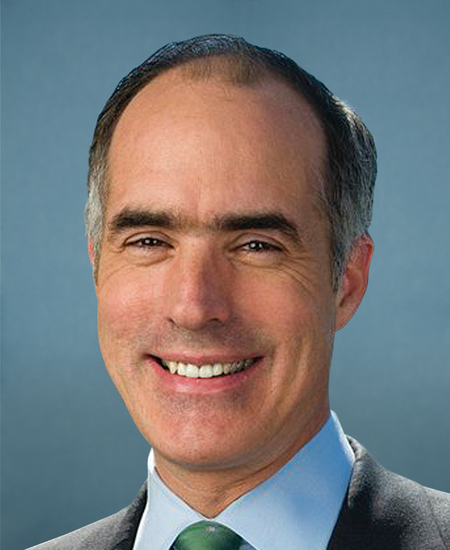
Sen. Robert P. Casey, Jr.
Sponsored bills
Maddy summaryThis bill creates a new renewable fuel credit program under the Clean Air Act to help obligated entities (like refiners and importers) meet their renewable fuel requirements. It sets a fixed price of $0.20 per credit (adjusted for inflation), which can only be used for compliance in the year purchased and cannot be resold or used for other biofuel mandates. Revenue from credit sales is split equally: one-third funds advanced biofuels investments, one-third supports farmers' crop diversification, and one-third goes to the Habitat and Wildlife Restoration Fund. The fund directs money to restore grasslands, wetlands, and other habitats impacted by expanded corn and soy production since 2007, managed through a partnership with the National Fish and Wildlife Foundation.
Maddy summaryS 2217, the IDEA Full Funding Act, mandates specific annual federal funding levels for the Individuals with Disabilities Education Act (IDEA) to support public education services for students with disabilities. It requires the federal government to appropriate increasing percentages of the total estimated cost - starting at 14.2% for FY 2024 and rising to 40% by FY 2033 - based on the number of eligible students and national average per-pupil spending. This directly affects public schools and state education agencies that receive IDEA funding, guaranteeing phased increases in federal support over a decade. The bill sets concrete, legally binding funding targets without altering eligibility or service requirements for students.
Maddy summaryThis bill amends over 30 sections of the Internal Revenue Code to replace gendered language like "husband and wife" with gender-neutral terms such as "married couple" or "spouses." It directly affects all married taxpayers by ensuring the tax code refers to married couples in inclusive language, regardless of gender. The key mechanism is updating specific tax code provisions to use neutral terminology throughout, including changing "his spouse" to "the individual's spouse" in numerous sections. This is a technical correction to modernize the language of the tax code, not a change to tax rates, deductions, or policy. The bill does not alter tax obligations or benefits for married couples.
Maddy summarySRES 282 is a non-binding Senate resolution recognizing June 2023 as "LGBTQ Pride Month" to honor the contributions and resilience of lesbian, gay, bisexual, transgender, and queer individuals across the United States. It does not create new laws or policies but formally acknowledges historical challenges faced by the LGBTQ community, including discrimination, hate crimes (such as the Pulse and Club Q shootings), and barriers to equality in employment, healthcare, and housing. The resolution encourages all Americans to learn about the LGBTQ community's history of struggle and achievement during June 2023. Introduced by 44 bipartisan senators, it serves as a symbolic gesture of support without altering any legal rights or obligations.
Maddy summaryThis Senate resolution (SRES 280) designates May 2023 as National Foster Care Month to raise public awareness about challenges faced by children in foster care. It encourages Congress to develop policies improving outcomes for these children, without specifying new laws or funding. The resolution highlights issues like educational instability, lengthy stays in care, and the need for family reunification support, but does not create binding requirements. It focuses on recognition - honoring foster parents, youth resilience, and child welfare workers - rather than enacting policy changes. As a procedural resolution, it serves as a symbolic call to action, not a legislative measure with concrete policy effects.
Maddy summaryThis resolution approves 1996 regulations governing labor-management relations for Senate employees. It applies standard federal labor rules (from Chapter 71) to specific Senate workplaces, including leadership offices, committees, and staff units like the Office of the Secretary of the Senate. The regulations define covered employees and outline how labor-management procedures - such as collective bargaining and grievance processes - will operate within these Senate offices. As a procedural approval of existing rules (not new policy), it does not change current workplace practices but formally adopts the 1996 framework for Senate staff.
Maddy summaryThis bill bans the provision and advertising of conversion therapy for compensation, targeting therapists, clinics, and anyone offering paid services claiming to change a person's sexual orientation or gender identity. It prohibits advertising that falsely claims such therapy is harmless, effective, or without risk, and makes it unlawful to profit from these practices. Enforcement is handled by the Federal Trade Commission and state attorneys general through civil actions. The law directly affects providers of paid conversion therapy while protecting LGBTQ+ individuals from potentially harmful and ineffective treatments.
Maddy summaryThis bill establishes a new Title X Clinic Fund to increase federal funding for family planning services. It appropriates $512 million annually (2024-2033) for clinic grants and $50 million for clinic infrastructure (construction/renovation) under the Department of Health and Human Services. The fund requires clinics receiving this money to provide nondirective pregnancy counseling, ensuring patients receive neutral information about all options - including prenatal care, adoption, and pregnancy termination - without bias. This directly affects Title X clinics serving low-income individuals seeking reproductive health services.
Maddy summaryThis bill establishes an Office for Gender Equity within the Department of Education to support schools and colleges in fully implementing Title IX. It authorizes $160 million annually to fund grants for educational entities to develop programs addressing gender equity gaps in athletics, STEM fields, career education, and campus safety. The bill provides training and resources for Title IX coordinators and "Title IX allies" to address sex discrimination, with specific attention to students facing discrimination based on multiple characteristics like race and gender. It also requires the Department to research and share evidence-based best practices for reducing sex discrimination in education.