

Maddy summaryThe CHILD Labor Act strengthens protections against child labor by defining "oppressive child labor" to include specific dangerous occupations for children under 18, such as manufacturing, mining, trenching, and meat processing. It prohibits Federal contractors from employing children under 16 in any work and restricts 16-17 year olds from hazardous occupations, requiring contractors to implement training programs and establish labor-management committees to monitor compliance. The bill significantly increases penalties for violations, including civil fines up to $750,000 for violations causing death or serious injury, and adds criminal penalties for willful violations. It also requires the Department of Labor to issue "child labor tags" for goods produced with prohibited child labor and submit annual reports to Congress on work-related injuries and deaths.
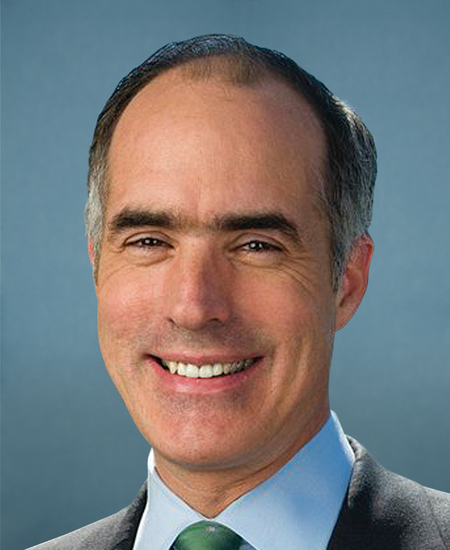
Sen. Robert P. Casey, Jr.
Sponsored bills
Maddy summarySRES 435 is a Senate resolution designating October 30 through November 4, 2023, as "National Veterans Small Business Week." It formally recognizes the contributions of veterans who own small businesses, highlighting their role in the economy (over 1.7 million veteran-owned businesses employing 2.9 million people). The resolution expresses support for veterans' entrepreneurship, encourages policies reducing regulatory burdens for small businesses, and thanks veterans for their service through business ownership. This is a symbolic recognition with no new legal requirements or funding.
Maddy summaryThis Senate resolution expresses support for afterschool programs and the Lights On Afterschool event held on October 26, 2023. It recognizes the role of high-quality afterschool programs in providing safe, engaging learning opportunities for children, supporting working families, and strengthening community partnerships. The resolution does not create new policies, funding, or requirements - it is a symbolic gesture acknowledging the value of these programs. It was introduced by Senators Smith, Collins, Warren, Kaine, and Casey.
Maddy summaryThe Support Through Loss Act (S 3137) would provide eligible employees with 56 hours of paid leave per year to address pregnancy loss, unsuccessful assisted reproductive technology procedures, failed adoption or surrogacy arrangements, or medical events impacting pregnancy or fertility. This leave can also be used to care for a spouse or domestic partner experiencing these events. Employers with 5 or more employees would be required to provide this leave, with specific notice requirements and protections against discrimination for taking this leave. The bill also includes provisions for research and education on pregnancy loss through the Department of Health and Human Services, including $45 million annually for research on causes and treatments.
Maddy summaryThis resolution (SRES 432) is a ceremonial Senate measure commemorating the fifth anniversary of the October 27, 2018, antisemitic attack at Pittsburgh’s Tree of Life synagogue, which killed 11 people. It does not create new laws or policies; instead, it honors the victims, thanks law enforcement and medical responders, and expresses solidarity with the Pittsburgh Jewish community. The resolution condemns antisemitism as a threat to U.S. values and reaffirms the government’s commitment to protecting religious freedom and safety. It follows a pattern of symbolic congressional recognition for significant historical events.
This resolution recognizes October 2023 as National Women's Small Business Month, honoring the role of women small business owners and entrepreneurs and encouraging the support and creation of women-owned small businesses.
Maddy summaryThis bill increases federal funding for Medicaid home and community-based services (HCBS) by raising the federal share (FMAP) by 10 percentage points for states during 2024-2025, capped at 95%. States must apply with plans to use these funds to increase wages and benefits for home care workers (like paid leave and hazard pay), reduce waiting lists for services, help people return from institutional settings, and cover related costs like equipment or training. Funds must supplement, not replace, existing state spending and be reported on by states by 2027. It directly affects states administering Medicaid HCBS programs, home care workers, and people receiving community-based care.
Maddy summaryThe PROTECT Act (S 3108) establishes a federal initiative to reduce youth and young adult e-cigarette use. It directs the CDC to conduct research on youth e-cigarette patterns, product characteristics, and access methods; develop health provider guidance; identify prevention strategies; and run public education campaigns about e-cigarette risks. The bill authorizes $100 million annually (2024-2028) to fund state health departments and tribal organizations implementing youth-focused prevention and cessation programs. This initiative affects youth and young adults directly by targeting e-cigarette access and use, while requiring CDC and health agencies to coordinate new research and outreach efforts.
Maddy summaryThe ABC Act requires Medicare, Medicaid, CHIP, and Social Security offices to review and simplify their application, eligibility, and communication processes. It directly affects family caregivers who help loved ones navigate these programs by targeting repeated paperwork, inconsistent information requests, and poor communication. Key mechanisms include mandating agencies to reduce duplicate forms, improve website accessibility (including ADA compliance), shorten call wait times, and provide multilingual support based on feedback from caregivers and advocacy groups. Agencies must submit detailed reports to Congress within one year outlining their findings and planned improvements.
Maddy summaryThe Safe Schools Improvement Act (S 3105) requires states receiving federal education funding to mandate public elementary and secondary schools to adopt comprehensive anti-bullying policies. These policies must prohibit bullying based on protected characteristics like race, gender identity, disability, or religion, include annual parent/student notices, establish complaint procedures, and collect anonymized data on incidents. Schools must publicly report annual data on bullying frequency at the school and district levels. The law also requires states to submit biennial reports on implementation and triggers a federal evaluation to assess the policy's impact on reducing bullying. It explicitly states the law supplements, but does not replace, existing civil rights protections like Title IX.