

Maddy summaryThis bill amends three sections of the District of Columbia Official Code to update outdated and potentially offensive terminology used in court jurisdiction rules. It replaces phrases like "substantially retarded persons" and "at least moderately mentally retarded" with the more respectful and current term "persons with moderate intellectual disabilities" in the U.S. District Court, Superior Court, and Family Court codes. The change directly affects how DC courts legally refer to individuals with intellectual disabilities in jurisdictional contexts. The bill makes a concrete policy shift to align legal language with modern, person-centered terminology.
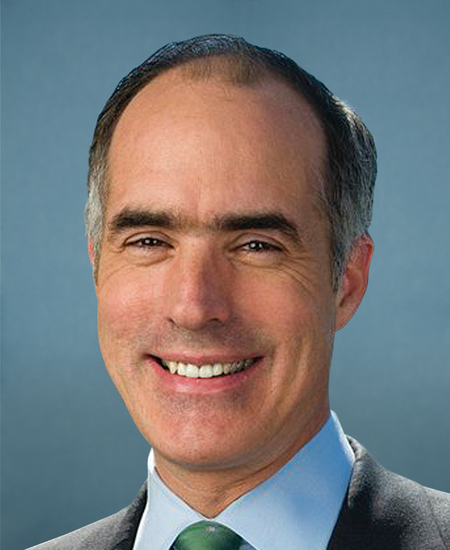
Sen. Robert P. Casey, Jr.
Sponsored bills
Maddy summarySRES 888 is a ceremonial Senate resolution honoring the late James Ralph Sasser, a former U.S. Senator from Tennessee (served 1976-1993). It formally expresses the Senate’s "profound sorrow" over his death and requests the Secretary of the Senate transmit the resolution to his family. The resolution has no policy impact or direct effect on any individuals or entities - it is solely a commemorative gesture. As a procedural resolution, it does not create new laws or alter existing policies.
Maddy summaryThis bill authorizes the awarding of a Congressional Gold Medal to tennis legend Billie Jean King in recognition of her lifelong advocacy for gender equality in sports and society. The legislation specifically acknowledges her pivotal role in advancing women's rights, including her work leading to the passage of Title IX and her efforts to establish equal prize money in tennis. Under the bill, the Secretary of the Treasury would strike a gold medal featuring an image and inscription of Billie Jean King, with bronze duplicates available for sale to cover costs. The medal would be presented by congressional leaders as a formal recognition of her contributions to American society. This is a commemorative honor, not a policy that creates new legal requirements or funding.
Maddy summaryThis bill awards a Congressional Gold Medal to the United States Army Dustoff crews who served during the Vietnam War, recognizing their life-saving medical evacuations. The medal, to be designed by the Secretary of the Treasury in consultation with the Secretary of Defense, will be displayed at the U.S. Army Medical Department Museum. The bill honors the approximately 900,000 wounded personnel these crews transported over the course of the Vietnam War, including U.S., South Vietnamese, and allied forces, who relied on their rapid medical evacuation services.
Maddy summarySRES 864 is a Senate resolution designating September 23-29, 2024, as "Rail Safety Week." It expresses support for efforts to reduce highway-rail grade crossing incidents, trespasser-related fatalities, and derailments, while promoting safer transportation of hazardous materials and preventing rail worker injuries or deaths. The resolution encourages public education on rail safety and aligns with ongoing initiatives like the Federal Railroad Administration’s safety programs. It does not create new laws or funding but formally supports existing safety goals and commemorates past rail safety efforts.
Maddy summaryThis resolution (SRES 880) is a symbolic Senate statement supporting afterschool programs and the annual Lights On Afterschool event on October 24, 2024. It does not create new laws or allocate funding but formally recognizes the value of high-quality after-school programs that provide safe, educational activities for children, complement school days, and support working families. The resolution highlights how these programs build community partnerships and develop students' academic, social, and emotional skills. It directly affects public awareness and advocacy efforts for existing afterschool initiatives, without changing any policies or programs.
This resolution acknowledges the 120th anniversary of Big Brothers Big Sisters of America and commends the organization for its work mentoring the young people of the United States and strengthening thousands of communities.
Maddy summaryThe CADSAW Act creates demonstration projects to help home care aides advance their careers. It provides federal grants to eligible organizations (like community groups or agencies) to offer education, training, and career development for low-income home care aides who meet specific income and employment criteria. The bill requires projects to prioritize rural areas, underserved urban communities, and workers from Black, Latinx, and other underrepresented groups. It also includes a 25% payment increase for home health services provided by aides who complete training through these projects, starting in 2025. The program is funded at $5 million annually for 2025-2027.
Maddy summaryThis bill authorizes $10 billion in federal grants (2026-2035) to fund infrastructure projects at public 2-year community colleges in underserved areas. It directly affects community colleges located in "qualified areas" (cities/counties without existing 2-year colleges or low-income communities) and their governing bodies, requiring grants to be used for specific purposes like building facilities, improving broadband, providing childcare/housing on campus, or expanding transportation access. Grants must cover at least 95% of project costs (e.g., construction, equipment), with priority given to new colleges in underserved regions and partnerships with high schools or 4-year institutions. The program mandates competitive applications and requires annual reports to Congress on how funds are used and which communities students serve.
Maddy summaryThis bill authorizes $5 million annually (2025-2034) in federal grants to train personal and home care aides, direct support professionals, home health aides, and nursing assistants. It requires grantees to use competency-based training for roles with living wages and labor shortages, prioritizing projects in rural areas or underserved urban communities (at least 50% of grants). The program mandates reports on participant outcomes and workforce development, focusing on accessible entry points, fair wages, benefits, and diversity for low-income workers. It directly affects care workers in high-demand health and human services roles, aiming to expand their career pathways through structured training.