Maddy summaryThis bill directs the Department of Education to consider the International Holocaust Remembrance Alliance (IHRA) definition of antisemitism when investigating potential violations of Title VI of the Civil Rights Act of 1964. It specifically applies to cases involving discrimination based on actual or perceived Jewish ancestry or ethnic characteristics in schools and federally funded programs. The bill clarifies that this guidance does not expand the Department's authority, alter existing discrimination standards, or affect First Amendment rights. It aims to ensure consistent enforcement against antisemitism under existing civil rights law, as previously adopted by the Department of Education.
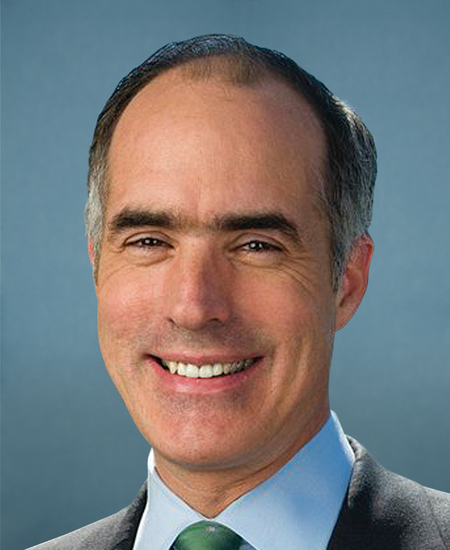
Sen. Robert P. Casey, Jr.
Sponsored bills
Maddy summaryThe Affordable Housing Credit Improvement Act of 2023 updates the federal Low-Income Housing Tax Credit program to create more affordable housing options. Key provisions include increasing state funding allocations through revised per capita and minimum amount calculations, modifying tenant eligibility rules to better protect vulnerable populations (including domestic violence victims), and expanding the program's reach to Native American communities and rural areas. The bill also changes the program's name from "Low-income Housing Credit" to "Affordable Housing Credit" and makes administrative improvements to enhance transparency and accountability. These changes aim to make it easier for developers to create and maintain affordable housing units for low- and moderate-income households.
Maddy summaryThis bill permanently extends the New Markets Tax Credit (NMTC) program, which incentivizes private investment in low-income communities. It modifies the tax code to keep the credit available indefinitely (replacing the previous 2020-2025 timeframe) and adds automatic annual inflation adjustments to the credit amount. The extension specifically benefits community development financial institutions (CDFIs) and investors who make qualified equity investments in designated low-income areas. It also provides relief from the alternative minimum tax for credits tied to investments made after December 2022.
Maddy summary# Summary of the Long-Term Care Workforce Support Act This comprehensive legislation establishes a framework to support and improve conditions for the direct care professional workforce (including home health aides, nursing assistants, and similar workers) through multiple key provisions: 1. **Workplace Violence Prevention** - Requires healthcare facilities to develop and implement written workplace violence prevention plans, including risk assessments, training, incident reporting procedures, and anti-retaliation policies. The plan must include specific measures to address different types of workplace violence (Type 1-4). 2. **Paid Sick Time** - Mandates that employers provide direct care professionals with paid sick time (1 hour for every 30 hours worked), with specific uses including: - Medical care for the employee - Caring for family members (children, parents, spouse, domestic partner) - Addressing domestic violence, sexual assault, or stalking - Public health emergencies (with additional paid sick time provided during declared emergencies) 3. **National Compensation Strategy** - Establishes a National Direct Care Professional Compensation Strategy to: - Identify ways to provide direct care professionals with livable wages - Guide State Medicaid agencies in compensating direct care professionals at full labor cost - Create a National Direct Care Professional Compensation Advisory Council with diverse representation - Address challenges including part-time work nature, workforce mobility, and inequities related to race, ethnicity, and immigration status 4. **Evaluation Framework** - Requires an evaluation of the Act's implementation and outcomes by an external evaluator with experience in home and community-based services, disability programs, and healthcare workforce programs. The evaluation will assess impacts on: - Workforce recruitment, retention, and advancement - Compensation and working conditions - Burnout and attrition rates - Access to long-term care services - Costs to Medicare and Medicaid programs The legislation aims to improve the quality of care for older individuals and people with disabilities by strengthening the direct care workforce through better compensation, safer working conditions, and improved benefits.

Maddy summarySRES 636 is a symbolic Senate resolution designating February 29, 2024, as "Rare Disease Day." It recognizes the importance of raising awareness about rare diseases, improving early diagnosis, and supporting research for treatments - without creating new policies or affecting any specific group. The resolution highlights that rare diseases affect over 30 million people in the U.S. but does not include funding or regulatory changes. It aligns with the annual global observance of Rare Disease Day, observed on the last day of February.
Maddy summaryThis bill requires random assignment of certain civil cases challenging laws to a district court judge, rather than allowing parties to strategically choose courts. It directly affects individuals or groups filing lawsuits seeking nationwide challenges to federal laws or statewide challenges to state laws. The key provision mandates that cases asking courts to block, invalidate, or order enforcement of laws (including regulations or agency policies) must be randomly assigned to a judge in the filing district. This aims to prevent "judge shopping" by eliminating the ability to select a court based on perceived judicial bias. The rule applies to both federal and state law challenges filed in district courts.
Maddy summaryThis bill establishes the "Expanding Childcare in Rural America Initiative" within the USDA to improve childcare access in rural and agricultural communities. It directs the USDA to prioritize funding through existing programs (like rural business grants and essential community facilities loans) for projects addressing childcare availability, quality, or cost in rural areas, with special focus on farming-dependent counties. The initiative requires a balanced geographic distribution of funds and allows USDA to work with childcare networks or nonprofits to support facility upgrades and provider assistance. The USDA must evaluate the initiative's impact and report results to Congress within three years.
Maddy summaryThe Countering Antisemitism Act establishes a National Coordinator within the Executive Office of the President and an Interagency Task Force to coordinate federal efforts against antisemitism across government agencies. The bill requires annual threat assessments of antisemitic violent extremism from the FBI, DHS, and National Counterterrorism Center, and mandates reports from relevant agencies on implementing the U.S. National Strategy to Counter Antisemitism. It also requires the Department of Education to designate a senior officer to address antisemitic discrimination in higher education and to report on complaints, while directing a study on Holocaust education in schools. Additionally, the legislation amends the Nonprofit Security Grant Program to require public reporting on grant applications and awards, and designates May as Jewish American Heritage Month.
Maddy summaryThe REPO for Ukrainians Act authorizes the U.S. government to confiscate Russian sovereign assets held in the United States and use them to compensate Ukraine for damages caused by Russia's invasion. It establishes a Ukraine Support Fund to hold these assets and directs funds to be used for Ukraine's reconstruction, humanitarian aid, and rebuilding efforts. The bill prohibits releasing these assets until hostilities cease and full compensation is made to Ukraine or Russia participates in a bona fide international compensation mechanism. It requires regular reports to Congress on asset use and establishes mechanisms for international coordination with allies on using these assets for Ukraine's reconstruction.
Maddy summaryThe FEND Off Fentanyl Act authorizes sanctions against foreign individuals and entities involved in trafficking fentanyl and its precursors into the United States, with specific focus on transnational criminal organizations like Mexican cartels and the flow of precursor chemicals from China. It requires the President to submit annual reports to Congress on actions taken under the law and designates fentanyl-related transactions as a primary money laundering concern for financial institutions. The bill also repeals a prohibition on imposing sanctions related to importation of goods under previous fentanyl sanctions law. It aims to increase financial costs for traffickers by blocking assets and prohibiting transactions involving sanctioned persons.