

Maddy summaryThis bill, titled misleadingly as the "Secure Family Futures Act of 2025," actually modifies tax rules for specific insurance companies, not family-related policies. It directly affects "applicable insurance companies" (defined as most domestic insurers not using special tax elections or foreign entities) by: (1) excluding their debt holdings (like bonds) from being counted as capital assets for tax purposes, and (2) allowing capital losses incurred by these companies to be carried forward over 10 years instead of the standard period. These changes apply to debt acquired and losses arising after December 31, 2025. The bill contains no provisions related to families, child welfare, or social programs.
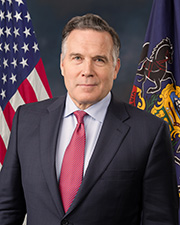
Sen. David McCormick
Sponsored bills
Maddy summaryThis resolution (SRES 159) is a ceremonial Senate measure honoring the late Senator John Bennett Johnston, Jr. (1932-2024), who represented Louisiana in the U.S. Senate from 1972 to 1997. It commemorates his career, including his work on energy policy, flood control, and Louisiana conservation efforts, and requests the Senate adjourn in his memory while sending condolences to his family. As a non-binding resolution, it has no policy impact or direct effect on any individuals or laws.
Maddy summaryThis bill (S 1308, VETS Opportunity Act of 2025) changes how the U.S. Department of Veterans Affairs (VA) counts independent study programs toward education benefits for veterans. It requires these programs to include regular, substantive interaction between students and instructors to qualify for VA funding. The bill also specifies that only institutions participating in federal student aid programs (Title IV of the Higher Education Act) can offer qualifying independent study courses. These changes apply to education terms starting August 1, 2025, directly affecting veterans pursuing VA-covered independent study courses.
Maddy summaryThe Rural Development Hospital Technical Assistance Program Act of 2025 establishes a new program within the Department of Agriculture to provide tailored technical assistance to eligible rural hospitals and clinics. It directly affects facilities like critical access hospitals, rural health clinics, and other designated rural health care providers in underserved areas, particularly those facing financial challenges or located in health professional shortage zones. The program helps these facilities identify development needs (such as facility upgrades, telehealth expansion, or health IT systems), improve financial management, and access USDA loan and grant programs. Authorized funding is $2 million annually for fiscal years 2025-2029, with mandatory annual reports to Congress on program outcomes and effectiveness.
Maddy summaryS 1289 authorizes the U.S. Mint to produce and sell commemorative $5 gold and $1 silver coins to mark the 25th anniversary of the September 11, 2001, terrorist attacks. The bill specifies coin specifications (e.g., 90% gold/silver content, design requirements including "Never Forget"), sets a one-year issuance window (January 1, 2027-2028), and requires surcharges of $35 per gold coin and $10 per silver coin. These surcharges will be paid directly to the National September 11 Memorial and Museum to support its operations and maintenance, with coins sold at a price covering face value, surcharge, and production costs. The legislation does not impose new regulations or affect public policy but focuses on commemoration and funding for the museum.
Maddy summaryThe BOP SCAN Mail Act requires the Bureau of Prisons to implement digital mail scanning at all federal correctional facilities to detect and prevent synthetic drugs like fentanyl from entering prisons through inmate mail. Within 180 days of enactment, the BOP Director must evaluate scanning technology and submit a strategy to Congress for achieving 100% mail scanning, including providing inmates digital mail copies within 24 hours and physical copies within 30 days if no drugs are detected. The strategy must cover equipment, training, a 2025-2027 budget, and annual progress reports on drug detection and program efficiency. This directly affects 122 federal prisons, their 38,000 employees, and over 150,000 inmates by addressing a 600% rise in drug-related overdoses linked to mail-sent contraband.
Defending Education Transparency and Ending Rogue Regimes Engaging in Nefarious Transactions Act or the DETERRENT Act This bill expands oversight and disclosure requirements related to foreign sources and institutions of higher education (IHEs). Specifically, the bill requires an IHE to annually disclose to the Department of Education (ED) any year in which the IHE receives a gift from a foreign country of concern (e.g., China or Russia) or foreign entity of concern of any dollar amount; receives a gift or contract from a foreign source (other than a foreign country of concern or foreign entity of concern) that is valued at $50,000 or more, considered alone or in combination with all other gifts or contracts within a calendar year (current disclosure threshold is $250,000 or more), or which has an undetermined monetary value; enters into a contract with a foreign country of concern or foreign entity of concern after receiving a waiver for such contract; or is substantially controlled by a foreign source. Additionally, the bill prohibits IHEs from entering into contracts with a foreign country of concern or with a foreign entity of concern without obtaining a waiver, and requires certain IHEs to disclose gifts or contracts between covered individuals (e.g., researchers) and foreign sources. The bill requires ED to investigate possible violations of this bill and outlines the various penalties for each violation. Penalties may include losing eligibility for federal student financial aid.
Maddy summaryThis bill requires all new passenger vehicles sold in the U.S. (including domestically manufactured, imported, or shipped vehicles) to include AM radio as standard equipment, meaning it must be built into the vehicle at no extra cost to buyers. It mandates that manufacturers install AM radio receivers that can access both traditional and digital AM broadcast stations, with compliance deadlines set 2-4 years after the rule is issued. During a transition period before the rule takes effect, manufacturers must clearly label vehicles without AM radio but cannot charge extra for AM access. The bill also prohibits states from creating their own requirements about AM radio access in vehicles, aiming to ensure consistent emergency alert capabilities through AM radio in cars.
Maddy summaryThis bill protects public safety workers (law enforcement officers, firefighters, and emergency medical personnel) from retaliation by their employers for speaking out on certain workplace issues. It allows covered employees to sue their employer if they face termination or other negative job actions for expressing personal opinions about public safety service delivery, pay/benefits, working conditions (like equipment), policies, or even political/religious views. However, the protection does not cover speech made while on duty, advocacy of violence, discrimination, leaking personal information about individuals, or threatening to withhold essential services. The law explicitly states it does not replace existing federal or state civil rights lawsuits.
Maddy summaryThe CONNECT for Health Act of 2025 expands Medicare coverage for telehealth services by removing geographic restrictions that previously limited where patients could receive telehealth care. It allows more healthcare providers to offer telehealth services, including expanding eligibility for practitioners and removing the six-month in-person visit requirement for telemental health. The bill also includes specific provisions for Federally Qualified Health Centers, rural health clinics, and Native American health facilities to better integrate telehealth into their services. Additionally, it establishes program integrity measures to address billing patterns and requires the posting of telehealth service data to improve transparency and quality measurement. These changes aim to make telehealth more accessible for Medicare beneficiaries, particularly in rural areas and for underserved populations.