

Maddy summaryThis resolution recognizes the progress made by the Americans with Disabilities Act of 1990 in advancing independent living and economic self-sufficiency for people with disabilities, while highlighting persistent challenges like high poverty rates, employment barriers, and inaccessible services. It calls on multiple federal agencies - including the Department of Labor, Health and Human Services, and the Federal Communications Commission - to take specific actions, such as developing employment policies, improving accessibility in communications, and expanding home- and community-based services. The resolution urges bipartisan efforts to dismantle systemic barriers and strengthen opportunities for people with disabilities to fully participate in work and community life. As a non-binding resolution, it does not create new laws but serves as a formal statement of congressional intent and a framework for future policy action.
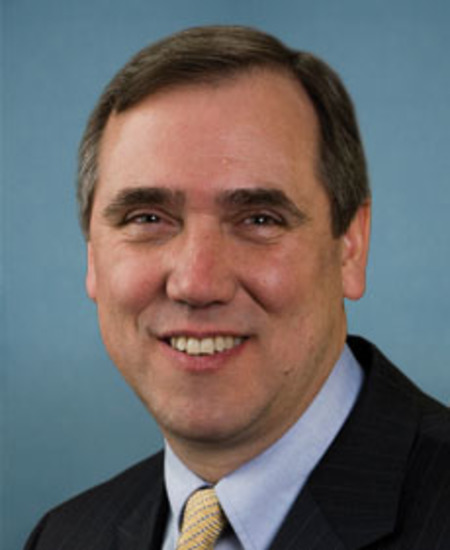
Sen. Jeff Merkley
Sponsored bills
Maddy summaryThe State-Based Universal Health Care Act of 2024 establishes a framework for states to create their own universal health care systems by applying for waivers from certain federal health care requirements. States would replace federal programs like Medicaid, Medicare, and ACA subsidies with their own state-based systems, while maintaining coverage that's at least as comprehensive as the programs they're replacing. The bill requires states to achieve 95% coverage of residents within 5 years, with federal funding redirected to states based on what would have been spent on the replaced federal programs, adjusted for inflation. It also includes specific provisions for Indian health care and establishes an Independent Assessment Panel to review waiver applications.
Maddy summary# Department of the Interior, Environment, and Related Agencies Appropriations Act, 2025 - Summary This comprehensive appropriations bill provides funding for various federal agencies and programs for fiscal year 2025, with key elements including: ## Major Funding Allocations - **Department of the Interior**: $249.76 million for Indian Health Services, $16.89 million for Indian Health Facilities - **Environmental Protection Agency**: Specific funding for environmental programs - **Forest Service**: Funding for forest management, wildfire prevention, and facility maintenance - **Indian Health Service**: $4.93 billion for health services, with $278.02 million for Electronic Health Record System and Indian Healthcare Improvement Fund - **National Institutes of Health**: $81.61 million for National Institute of Environmental Health Sciences, $83.09 million for Agency for Toxic Substances and Disease Registry - **Smithsonian Institution**: $912.35 million for operations, $197.65 million for facilities capital - **National Endowment for the Arts**: $209 million for arts programs - **National Endowment for the Humanities**: $209 million for humanities programs ## Key Provisions and Restrictions - **Contract Support Costs**: Specific limitations on funding for contract support costs under self-determination agreements - **Wild Horse and Burro Management**: Provisions for humane transfer and treatment of excess wild horses and burros - **Funding Restrictions**: - Prohibits use of funds for certain regulations (e.g., requiring permits for greenhouse gas emissions from livestock) - Limits on using funds for certain types of activities (e.g., no funding for destruction of healthy wild horses) - Requires blocking access to pornography websites on federal computer networks - **Reporting Requirements**: Mandates quarterly reports on fund balances to congressional committees - **Extension of Programs**: Several program authorizations extended through fiscal year 2025 (e.g., Shasta-Trinity Marina fee authority, Interpretive Association authorization) - **Environmental Restrictions**: Prohibits funding for certain environmental regulations related to greenhouse gas emissions and lead content in ammunition ## Specific Program Requirements - **Indian Health Service**: Specific funding for Purchased/Referred Care, Indian Catastrophic Health Emergency Fund, and loan repayment programs - **National Parks and Public Land Legacy Restoration Fund**: Requirements for allocation of funds to specific projects - **Land and Water Conservation Fund**: Specific allocation requirements for conservation projects This bill establishes the funding levels and specific restrictions for numerous federal programs, with particular emphasis on environmental protection, Native American health services, cultural institutions, and land management activities.
Maddy summaryThe Health Over Wealth Act (S 4804) requires for-profit corporations owning health care entities (such as hospitals, physician practices, and nursing facilities) to disclose detailed financial and operational information to the government. Covered firms must report on debt levels, ownership structures, staffing patterns, political spending, and other metrics to increase transparency about private equity's role in health care. The bill establishes risk mitigation requirements, including escrow accounts for 5 years, and prohibits certain real estate transactions that could weaken health care entities. It also creates a Task Force to monitor private equity's impact on health care access, quality, and equity, with annual reporting requirements to Congress.
Maddy summaryThe Environmental Health in Prisons Act requires Federal, State, local, and Tribal carceral facilities to monitor and publicly report on environmental conditions including air quality, water safety, temperature, and exposure to hazardous materials. It establishes an advisory panel of public health experts and formerly incarcerated people to recommend environmental health improvements, mandates that facilities communicate environmental health information to incarcerated people and staff, and creates grant programs to fund infrastructure upgrades and programs that improve environmental health conditions. The bill prohibits facilities from penalizing people who request environmental health information or report concerns, directly affecting approximately 2 million incarcerated people and staff across the U.S. correctional system.
Maddy summaryThe Stop Corporate Capture Act requires agencies to disclose conflicts of interest when reviewing studies submitted by interested parties, including corporations, industry groups, or advocacy organizations. It mandates that agencies make these studies publicly available and consider social equity impacts in rulemaking decisions. The bill establishes an Office of the Public Advocate to improve public participation in the regulatory process and conduct social equity assessments. It also includes penalties for submitting false information to agencies and requires agencies to explain why they withdraw proposed rules. These provisions aim to increase transparency and reduce undue corporate influence in regulatory decision-making.
Maddy summarySRES 765 is a Senate resolution honoring the late Senator James M. Inhofe of Oklahoma following his death on July 9, 2024. The resolution commemorates his 28-year Senate service (1994-2023) and 52 years in public office, highlighting his work on defense policy, aviation legislation, infrastructure projects, and support for military bases in Oklahoma. This procedural resolution expresses the Senate's condolences and formally recognizes his legacy, rather than enacting any policy changes.
Maddy summaryThe "Promoting a Resolution to the Tibet-China Dispute Act" amends the Tibetan Policy Act of 2002 to clarify US policy regarding Tibet. It directs the US Special Coordinator for Tibetan Issues to counter Chinese disinformation about Tibet's history, culture, and institutions, including claims that Tibet has been part of China since ancient times. The bill specifically defines Tibetan Autonomous Regions for policy purposes and authorizes funds to support these counter-disinformation efforts. It reaffirms that Tibet has a distinct cultural identity and that dialogue between China and Tibetan representatives should occur without preconditions. The bill does not change US diplomatic relations with China but provides specific guidance for US policy implementation.
Maddy summarySRES 763 is a symbolic Senate resolution designating July 2024 as "Plastic Pollution Action Month." It does not create new laws or regulations but formally recognizes the environmental and health impacts of plastic pollution - citing statistics on global plastic production, low recycling rates, ocean contamination, and human microplastic exposure. The resolution encourages all U.S. individuals to voluntarily reduce plastic use, participate in cleanup efforts, and support reuse initiatives during July 2024 and year-round. It serves as a non-binding awareness tool, referencing existing public efforts like Plastics Free July and the International Coastal Cleanup. This resolution directly affects the public by promoting voluntary action, not by imposing legal requirements.
Maddy summaryThis bill requires the Office of Management and Budget (OMB) to issue guidance within 180 days clarifying how federal agencies recognize "special districts" (local government entities like water districts or fire protection areas with specific functions and budget autonomy) as eligible for federal grants. Agencies must then implement this guidance within one year, adjusting their policies to treat these districts as qualifying local governments for grant programs. The OMB Director must also report to Congress within two years on how well agencies followed the new guidance. The bill directly affects special districts seeking federal grants by standardizing their eligibility status across all federal agencies.