

Maddy summaryThis bill reauthorizes the Deschutes River Conservancy Working Group through 2032, extending its existing structure and operations. It directly affects stakeholders in Oregon's Deschutes River Basin, including environmental groups, irrigated agriculture, the Confederated Tribes of Warm Springs, hydroelectric producers, federal/state agencies (like Oregon Fish and Wildlife), and local governments. Key changes include extending the group's authorization period from 2016 to 2032 and increasing the allowable administrative costs from 5% to 10% of funds managed. The bill does not create new programs but continues the current collaborative framework for river basin management.
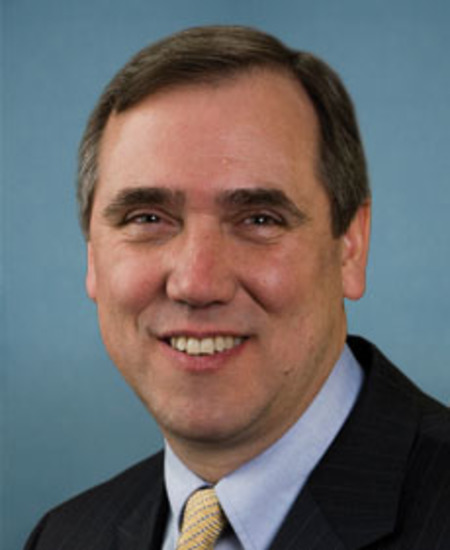
Sen. Jeff Merkley
Sponsored bills
Maddy summaryThis bill would require Members of Congress, their spouses, and dependent children to stop trading or holding certain investments (called "covered investments") and instead place them in "qualified blind trusts" or divest them by specific deadlines. It defines covered investments broadly to include stocks, commodities, and derivatives, but excludes diversified mutual funds, government bonds, and some business interests. The bill sets different deadlines for different groups (e.g., 90 days after enactment for existing holdings, 120 days for new holdings) and establishes civil penalties for non-compliance, including penalties equal to 10% of the value of non-compliant holdings. It also requires public reporting of financial disclosures and establishes procedures for oversight by ethics offices.
Maddy summaryThis concurrent resolution (SCONRES 45) expresses Congress's support for an inclusive political transition in Syria that protects religious and ethnic minorities. It affirms U.S. commitment to preserving minority cultural heritage, continuing partnership with the Syrian Democratic Forces (SDF) in counterterrorism efforts, and advocating for the protection of minority communities. The resolution also calls for U.S. engagement to address humanitarian needs and reiterates support for finding American journalist Austin Tice, who was kidnapped in Syria in 2012. As a symbolic resolution, it does not create new laws or alter policy.
Maddy summaryThe Auto Data Privacy and Autonomy Act requires vehicle manufacturers to obtain explicit, written consent from owners before accessing or sharing their vehicle data, and prohibits selling personal information to specific foreign governments like China, Russia, or Iran. It ensures vehicle owners can freely access, control, and delete their data - including user-generated information - without fees, proprietary devices, or restrictions. Manufacturers must provide this access via a secure, technology-neutral system that works with any device, and the Federal Trade Commission will enforce these rules while creating standards within a year. The law applies to most motor vehicles, including cars, trucks, and farming/construction vehicles, superseding conflicting state or federal regulations.
Maddy summaryThis bill creates a federal task force within Homeland Security to reunite children separated from parents at the U.S.-Mexico border between January 2017 and January 2021 under the Zero-Tolerance Policy. The task force must identify all affected children (under 18 during separation), recommend legal pathways for reunification (including visa options and parole), and propose support services like mental health care. It must report to Congress every 60 days and will sunset 120 days after all reunifications are complete or by January 20, 2039, whichever comes first. The bill directly affects thousands of children and families impacted by the 2018 border separation policy.
Maddy summaryS 5588, the Keep It in the Ground Act of 2024, prohibits new oil and gas leasing on all federal lands and waters, including the Gulf of Mexico, Atlantic, Pacific, and Arctic oceans, and bans renewals or extensions of nonproducing leases (leases that haven’t extracted fossil fuels). It directly affects oil and gas companies seeking to develop federal fossil fuel projects. The law requires the Secretary of the Interior to cancel existing leases in the Beaufort, Cook Inlet, and Chukchi Seas within 60 days of enactment. Exceptions only apply for imminent national security threats or to avoid breach-of-contract lawsuits. The bill aims to prevent emissions from federal fossil fuel reserves by keeping 90% of potential emissions underground.
Maddy summaryS 5592, the *Protecting America's Economy from the Carbon Bubble Act of 2023*, prohibits financial companies (including banks, investment firms, and related entities) from facilitating new fossil fuel production. Specifically, it bans loans, investments, or financial activities supporting projects exceeding existing proven fossil fuel reserves or new infrastructure like pipelines and power plants. Financial institutions must implement compliance programs and face penalties - including criminal charges, employment bans, and fines up to $5 million per day - for violations. The bill directly affects how banks and investors finance fossil fuel projects, aiming to restrict capital flow into new extraction beyond current reserves.
Maddy summaryThe NO SPILLS Act of 2024 amends the Deepwater Port Act of 1974 and Oil Pollution Act of 1990 to strengthen environmental protections for coastal communities affected by deepwater port operations. The bill increases financial liability limits for spills from $22 million to $70 million, requires 90-day public comment periods for port projects, and mandates active outreach to environmental justice communities. It adds new environmental review criteria that specifically consider impacts on low-income communities, climate change, and the transition to renewable energy. The legislation also requires a programmatic environmental impact statement for all Gulf of Mexico deepwater port projects before new licenses can be issued, and prohibits federal funding for liquefied natural gas research. This bill directly affects deepwater port operators, coastal communities, and federal agencies responsible for environmental reviews and permitting.
Maddy summaryThe Homebuyers Privacy Protection Act (S 3502) limits how consumer credit reports can be shared during mortgage applications. It prevents credit reporting agencies from sending these reports to third parties solely based on a mortgage-related request, unless the third party has the homebuyer's explicit authorization or is directly involved in the loan (like the mortgage lender, loan servicer, or their bank holding the homebuyer's account). This directly affects homebuyers applying for residential mortgages by restricting unauthorized sharing of their credit data. The bill amends the Fair Credit Reporting Act to add these privacy protections without creating new government programs or altering existing mortgage processes.
Maddy summaryThe Good Samaritan Remediation of Abandoned Hardrock Mines Act of 2024 establishes a pilot program allowing qualified individuals or organizations (defined as "Good Samaritans") to remediate historic mine residue at abandoned hardrock mine sites without facing liability for their actions. The Environmental Protection Agency would grant up to 15 permits for projects that address pollution from abandoned mines, with applicants required to demonstrate they meet specific eligibility criteria (not being responsible owners/operators, having no role in creating the residue, and possessing adequate resources). The program includes liability protection for permitted activities, requires detailed remediation plans with baseline condition assessments, public notice, and environmental reviews, and establishes a fund for long-term operations and maintenance. This 7-year pilot program would directly affect communities near abandoned mine sites and qualified remediation groups seeking to address environmental contamination.