

Maddy summaryS 383 (the JOBS Act of 2025) expands Federal Pell Grant eligibility to students enrolled in certain short-term job training programs at eligible institutions of higher education. The bill creates a "job training Federal Pell Grant" for programs meeting specific criteria: 150-600 clock hours over 8-15 weeks, aligned with high-demand industry sectors, and leading to recognized postsecondary credentials that meet employer hiring requirements or licensure prerequisites. It also lowers the minimum Pell Grant award from 10% to 5% of the full annual amount. This directly affects students seeking career-focused training and institutions offering qualifying programs that validate industry partnerships.
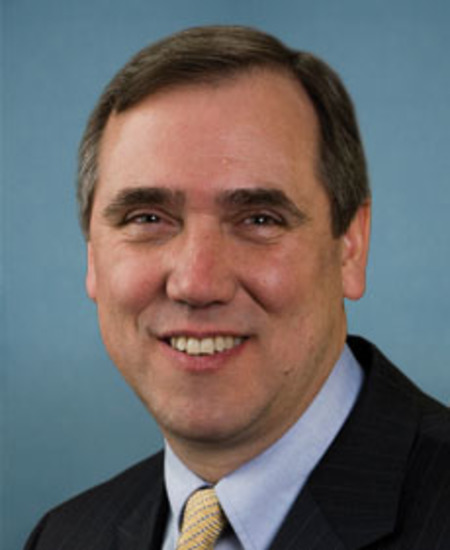
Sen. Jeff Merkley
Sponsored bills
Maddy summaryThis bill caps credit card interest rates at 10% annually for all finance charges, directly affecting credit card users by limiting how much lenders can charge. It prohibits lenders from using non-finance fees (like annual fees) to bypass this cap, and allows consumers to recover overpaid interest within two years of payment. The cap expires on January 1, 2031, and does not override stricter state consumer protections. This is a permanent policy change for credit card terms until the sunset date.
Maddy summaryThe NO BAN Act (S.398) amends U.S. immigration law to prohibit discrimination based on national origin, religion, or other protected categories when processing nonimmigrant visas or immigration benefits. It explicitly bans entry restrictions that target specific nationalities or religions, requiring the President to justify any such restrictions with specific evidence, narrow tailoring, and congressional notification under Section 212(f). The bill mandates detailed public reporting on visa denials, waivers, and refugee admissions for affected countries, and requires ongoing 30-day updates if entry restrictions are implemented. This directly affects nonimmigrant visa applicants, refugees, and commercial airlines subject to enforcement provisions.
Maddy summarySRES 51 is a symbolic Senate resolution expressing that the United States Agency for International Development (USAID) is essential for advancing U.S. national security. It states USAID helps mitigate foreign threats before they reach U.S. shores, promotes global stability, addresses the root causes of migration and extremism, and counters China's influence. The resolution does not change laws or funding - it only affirms the Senate’s view on USAID’s role. It was introduced by 38 Senators and refers to existing laws requiring congressional input for USAID changes.
Maddy summaryThis resolution designates January 30, 2025, as "Fred Korematsu Day of Civil Liberties and the Constitution" to honor civil rights activist Fred Korematsu. It commemorates his lifelong fight against racial discrimination, including his legal challenge to the WWII internment of Japanese Americans and his warnings against post-9/11 civil liberties violations. The resolution has no binding effect - it is a symbolic recognition encouraging reflection on protecting constitutional rights during national security crises. It does not create new policies or directly affect any individuals or groups. Several states already observe this day, and the Senate resolution aligns with their commemorative efforts.
Maddy summaryThis resolution designates February 3-7, 2025, as "National School Counseling Week" to recognize the role of school counselors. It encourages nationwide observance through ceremonies and activities highlighting counselors' work in supporting students' academic, social, emotional, and career development. The bill does not create new policies or funding but aims to increase public awareness of counselors' contributions to school communities. It directly affects school counselors, students, and schools by promoting recognition of their vital support services.
Maddy summaryThis bill excludes certain state-funded payments for disaster-resistant property improvements from taxable income. Homeowners who receive payments from state programs to make upgrades (like reinforcing roofs against windstorms or elevating homes to reduce flood damage) will not have those amounts counted as taxable income. The law specifically covers payments for "qualified catastrophe mitigation payments" made to reduce damage from windstorms, earthquakes, floods, or wildfires. It applies to payments received under state-established programs, including those managed by state insurance agencies or entities ensuring property insurance markets.
Maddy summaryThis bill authorizes the posthumous presentation of a Congressional Gold Medal to Fred Korematsu, a Japanese American civil rights advocate who challenged the WWII internment of Japanese Americans. The medal, designed by the Treasury Secretary and displayed at the Smithsonian Institution, commemorates his lifelong fight against racial discrimination and his role in exposing government deception regarding the internment. The bill creates no new legal obligations or policy changes - it solely establishes a symbolic honor recognizing Korematsu's legacy of justice and equality.
Nancy Gardner Sewell Medicare Multi-Cancer Early Detection Screening Coverage Act This bill allows, beginning in 2028, for Medicare coverage and payment for multi-cancer early detection screening tests that are approved by the Food and Drug Administration and that are used to screen for cancer across many cancer types, if the Centers for Medicare & Medicaid Services determines such coverage is appropriate. Coverage is limited to those under a certain age (age 68 in 2028, increased by one year every year thereafter) and to one test every 11 months.
Maddy summaryThis bill creates federal grants to help communities prepare for wildfire smoke and extreme heat. It provides funding for air pollution agencies to monitor air quality, install air filtration in public buildings, distribute protective equipment like N95 masks, and conduct community outreach in vulnerable areas. The bill also establishes research centers at universities to study health impacts and develop better response strategies, and creates a competitive grant program for states, tribes, and local governments to develop community-specific smoke and heat mitigation plans. These provisions directly affect communities facing wildfire smoke and extreme heat risks, particularly those with limited resources.