

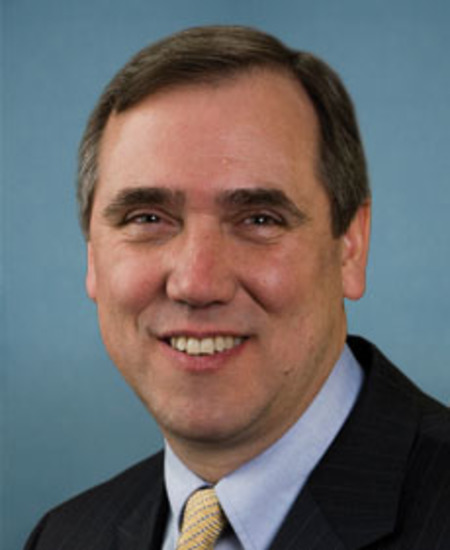
Photo of Jeff Merkley
D United States Senate · Oregon On the 2026 ballot

Sen. Jeff Merkley

Compare
Total votes
1,054
all sessions
Attendance
99%
10 missed
Higher than 75% of chamber peers
With party
93%
of cast votes
Lower than 78% of chamber peers
Bipartisan score
4%
crosses aisle rarely
Higher than 76% of chamber peers
Sponsored
2,272
bills & resolutions
Higher than 97% of chamber peers
Committees
18
assignments
2,272 bills and resolutions

Sponsored bills

Total
2,272
Primary
333
Co-sponsor
1,939
This page
2,272
matching current filters
Primary SRES 140
Passed · United States Senate · Lead sponsor
A resolution designating the first week of April 2025 as "National Asbestos Awareness Week".

Maddy summarySRES 140 designates the first week of April 2025 as "National Asbestos Awareness Week" through a symbolic Senate resolution. It urges the Surgeon General to educate the public about asbestos exposure risks and requests the Senate Secretary transmit the resolution to the Surgeon General's office. The resolution does not create new laws or requirements but aims to raise public awareness about asbestos-related health risks, including diseases like mesothelioma. It is a procedural designation with no binding policy changes.

Passed Mar 26, 2025 0 co-sponsors
Co-sponsor SRES 142
Passed · United States Senate · Co-sponsor
A resolution recognizing the heritage, culture, and contributions of American Indian, Alaska Native, and Native Hawaiian women in the United States.

Maddy summarySRES 142 is a Senate resolution recognizing the heritage, culture, and contributions of American Indian, Alaska Native, and Native Hawaiian women. It highlights specific achievements, including over 4,400 women serving in the military as of 2025, more than 11,600 women owning businesses as of 2024, and historical roles in fields like science, medicine, and cultural preservation. As a symbolic resolution, it does not create new laws or allocate funds but publicly honors these women’s contributions to communities, tribal sovereignty, and U.S. history without mandating policy changes.

Passed Mar 26, 2025 1 co-sponsor
Co-sponsor S 1105
In committee · United States Senate · Co-sponsor
No UPCODE Act

Maddy summaryS 1105, the No UPCODE Act, changes how Medicare Advantage plans are paid by altering risk adjustment rules. It requires using two years of diagnostic data (starting in 2026) for payment calculations and excludes diagnoses from chart reviews or health risk assessments from those calculations. The bill also mandates that the Medicare program evaluate how coding differences between plans and providers affect payment accuracy and publicly report the findings. These changes directly affect Medicare Advantage plans and their payment rates based on enrollee health status.

In committee Mar 25, 2025 1 co-sponsor
Co-sponsor S 1104
In committee · United States Senate · Co-sponsor
WATCH Act

Maddy summaryThe WATCH Act requires foreign laboratories receiving U.S. federal funding for animal research to undergo quarterly inspections to ensure compliance with U.S. animal welfare standards. It directly affects overseas labs conducting NIH-funded studies involving animals, mandating inspections of their animal care committees, treatment reviews, and record-keeping. Labs must maintain compliance, with public certificates of compliance issued after each inspection; persistent non-compliance may lead to funding suspension. The law takes effect 180 days after enactment, requiring coordination with foreign authorities while respecting their sovereignty.

In committee Mar 25, 2025 1 co-sponsor
Co-sponsor S 1115
In committee · United States Senate · Co-sponsor
Paycheck Fairness Act

Maddy summaryThe Paycheck Fairness Act strengthens equal pay protections by modifying the Equal Pay Act of 1963 to require employers to prove that non-sex factors used in pay decisions are job-related, consistent with business necessity, and account for the entire pay difference. It prohibits employers from relying on salary history when setting pay for new hires and enhances protections for workers who discuss wages or file pay discrimination claims. The bill requires the Equal Employment Opportunity Commission to collect and publish compensation data disaggregated by sex, race, and ethnicity to better enforce pay discrimination laws. These provisions directly affect workers in the private and public sectors, particularly women and women of color who face the largest pay gaps. The act also establishes a National Award for Pay Equity to recognize employers making significant efforts to eliminate pay disparities.

In committee Mar 25, 2025 1 co-sponsor
Co-sponsor SRES 133
In committee · United States Senate · Co-sponsor
A resolution expressing support for the local public K-12 schools of the United States and condemning any actions that would defund public education or weaken or dismantle the Department of Education.

Maddy summaryThis Senate resolution expresses strong support for public K-12 schools and condemns any efforts to defund public education or dismantle the Department of Education. It highlights the federal government’s critical role in providing equitable funding - particularly for students in underserved communities, including those with disabilities, from low-income families, and in rural areas - and opposes diverting funds to private schools. As a non-binding resolution, it does not create new laws but formally states the Senate’s position on protecting public education funding and oversight.

In committee Mar 24, 2025 1 co-sponsor
Primary S 1094
In committee · United States Senate · Lead sponsor
Mass Timber Federal Buildings Act of 2025

Maddy summaryS 1094, the Mass Timber Federal Buildings Act of 2025, requires U.S. federal agencies (like the General Services Administration and Department of Defense) to prioritize using U.S.-made mass timber products in new public building construction. It mandates that agencies give contract preference to mass timber sourced from domestic facilities and responsibly harvested U.S. forests, with specific priority for products from forest restoration practices, wildfire prevention efforts, or underserved forest owners. The bill also requires a lifecycle assessment of mass timber buildings' environmental impact and a public report within 180 days of enactment. This directly affects federal building projects and U.S. timber producers meeting the defined sourcing criteria.

In committee Mar 24, 2025 0 co-sponsors
Co-sponsor S 1026
In committee · United States Senate · Co-sponsor
Tar Sands Tax Loophole Elimination Act

Maddy summaryThis bill amends the tax code to close a loophole that previously allowed certain tar sands oil to be taxed differently than conventional crude oil. It expands the definition of "crude oil" under federal excise tax rules to explicitly include oil derived from tar sands, bitumen, and oil shale. This change directly affects oil producers and refiners handling these specific unconventional oil sources, requiring them to pay the standard crude oil excise tax. The key mechanism is the updated tax code definition, which also grants the Secretary regulatory authority to include other pipeline-transported petroleum products meeting specific environmental risk criteria.

In committee Mar 13, 2025 1 co-sponsor
Co-sponsor S 1027
In committee · United States Senate · Co-sponsor
Military Spouse Hiring Act

Maddy summaryThis bill expands the Work Opportunity Tax Credit to include military spouses. It adds "qualified military spouse" as a new category eligible for the credit, meaning employers who hire spouses of active-duty service members can claim the tax benefit. To qualify, a spouse must be certified by a local agency as married to an Armed Forces member at the time of hire. The change applies to hires occurring after the law's effective date, directly affecting military spouses seeking employment and employers who hire them.

In committee Mar 13, 2025 1 co-sponsor
Co-sponsor S 1030
In committee · United States Senate · Co-sponsor
Stop Giving Big Oil Free Money Act

Maddy summaryThis bill requires oil and gas companies holding specific Gulf of Mexico leases to renegotiate their terms to pay royalties when oil or gas prices reach certain market thresholds. It directly affects companies with "covered leases" (existing leases issued between 1996-2000 for Central/Western Gulf tracts that currently avoid royalties at high prices). The key mechanism mandates renegotiation to include price-based royalty requirements equal to thresholds already in existing law, effective October 1, 2026. New leases or lease transfers in the Gulf are blocked unless these renegotiations are completed first.

In committee Mar 13, 2025 1 co-sponsor
Showing 741 to 750 of 2,272 bills
Previous 1 … 74 75 76 … 228 Next