

Maddy summaryThe Fighting Fibers Act of 2025 requires all new washing machines sold in the U.S. (both residential and commercial) to include a built-in or included microfiber filtration system that captures fibers smaller than 100 micrometers, starting January 1, 2030, and display a visible consumer label about filter maintenance. It mandates a one-year EPA study on microfibers' environmental presence, health effects, and potential inequitable impacts on environmental justice communities. Manufacturers violating the filtration, labeling, or future EPA standards face civil penalties of up to $30,000 per violation. This law directly affects washing machine manufacturers, retailers, and consumers by setting new product standards and requiring transparency about microfiber reduction.
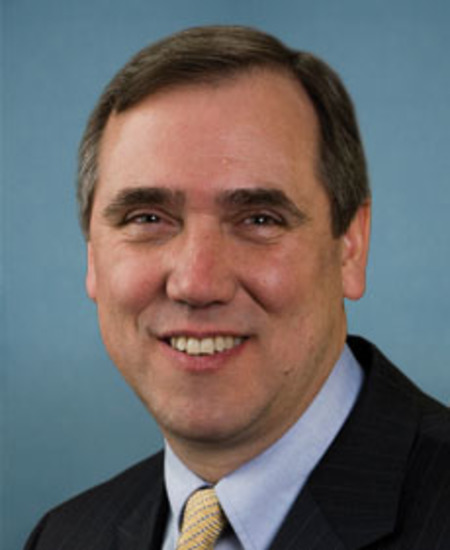
Sen. Jeff Merkley
Sponsored bills
Maddy summaryThe Resident Physician Shortage Reduction Act of 2025 adds 14,000 new residency training positions over seven years (2027-2033), distributing 2,000 annually through a structured application process. It directly affects hospitals applying for these positions, requiring them to commit to filling the new spots and prioritizing rural hospitals, those serving health shortage areas, and hospitals affiliated with historically Black medical schools. Key mechanisms include seven annual application rounds, rules for carrying over unused positions, and minimum distribution quotas (e.g., 10% to rural hospitals). The bill also mandates a study on increasing diversity in the health workforce, with a report due to Congress within two years.
Maddy summaryThis bill establishes minimum salary ($45,000 annually for full-time) and wage ($30/hour for part-time) standards for paraprofessionals and education support staff in public schools. It authorizes $25 billion in federal funding for fiscal year 2026 with annual increases tied to inflation or 2%, to help states meet these requirements. States must submit implementation plans to ensure full-time staff meet the minimum salary and part-time staff meet the minimum wage within four years, with 98% of funds going directly to local school districts. The legislation directly affects school support staff, school districts, and state education agencies across the country.
Maddy summaryThis bill expands Medicare Part B coverage to include specific pharmacist services, directly affecting Medicare beneficiaries and pharmacists who provide these services. It defines "pharmacist services" as evaluations and treatments for illnesses like COVID-19, flu, RSV, or strep throat, or services addressing public health emergencies, requiring collaboration with physicians as state law permits. Medicare would pay 80% of the lower of the actual charge or 85% of the physician payment rate (100% for public health emergencies), and prohibits balance billing for these services. The changes take effect January 1, 2026.
Maddy summaryThis bill eliminates government subsidies for fossil fuel production by increasing royalties for oil and gas extraction, terminating tax credits for fossil fuel companies, and prohibiting government funding for fossil fuel projects. It repeals recent legislation that provided fossil fuel subsidies, including provisions from the Inflation Reduction Act, and requires a study of additional subsidies. The bill affects fossil fuel companies, government agencies, and financial institutions that support fossil fuel development. Key provisions would take effect for production and tax years beginning after the bill's enactment.
Maddy summaryThis bill repeals two specific provisions from the 2023 "Trump Sick Tax Act" (Public Law 119-21) that affected Medicaid and drug pricing. It restores previous Medicaid cost-sharing rules under Title XIX of the Social Security Act and reverts changes to orphan drug exclusions under the Drug Price Negotiation Program (Title XI). These changes directly affect Medicaid beneficiaries and pharmaceutical manufacturers by returning to the pre-2023 policy framework for cost-sharing and drug pricing negotiations. The bill does not create new programs but reverses specific cost-related provisions enacted in 2023.
Maddy summaryThe Stop the Scammers Act establishes a whistleblower reward program for individuals reporting violations of federal consumer financial law (e.g., scams, fraud). Whistleblowers who provide original information leading to successful enforcement actions by the Consumer Financial Protection Bureau (CFPB) may receive 10-30% of recovered civil penalties (minimum $50,000 if penalties are under $1 million). The bill mandates strong confidentiality protections for whistleblowers, prohibits employers from waiving these rights via contracts, and requires the CFPB to report annually on the program. It directly affects whistleblowers in consumer finance cases and the CFPB’s enforcement process, not the general public.
Maddy summaryThe Community Mental Wellness and Resilience Act of 2025 establishes federal grant programs to fund community-led mental wellness initiatives. It provides planning grants (up to $250,000) for organizations to form resilience networks and assess community needs, followed by program grants (up to $500,000 annually for 4 years) to implement evidence-based programs. At least 20% of funds must support rural areas, requiring networks to include representatives from at least five community sectors (e.g., schools, faith groups, health services). The bill mandates a community-wide "public health approach" focused on strengthening protective factors, addressing risk factors, and developing strategic plans using culturally appropriate methods to build collective resilience.
Maddy summaryThis concurrent resolution (SCONRES 19) is a symbolic statement recognizing that people with disabilities face daily barriers accessing federally funded facilities. It does not create new legal requirements but reaffirms support for the existing Americans with Disabilities Act (ADA) and Architectural Barriers Act of 1968. The resolution pledges to prioritize "universal and inclusive design" in future infrastructure projects and calls for removing access barriers for all people, particularly those with disabilities. It cites statistics on disability prevalence (1 in 4 adults) but focuses on principle, not policy change. As a resolution, it has no binding effect on federal agencies.
Maddy summaryThis bill amends the Federal Water Pollution Control Act to extend the funding period for the Columbia River Basin Restoration program from 2020-2021 to 2026-2030. It directly affects the federal program responsible for managing cleanup efforts in the Columbia River Basin. The key change updates the timeframe for allocating funds toward river restoration projects, without altering the program's scope or requirements.