

Western Tribal Water Infrastructure Act of 2021 This bill reauthorizes through FY2024, and expands, the Indian Reservation Drinking Water Program. Specifically, the bill directs the Environmental Protection Agency to connect, expand, or repair existing public water systems that are on Indian reservations or off-reservation sites that serve tribes in the Columbia River Basin or its adjacent coastal river basins. Currently, only projects that are on Indian reservations in the Upper Missouri River Basin or the Upper Rio Grande Basin are eligible for the program.
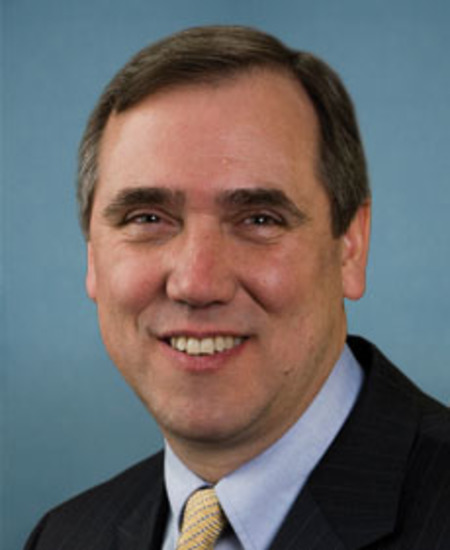
Sen. Jeff Merkley
Sponsored bills
Puppy Protection Act of 2021 This bill requires the Department of Agriculture to expand standards that govern the humane handling, care, treatment, and transportation of animals to include new requirements for commercial dog dealers. Specifically, the standards must require dog dealers to provide to dogs adequate housing, exercise, and veterinary care; appropriate and nutritious food; continuous access to potable water; and meaningful socialization with humans and compatible dogs for at least 30 minutes each day. The standards must also include requirements for breeders to use safe breeding practices and make all reasonable efforts to find humane placement for retired breeding dogs.
Animal Freedom from Testing, Experiments, and Research Act of 2021 or the AFTER Act of 2021 This bill requires departments, agencies, or instrumentalities that operate federal research facilities or exhibit animals to promulgate regulations that facilitate and encourage the adoption of certain animals that are suitable for retirement.
Families Belong Together Act This bill provides various immigration benefits for eligible alien parents (or legal guardians) and minor children who were separated by the Department of Homeland Security (DHS) between January 20, 2017, and January 20, 2021. Generally, to be an eligible parent or minor child under this bill, the alien must not be inadmissible for certain crime- or security-related grounds, though DHS may waive certain grounds for humanitarian or public interest reasons. Furthermore, an eligible child who was separated as a minor remains eligible for the immigration benefits after reaching majority. DHS must grant humanitarian parole into the United States to an eligible alien who requests such parole, regardless of whether the alien is physically present in the United States. An eligible alien in the United States may apply for lawful permanent resident status. U.S. Citizenship and Immigration Services shall grant a qualifying alien's lawful permanent resident status within 30 days of receiving the alien's application. An alien who receives lawful permanent resident status under this bill shall be eligible for benefits and services that are available to an alien who is admitted as a refugee. Certain annual numerical limitations shall not apply to aliens who receive lawful permanent resident status under this bill. If an alien seeks judicial review of a denial of an application for lawful permanent resident status under this bill, the Department of Justice shall appoint counsel to represent that alien upon request.
Extending Tribal Broadband Priority Act of 2021 This bill requires the Federal Communications Commission (FCC) to, within 30 days, establish a new tribal priority window for the 2.5 gigahertz band, through which tribes in rural areas may apply for unassigned spectrum. The new window is subject to the same terms and conditions as the tribal priority window that was adopted by the FCC on July 10, 2019, and that closed on September 2, 2020.
This concurrent resolution calls for renewed U.S. leadership in addressing the climate crisis that is disproportionately affecting the health, economic opportunity, and fundamental rights of children. It also recognizes the need for the departments and agencies of the executive branch with delegated authority over energy and climate policy to prepare a climate recovery plan that puts the United States on a trajectory consistent with reducing global atmospheric carbon dioxide to below 350 parts per million by the year 2100.
This resolution declares racism a public health crisis and supports efforts to address health disparities and inequities across all sectors.
This resolution honors the life and legacy of award-winning children's author Beverly Cleary, expresses profound regret at the announcement of her passing, and recognizes her as one of the most significant and successful authors of the 20th century. The resolution extends the sympathy of the Senate to the family of Beverly Cleary.
End Price Gouging for Medications Act This bill requires the Department of Health and Human Services (HHS) to set maximum prices for prescription drugs under specified federal health programs. Specifically, HHS must establish reference prices based on certain factors, including drug prices in listed countries. Retail prices of covered drugs under specified federal health programs (e.g., Medicare and Medicaid) may not exceed the established reference prices. Drugs must also be available at such prices to uninsured individuals and to individuals with private health insurance.
Job Creation through Energy Efficient Manufacturing Act This bill requires the Department of Energy (DOE) to establish a Financing Energy Efficient Manufacturing Program that provides grants for energy efficiency improvement projects in the manufacturing sector. The following types of entities are eligible for grants: state energy offices; Native American tribes; nonprofit organizations that focus on providing energy efficiency or renewable energy services and receive funding from states, tribes, or utilities; electric cooperative groups; or entities with a public-private partnership under the Hollings Manufacturing Extension Partnership. The entities that receive grants must then distribute subgrants to certain small- or medium-sized manufacturers (employing no more than 750 employees) located in the same states as the entities. Recipients of subgrants must carry out projects that (1) improve the energy efficiency of the manufacturers, and (2) develop technologies that reduce electricity or natural gas use by the manufacturers. The bill establishes labor requirements for projects that receive grant funding under this bill. In addition, grant projects may only use iron and steel products that are produced in the United States, unless DOE grants a waiver of the requirement.