Give Our Athletes Level Salaries Act or the GOALS Act This bill prohibits the use of funds for the 2026 World Cup until the U.S. Soccer Federation agrees to provide equitable pay to the members of the U.S. Women's National Team and the U.S. Men's National Team.
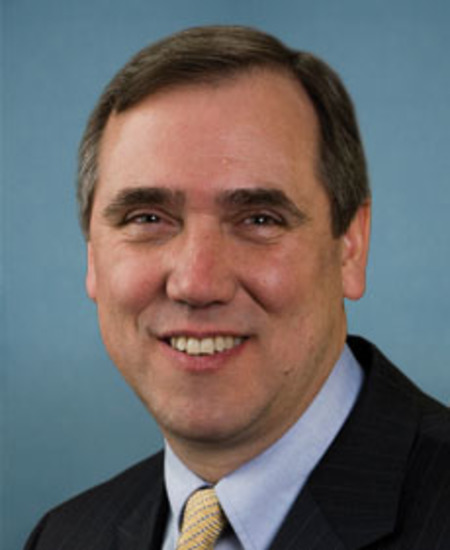
Sen. Jeff Merkley
Sponsored bills
Nullifying Opportunities for Variants to Infect and Decimate Act or the NOVID Act This bill establishes the Pandemic Preparedness and Response Program to coordinate and carry out the U.S. government's global health response to COVID-19, its variants, and other pathogens with pandemic potential. As part of the program, the bill requires, within 30 days, the development of a comprehensive strategy to end the COVID-19 pandemic. The strategy must outline efforts to increase COVID-19 vaccinations worldwide, including through the immediate release of the COVID-19 vaccine doses that the United States committed to sending abroad. The bill also requires a long-term strategy for the program to prevent future pandemics.
This resolution expresses the Senate's condolences to the people of Afghanistan and the Hazara, an ethnic minority community in Afghanistan. The resolution also condemns all forms of violence against women and girls in Afghanistan and supports U.S. and international efforts to ensure that girls in Afghanistan can safely attend school. (On May 8, 2021, a bomb attack at the Sayed Ul-Shuhada High School in Kabul killed more than 85 people.)
This resolution offers the condolences of the Senate regarding the death of Senator John William Warner and expresses deep appreciation for his outstanding and important service to his country.
This resolution recognizes the significance of Asian/Pacific American Heritage Month as an important time to celebrate the contributions of Asian Americans and Pacific Islanders to the history of the United States. The resolution also recognizes that the Asian American and Pacific Islander communities enhance the rich diversity of the United States.
National Origin-Based Antidiscrimination for Nonimmigrants Act or the NO BAN Act This bill imposes limitations on the President's authority to suspend or restrict aliens from entering the United States. It also prohibits religious discrimination in various immigration-related decisions, such as whether to issue an immigrant or nonimmigrant visa, unless there is a statutory basis for such discrimination. The President may temporarily restrict the entry of any aliens or class of aliens after the Department of State determines that the restriction would address specific and credible facts that threaten U.S. interests such as security or public safety. The bill also imposes limitations on such restrictions, such as requiring the President, State Department, and the Department of Homeland Security (DHS) to (1) only issue a restriction when required to address a compelling government interest, and (2) narrowly tailor the suspension to use the least restrictive means to achieve such an interest. Before imposing a restriction, the State Department and DHS shall consult with Congress. The State Department and DHS shall report to Congress about the restriction within 48 hours of the restriction's imposition. If such a report is not made, the restriction shall immediately terminate. Individuals or entities present in the United States and unlawfully harmed by such a restriction may sue in federal court. DHS may suspend the entry of aliens traveling to the United States on a commercial airline that failed to comply with regulations related to detecting fraudulent travel documents.
Clean Water Standards for PFAS Act of 2021 This bill directs the Environmental Protection Agency (EPA) to develop requirements and incentives to limit the discharge of perfluoroalkyl and polyfluoroalkyl substances (PFAS) into certain waters of the United States. PFAS are man-made and may have adverse human health effects. A variety of products contain the compounds, such as nonstick cookware or weatherproof clothing. Within two years, the EPA must publish water quality criteria for each measurable perfluoroalkyl substance, polyfluoroalkyl substance, and class of PFAS. The water quality criteria must determine how much of these substances can be present in water before it is likely to harm human health. Within four years, the EPA must publish a final rule that establishes, for each priority industry category specified in the bill, effluent limitations guidelines and standards for the discharge of each measurable perfluoroalkyl substance, polyfluoroalkyl substance, and class of PFAS. Under the Clean Water Act, effluent limitations restrict the quantities, rates, and concentrations of chemical, physical, biological, and other constituents which are discharged from point sources (e.g., a discernible source such as a pipe) into navigable waters, the ocean, or other specified waters. In addition, the EPA must award grants to owners and operators of publicly owned treatment works for implementing the effluent limitations guidelines and standards.

Climate Change Financial Risk Act of 2021 This bill addresses climate change risk and its potential impact on the financial system. The Federal Reserve Board must develop financial risk analyses relating to climate change for specified large nonbank financial companies and bank holding companies. Specifically, these entities will be evaluated every two years on whether they have the capital necessary to absorb financial losses that would arise under several different climate change risk scenarios. The bill also establishes the Climate Risk Scenario Technical Development Group to provide recommendations to the board regarding such climate change risk scenarios, and determine the financial and economic risks of these scenarios. The Financial Stability Oversight Council of the Department of the Treasury must establish a committee to assist it in identifying risks and responding to threats to the financial system as a result of climate change.
Genetically Engineered Salmon Labeling Act This bill requires the market name of genetically engineered (commonly called genetically modified or GMO ) salmon to include Genetically Engineered or GE in front of the existing market name.
Affordable Medications Act This bill revises and expands various requirements relating to prescription drug pricing and affordability. Specifically, the bill expands financial reporting requirements for drug manufacturers and establishes corresponding civil penalties for noncompliance; it also adds reporting requirements for certain nonprofit patient-assistance programs. Further, the bill requires the Centers for Medicare & Medicaid Services (CMS) to negotiate prices for certain prescription drugs under Medicare and requires the Centers for Medicare and Medicaid Innovation within the CMS to test specified models for negotiating drug prices. It also establishes reporting requirements, and corresponding civil penalties for noncompliance, for pharmaceutical companies with respect to spikes in prescription drug prices. The bill establishes an excise tax on prescription drugs subject to price spikes, lessens prescription drug cost-sharing requirements under qualified health plans and group health plans, and modifies requirements for the importation of prescription drugs. It also requires drug manufacturers to provide rebates for drugs dispensed to certain low-income individuals under the Medicare program and limits the time frame that trade agreements are required to provide market exclusivity for biological products. Additionally, the bill (1) requires the Food and Drug Administration to establish a database of generic drugs; (2) modifies other provisions related to generic drugs, prescription drug advertising, disclosure of wholesale acquisition prices, and patent-infringement proceedings; and (3) revises certain time frames and conditions related to drug exclusivity. Finally, it establishes an innovation incentive fund for new or more effective treatments of bacterial infections and establishes the Center for Clinical Research within the National Institutes of Health.